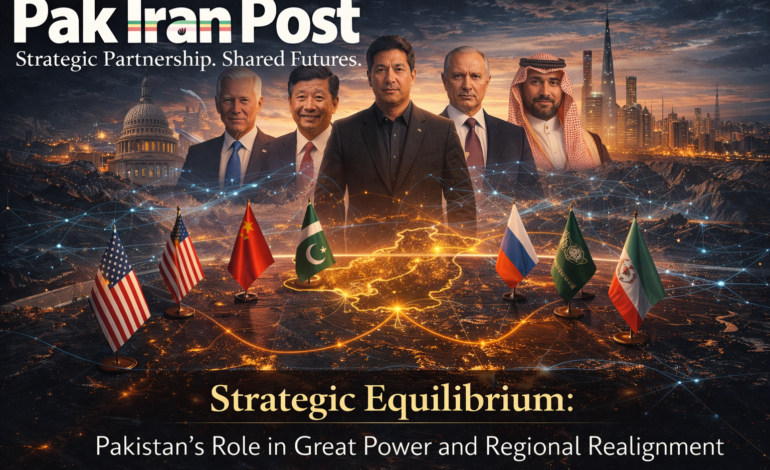
Strategic Equilibrium: Pakistan’s Role in Great Power and Regional Realignment

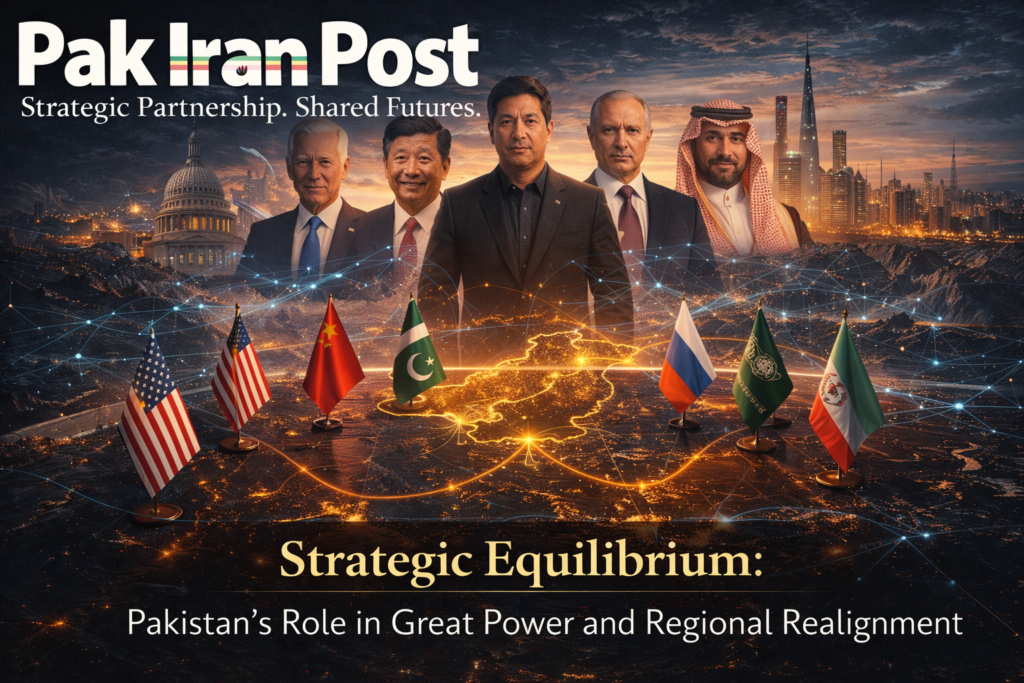
The Middle East is undergoing a fundamental geopolitical realignment that is redefining power balances, energy flows, and strategic relationships. The ongoing conflict in the Gulf involving the United States, Israel, and Iran has exposed vulnerabilities in existing security architectures and highlighted the strategic significance of regional actors such as Pakistan. In this environment, Islamabad faces a unique opportunity to assert itself as a stabilizing force, mediate tensions, and secure national interests by positioning itself at the nexus of great power influence and regional alignment. The task is complex: Pakistan must navigate competing expectations from the United States, Gulf states, China, and Iran, ensuring strategic gains without triggering sanctions or economic isolation. This is a moment to convert geopolitical complexity into sustainable advantage, leveraging diplomacy, defense, and economic strategy in tandem.
Pakistan’s historical balancing role offers a strong foundation. Islamabad has long maintained nuanced relations with neighboring Iran, Gulf Cooperation Council members, and major powers including China and the United States. These relationships, while sometimes asymmetrical, provide channels for influence, negotiation, and mediation. In the current environment, these links acquire renewed significance. The Gulf conflict has created both strategic vacuums and opportunities. With the United States recalibrating its military presence and Gulf states reassessing security dependencies, Pakistan can serve as a credible intermediary capable of delivering both security assurances and diplomatic solutions.
The first dimension of Pakistan’s strategy involves establishing a structured mediation framework. This requires active engagement with all stakeholders to create a transparent, multilateral platform for dialogue, conflict resolution, and risk mitigation. Pakistan’s credibility in this role derives from its geographic proximity, cultural and historical connections, and established diplomatic channels. A structured mediation framework would formalize Pakistan’s role, reduce uncertainty in the region, and provide avenues for economic and strategic benefits. By facilitating communication between Iran and Gulf states, while maintaining alignment with broader international partners, Pakistan can prevent escalation, secure energy flows, and enhance its reputation as a regional stabilizer.
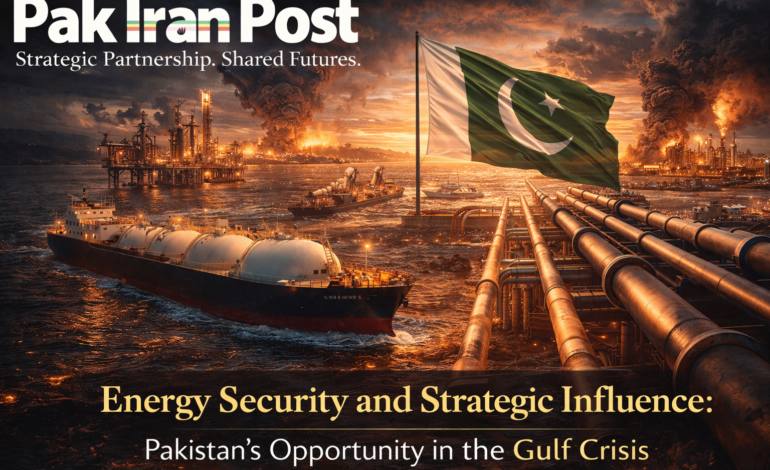
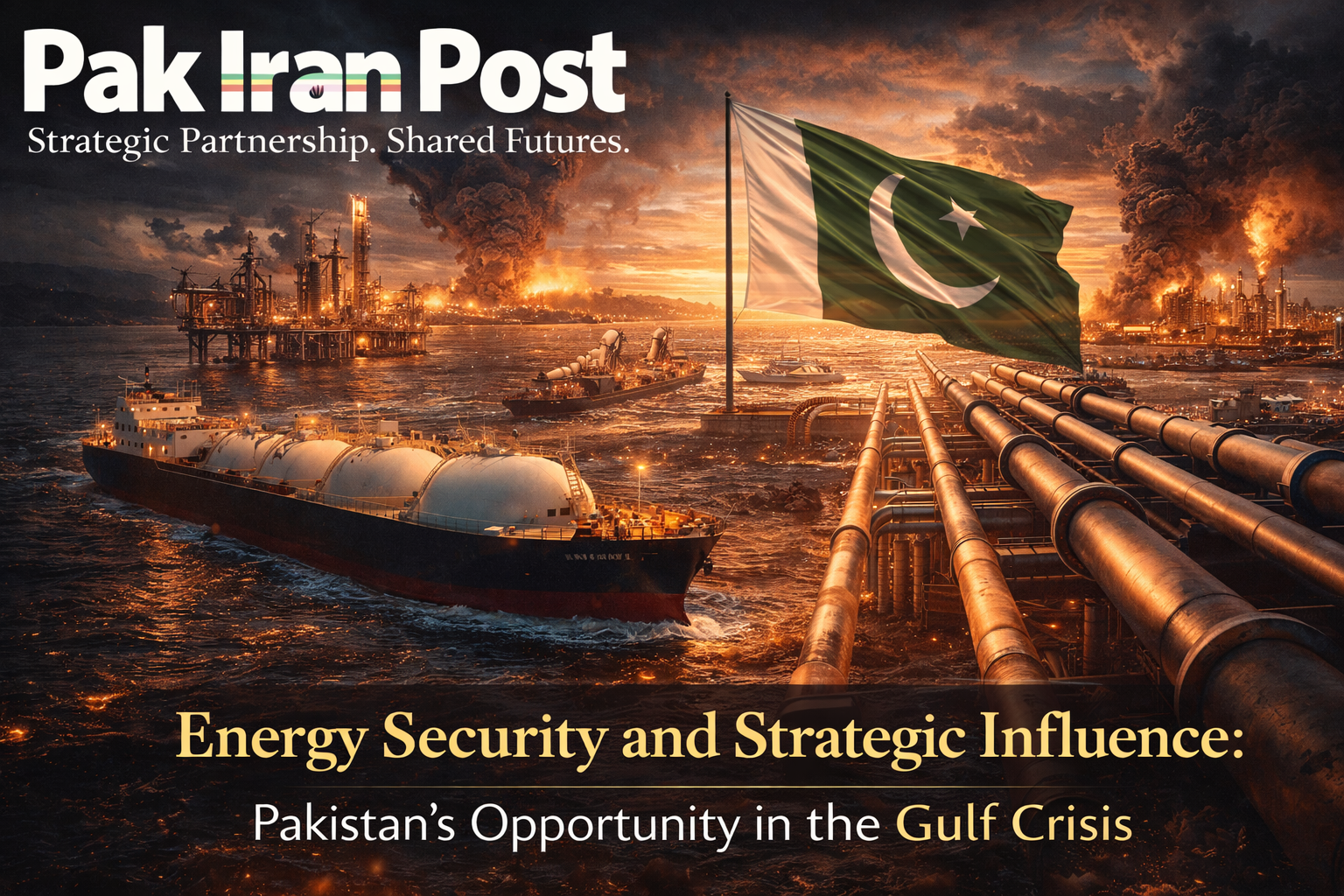
Energy security is intrinsically linked to strategic positioning. The Gulf remains the principal source of petroleum imports for many Asian economies, including Pakistan. Disruptions in the Strait of Hormuz and other transit routes pose direct threats to Pakistan’s economic stability. By positioning itself as a trusted intermediary in energy discussions, Islamabad can negotiate preferential access, secure transit guarantees, and participate in mechanisms that stabilize supply chains. This role provides leverage in pricing negotiations, insurance arrangements, and long-term energy agreements, reducing vulnerability to global shocks and enhancing fiscal resilience.
China’s expanding footprint in the region adds a further strategic layer. Beijing has intensified its diplomatic engagement in Gulf security issues and remains a principal investor in Pakistan through the China-Pakistan Economic Corridor. Pakistan’s ability to synchronize its mediation efforts with Chinese interests provides dual advantages: it ensures alignment with a major strategic partner and enhances Islamabad’s operational capacity in negotiations. Collaboration with China enables Pakistan to access technical, logistical, and diplomatic resources necessary for facilitating stability while maintaining strategic autonomy.
A second dimension involves strategic balancing. Pakistan must simultaneously maintain credible relationships with the United States and Gulf states while cultivating a stable relationship with Iran. This requires transparent communication, multilateral engagement, and calibrated signaling to avoid perceptions of bias. The goal is to achieve equilibrium where Pakistan’s influence is recognized across blocs without being interpreted as alignment with any one power against another. By institutionalizing strategic balancing, Pakistan converts its geographic and diplomatic position into leverage, shaping outcomes in the Gulf without direct confrontation.
Operationalizing this balancing act demands a combination of diplomatic, military, and economic measures. Diplomatically, Islamabad should deploy dedicated envoys to key capitals, convene regional dialogue forums, and coordinate with multilateral institutions to embed itself in decision-making structures. Militarily, Pakistan must maintain readiness to protect its interests and provide logistical or monitoring support in maritime corridors or critical infrastructure without provoking conflict. Economically, Islamabad can leverage corridor access, energy facilitation, and trade incentives to incentivize cooperation and stabilize relationships.
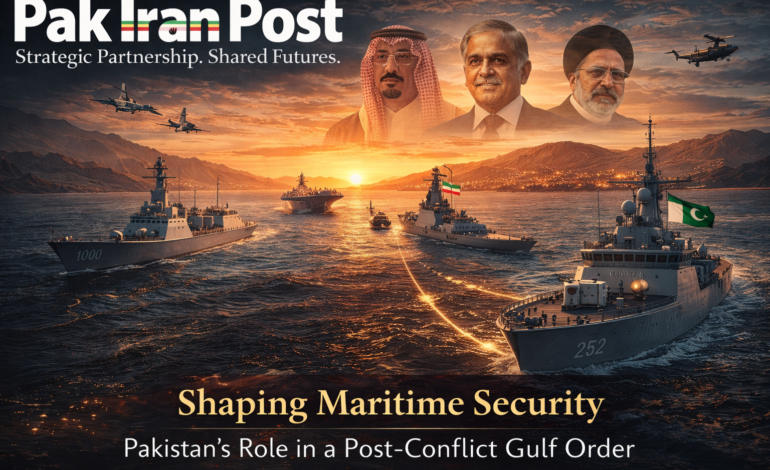
Security coordination is a central element of Pakistan’s role. The volatility of the Gulf and the risk of miscalculation among regional actors necessitate robust intelligence sharing, risk assessment frameworks, and contingency planning. Pakistan’s armed forces, including the navy and air defense units, can contribute expertise in maritime security and logistics oversight, ensuring the safe passage of energy and commercial assets. Integrating security capabilities with diplomatic mediation strengthens Pakistan’s credibility and operational influence, providing tangible assurance to stakeholders.
Economic policy integration complements security and diplomacy. Participation in energy corridor management, trade facilitation, and maritime transit supervision can generate revenue streams and reduce import costs. Gwadar Port serves as a critical node for energy distribution, transshipment, and logistics services, enabling Pakistan to consolidate its geoeconomic influence. The alignment of energy security with economic development creates a multiplier effect, where strategic positioning directly enhances fiscal stability and national economic resilience.
Institutional mechanisms are critical for sustaining influence. Pakistan should establish dedicated task forces, policy centers, and inter-agency committees to coordinate diplomacy, security operations, and economic management in the Gulf context. These institutions would ensure policy coherence, strategic foresight, and continuity across administrations. Capacity building within these structures allows Pakistan to manage complex interactions with multiple stakeholders, anticipate emerging challenges, and act decisively in high-stakes scenarios.
Technological investment further strengthens Pakistan’s operational credibility. Advanced surveillance, digital logistics management, and secure communications infrastructure enhance the reliability and efficiency of mediation and corridor management efforts. By deploying technology as a strategic enabler, Pakistan can ensure transparency, reduce risk, and improve coordination with regional partners. Integration of data analytics and predictive modeling enhances decision-making and facilitates rapid response to emergent threats.
Risk management is indispensable. Pakistan must anticipate potential backlash, sanctions pressure, or misalignment between stakeholders. Developing contingency strategies, including alternative trade routes, energy sourcing diversification, and diplomatic backchannels, ensures resilience against unforeseen disruptions. Scenario planning, combined with multilateral engagement, mitigates the risk of overexposure and positions Pakistan as a dependable stabilizer capable of navigating uncertainty.
Policy recommendations for Pakistan include immediate establishment of a multilateral Gulf mediation platform with formal participation from Iran, Gulf states, and neutral partners. Diplomatic channels should be strengthened through permanent envoys and joint coordination offices. Security measures must include intelligence sharing, maritime corridor monitoring, and naval coordination exercises with regional partners. Economic policy should integrate Gwadar Port development, energy corridor participation, and trade facilitation into the broader strategic framework. Investment in institutional capacity and technological infrastructure will ensure long-term operational effectiveness.
The strategic and diplomatic dividends of such engagement are substantial. Pakistan gains influence over critical energy flows, enhances regional credibility, secures long-term economic benefits, and positions itself as a neutral arbiter in high-stakes conflicts. By embedding itself within decision-making structures, Pakistan strengthens its bargaining power with global powers, secures preferential access to energy and trade opportunities, and consolidates its role as a central actor in regional stability architectures.
Pakistan’s engagement in strategic balancing also has broader geostrategic implications. By successfully mediating between great powers and regional actors, Pakistan projects influence beyond its immediate neighborhood. This enhances its global diplomatic stature, attracts investment, and enables Islamabad to participate proactively in shaping norms, protocols, and security frameworks in a complex multipolar environment. Its success in balancing competing interests sets a precedent for similar interventions in other strategic theaters, enhancing long-term geopolitical relevance.
In conclusion, the Gulf realignment presents Pakistan with a rare opportunity to leverage its unique geographic, diplomatic, and operational advantages. By adopting a multidimensional strategy that integrates mediation, security coordination, economic facilitation, and institutional capacity building, Pakistan can establish itself as a central stabilizing actor. Strategic balancing between great powers and regional actors enables Pakistan to safeguard energy security, secure economic benefits, and reinforce diplomatic credibility.
The effective execution of this strategy transforms Pakistan from a reactive observer into a proactive architect of stability. By simultaneously engaging with the United States, Gulf states, China, and Iran, Pakistan can shape regional outcomes, protect national interests, and achieve durable influence. The integration of technology, policy coherence, and institutional support ensures that Pakistan’s role is both credible and sustainable.
This moment represents a strategic inflection point. Pakistan’s ability to navigate competing pressures, assert influence in mediation, and operationalize economic and security levers will determine its long-term relevance in regional geopolitics. By embracing this opportunity, Islamabad not only stabilizes the Gulf but also reinforces its own strategic autonomy, ensuring that it emerges from crisis as a recognized power broker and indispensable partner in the post-conflict order.
A Public Service Message