

Can Pakistan Govern a Sanctions Border Responsibly

Pakistan’s debate over Iran is often staged as a question of foreign policy courage. Should Islamabad deepen trade with a neighbouring state under sanctions pressure. Should it revive the gas pipeline. Should it convert mediation into commercial advantage. Should it use geography more

Pakistan Between Tehran, Riyadh, Beijing and Washington
Pakistan’s Iran policy has always rested on a difficult proposition: that geography compels engagement with Tehran, economics requires accommodation with the Gulf, security prudence demands a working relationship with Washington, and long-term strategic insurance lies with China. For years, Islamabad managed these contradictions
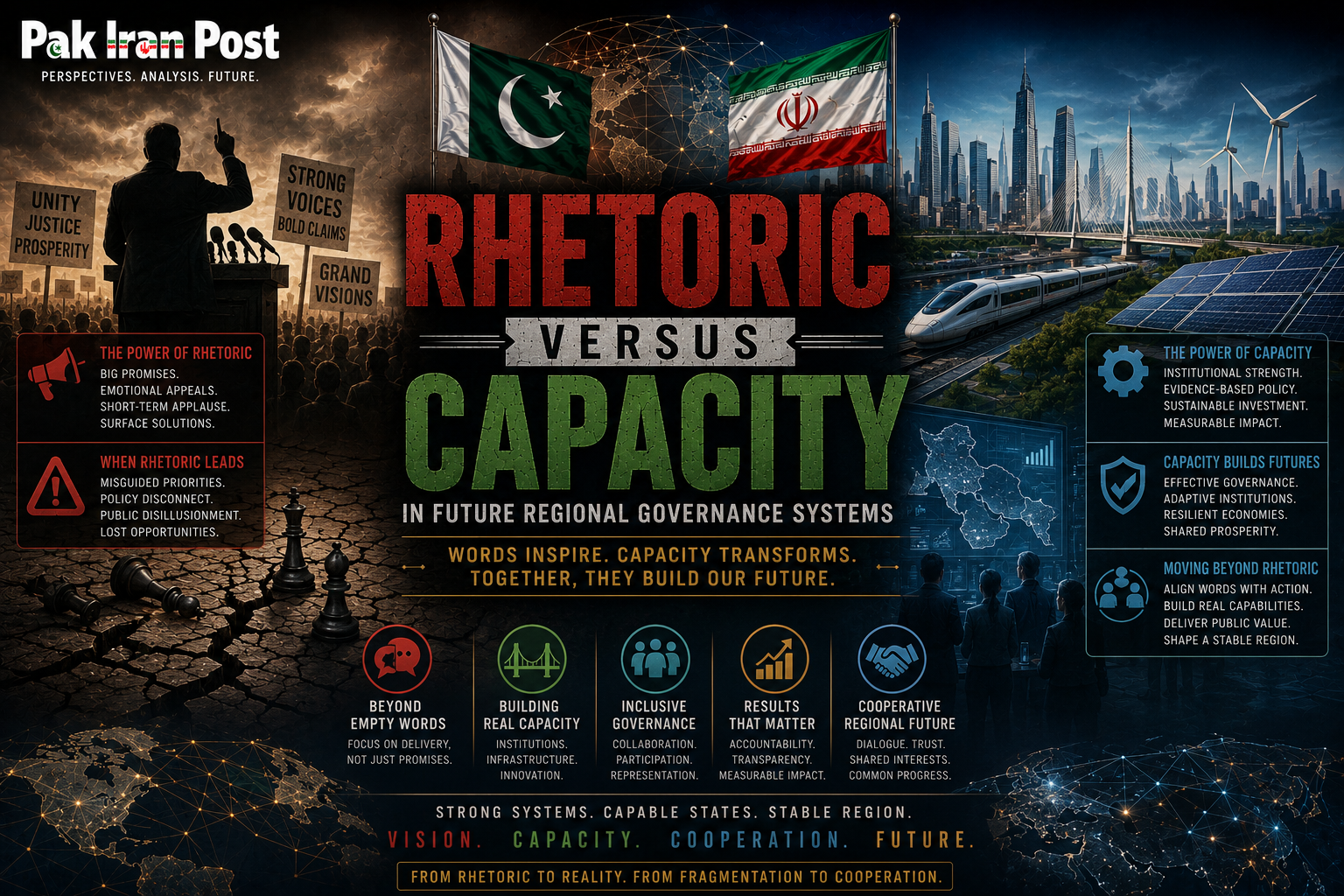
Rhetoric Versus Capacity I n Future Regional Governance Systems
In the evolving grammar of statecraft across South Asia and the broader Middle Eastern strategic arc, a quiet but decisive shift is underway in how governance success is evaluated, articulated, and ultimately legitimised. The historical dominance of political rhetoric, symbolic sovereignty assertions, and

Institutional Legitimacy Under Economic Stress and Digital Accountability Era Transitions
In an international policy environment increasingly defined by macroeconomic compression, accelerated digital transparency, and the intensification of public expectation regimes, the question of institutional legitimacy has shifted from a constitutional abstraction into a continuously stress-tested operational variable. For states situated at the intersection
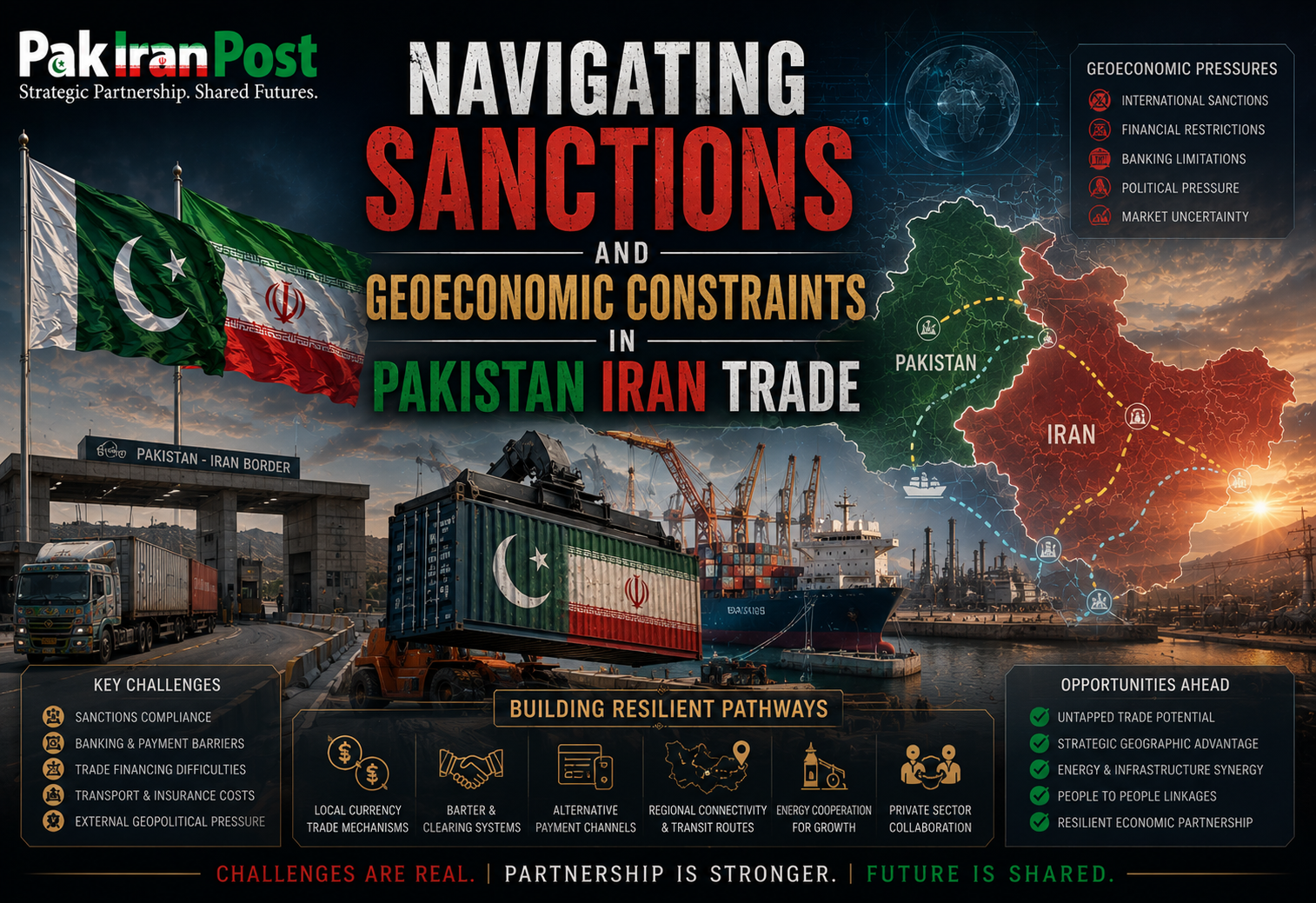
Navigating Sanctions and Geoeconomic Constraints in Pakistan Iran Trade
The evolving economic relationship between Pakistan and Iran is increasingly shaped not only by bilateral considerations but by the tightening architecture of global sanctions regimes, fragmented financial systems, and intensifying geoeconomic competition among major powers. In this constrained environment, economic engagement is no

A Realist Reset for Pakistan Iran Regional Stability Framework
The strategic geography linking Pakistan and Iran has long been described in diplomatic shorthand as a “natural corridor of civilizational adjacency,” yet in practical geopolitical terms it has functioned more as a managed tension zone than a coherent economic or security continuum. The

Pakistan Iran Policy Reset After Crisis
Pakistan’s relationship with Iran has long existed in a narrow corridor between geographic inevitability and geopolitical constraint. It is a relationship shaped less by strategic design and more by episodic necessity, interrupted repeatedly by sanctions regimes, border insecurity, regional rivalries, and shifting external

Strategic Petroleum Reserve for Pakistan Energy Security
Pakistan’s energy vulnerability has ceased to be a periodic macroeconomic inconvenience and has instead evolved into a structural determinant of its fiscal instability, exchange rate fragility, and industrial underperformance. In an international environment where energy has increasingly become a geopolitical instrument rather than

Fostering Regional Soft Power: Positioning Pakistan as a Hub for Iranian Youth Cultural Engagement
In an era where geopolitics is increasingly influenced by social and cultural connectivity, the role of soft power has emerged as a decisive tool for shaping regional influence. Iran, with a young population increasingly attuned to global trends, faces significant social, cultural, and
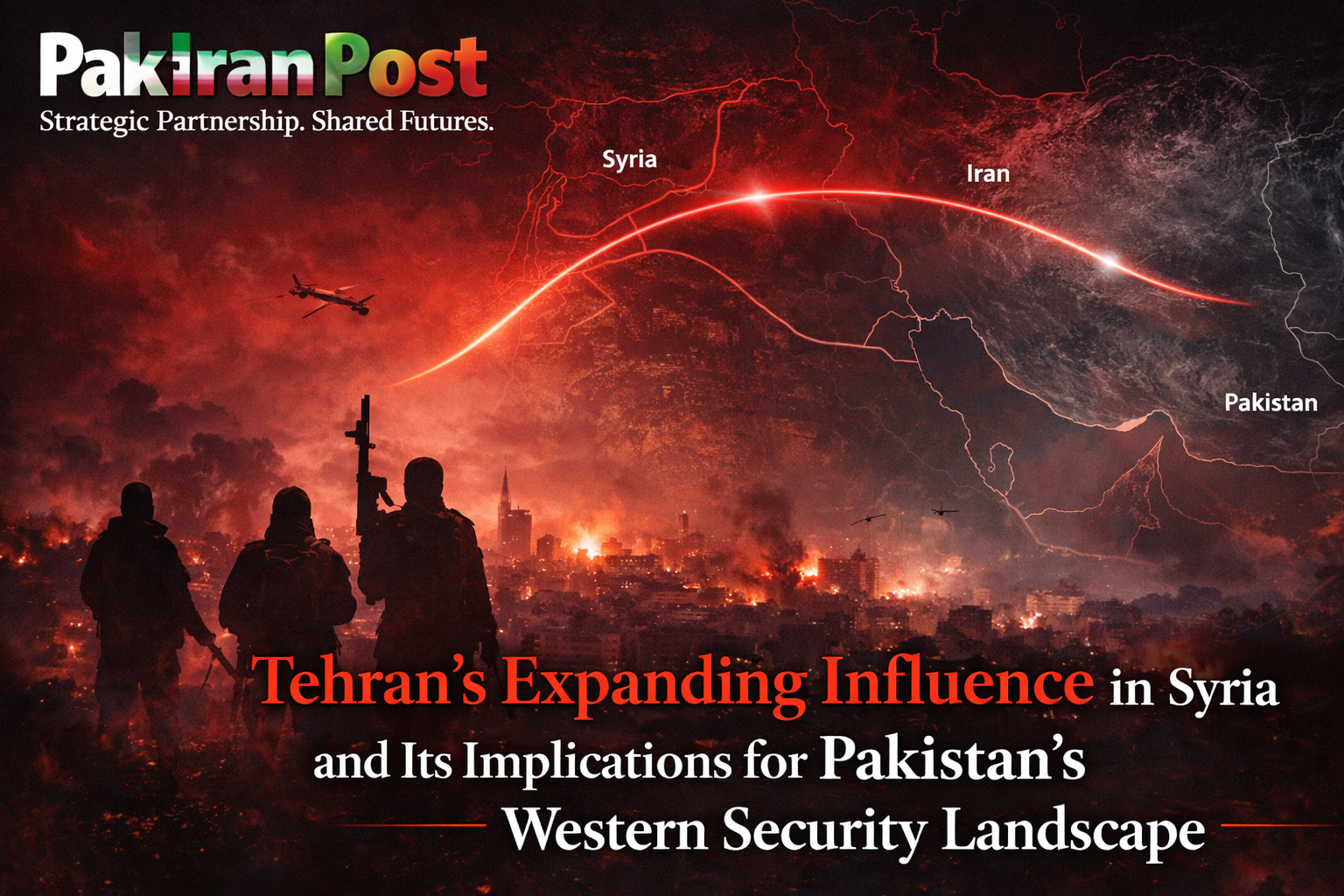
Tehran’s Expanding Influence in Syria and Its Implications for Pakistan’s Western Security Landscape
Iran’s foreign policy over the past two decades has been marked by a deliberate pursuit of strategic depth and regional leverage, prioritizing influence projection in neighboring countries and beyond in order to safeguard its core national security and ideological interests. Central to this