Shaping Maritime Security: Pakistan’s Role in a Post-Conflict Gulf Order

The strategic environment of the Gulf has entered a transformative phase. The Strait of Hormuz, long considered an open international passage for global energy flows, is witnessing a shift from unfettered access to selective management. The emergence of controlled transit regimes, driven by the intersection of national security, economic leverage, and global energy dependency, signals a profound recalibration of maritime order in the region. This structural evolution is not merely a consequence of conflict involving major powers; it represents the monetization and securitization of one of the world’s most critical chokepoints. In this context, Pakistan has an unprecedented opportunity to shape outcomes, consolidate influence, and translate maritime diplomacy into strategic and economic gains. The question before Islamabad is no longer whether to observe, but how to convert this moment into a durable position of authority within the emerging post-conflict maritime architecture.
The Gulf’s maritime environment has historically been governed by norms of open navigation and international law. These principles facilitated the movement of crude oil, refined products, and critical commodities from the Gulf to Asia, Europe, and the Americas. However, contemporary developments challenge these assumptions. The combination of sanctions, regional rivalry, and strategic risk calculations has given rise to managed access regimes where passage is permitted selectively to aligned or neutral actors. These policies impact shipping costs, energy insurance premiums, and global commodity pricing. Pakistan, as a regional neighbor with strategic ties to multiple stakeholders, occupies a position that allows it to mediate, influence, and benefit from this transformation.
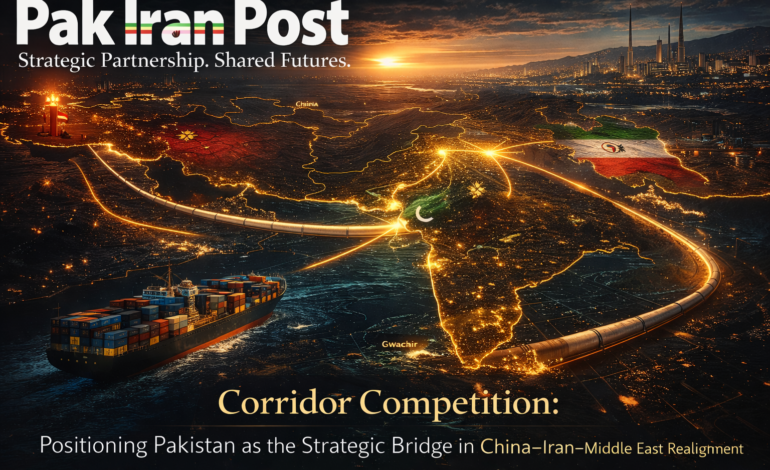
Pakistan’s proximity to Iran, its access to the Arabian Sea through Gwadar Port, and its diplomatic relationships with Gulf states, China, and Western powers collectively create a unique leverage point. The first pillar of Pakistan’s strategy must be formal maritime engagement, codifying its inclusion in corridor management and ensuring recognition as a permitted participant. This entails proactive negotiation with Iran and other stakeholders to establish transit rights, secure passage guarantees, and operational protocols for commercial and energy vessels. By embedding itself within these emerging frameworks, Pakistan can move from a peripheral observer to a core stakeholder in one of the most strategically significant maritime domains in the world.
A second pillar is economic integration. The monetization of the Strait implies that transit, insurance, and security costs are now sources of sovereign revenue. Pakistan’s engagement can secure a share of these flows through participation in joint shipping facilitation, insurance underwriting, and maritime risk management operations. The integration of Gwadar Port as a logistics and redistribution hub is central to this approach. By linking port infrastructure to corridor management, Pakistan can attract transshipment activity, energy storage operations, and commercial shipping services, generating both revenue and geopolitical relevance.
Energy security considerations must be embedded into Pakistan’s maritime strategy. Disruption in the Strait can significantly affect Pakistan’s energy imports and industrial sectors. By formalizing transit agreements and participating in corridor oversight, Pakistan can reduce exposure to supply shocks, stabilize domestic energy pricing, and strengthen economic resilience. In addition, the development of parallel energy corridors, including pipeline and LNG infrastructure, complements maritime engagement and creates multiple avenues for securing energy flows.
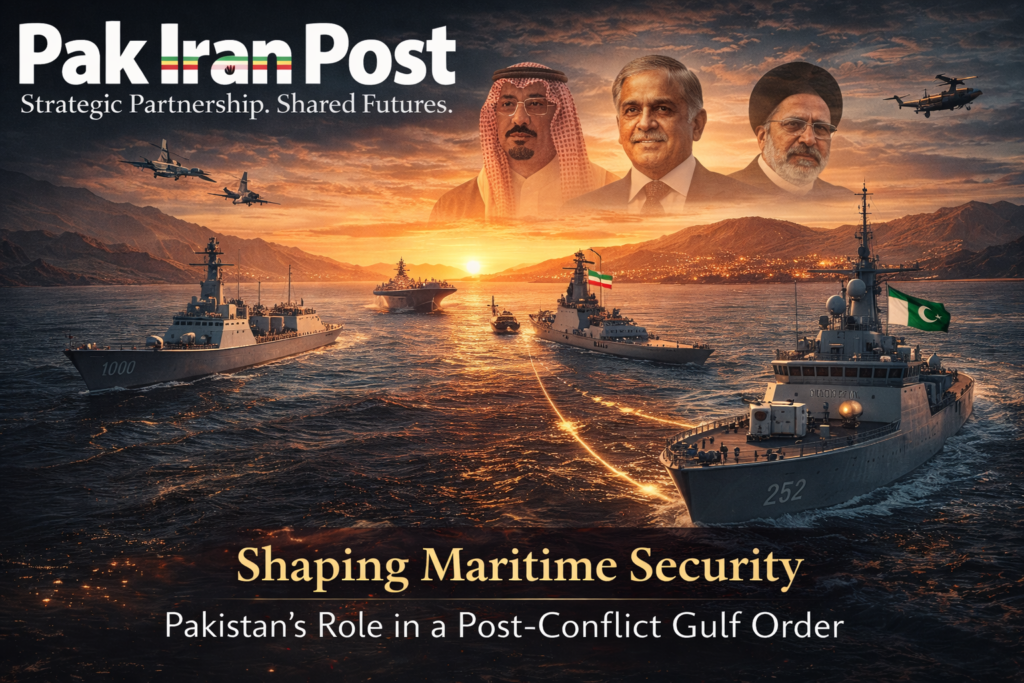
Security cooperation is an equally critical component. Pakistan’s role must extend beyond diplomacy and economic facilitation to include coordinated maritime security measures. These measures can encompass vessel monitoring, emergency response coordination, and intelligence sharing with regional actors. Pakistan’s navy, already equipped with operational capabilities for coastal defense and patrol, can serve in escort and risk mitigation roles. This approach enhances confidence among transit partners, reduces insurance premiums, and ensures that Pakistan’s participation is recognized as both credible and operationally effective.
Diplomatic nuance is essential in balancing competing regional and global interests. Pakistan must navigate the strategic sensitivities of Gulf states, the United States, and China while maintaining a constructive relationship with Iran. Transparency in negotiation, multilateral engagement, and adherence to international maritime law are critical to avoiding perceptions of bias. Islamabad must present its role as a stabilizing and facilitative actor, ensuring that its engagement is interpreted as contributing to regional security and economic continuity rather than taking sides in broader conflicts.
Institutional development underpins sustainable influence. Pakistan must create dedicated frameworks for maritime diplomacy, logistics coordination, and corridor management. Establishing a national maritime policy center staffed with experts in international law, energy economics, and naval operations ensures continuity, operational coherence, and strategic foresight. Institutionalization allows Pakistan to translate episodic engagement into persistent influence and long-term strategic leverage.
Technological integration further amplifies Pakistan’s capacity. The deployment of real-time vessel tracking, secure communication networks, and digital logistics platforms enables proactive management of maritime corridors. Investments in cyber defense, satellite monitoring, and maritime domain awareness are crucial for ensuring that Pakistan’s oversight capabilities are both credible and effective. Leveraging technology as a force multiplier ensures that Pakistan’s engagement is not merely symbolic but operationally substantive.
The economic rationale for engagement is compelling. Participating in the management of transit corridors allows Pakistan to capture revenue from shipping facilitation, insurance coordination, and logistical services. Coupled with Gwadar Port’s expansion and integration into regional trade routes, Pakistan can establish itself as a hub for energy distribution and commercial shipping. The resulting increase in foreign exchange reserves, reduction in import costs, and enhanced industrial stability represents tangible benefits that reinforce the strategic value of maritime engagement.
Risk management is central to Pakistan’s approach. The Gulf remains a volatile theater, and overexposure carries potential diplomatic, economic, and security risks. Pakistan must maintain contingency plans for alternative transit routes, energy sourcing, and diplomatic engagement. Scenario planning and multilateral coordination ensure that Pakistan remains resilient against shocks while maximizing leverage in corridor management.
Policy recommendations for Islamabad include the immediate negotiation of bilateral and multilateral transit agreements with Iran, Oman, and neutral Gulf states. These agreements should codify Pakistan’s status as a permitted partner in controlled access regimes. Concurrently, Pakistan should initiate infrastructure upgrades at Gwadar Port, focusing on energy storage, transshipment capacity, and logistical efficiency. Maritime security initiatives should include joint risk mitigation exercises, intelligence sharing, and naval coordination with corridor partners. Additionally, Pakistan should invest in institutional capacity by establishing a dedicated maritime strategy center to coordinate policy, operational oversight, and diplomatic engagement.
Strategically, Pakistan’s engagement can yield long-term geopolitical dividends. By embedding itself in the management of a critical chokepoint, Pakistan gains leverage over regional energy flows, influence in security arrangements, and recognition as a reliable and capable partner for global powers. This positioning enhances its diplomatic credibility, strengthens economic resilience, and ensures that Pakistan is a key architect rather than a passive observer of the emerging Gulf maritime order.
The broader implication is the transformation of Pakistan’s strategic posture. By actively shaping maritime security frameworks, integrating port infrastructure, and coordinating corridor oversight, Pakistan transitions from a peripheral actor to a central node in the regional geopolitical and economic network. This not only stabilizes energy and trade flows but also strengthens Pakistan’s negotiating position in regional and global forums, providing leverage in matters ranging from defense cooperation to economic partnerships.
Implementation requires a phased approach. Phase one involves securing formal recognition as a corridor partner and establishing operational protocols for shipping and energy transit. Phase two focuses on infrastructure enhancement, technological integration, and security cooperation. Phase three embeds institutional mechanisms and develops human capital capable of sustaining maritime diplomacy and operational management. This phased strategy ensures that Pakistan’s engagement is systematic, credible, and capable of delivering measurable strategic and economic outcomes.
Furthermore, Pakistan must actively engage international partners to reinforce its legitimacy. Engagement with China, the United States, and multilateral organizations ensures alignment with global norms while maintaining operational flexibility. These partnerships can provide investment, technical expertise, and diplomatic support, further enhancing Pakistan’s ability to shape corridor management. Multilateral engagement also reduces the risk of unilateral pressure and strengthens Pakistan’s standing as a stabilizing actor in a high-stakes maritime environment.
In conclusion, the post-conflict Gulf order presents Pakistan with a historic opportunity to assert itself as a central actor in maritime security and energy logistics. By integrating diplomacy, infrastructure, technology, and security, Pakistan can convert the monetization of strategic chokepoints into long-term national advantage. The engagement ensures stability in energy flows, reduces economic vulnerability, strengthens foreign exchange reserves, and consolidates Pakistan’s geopolitical relevance.
Pakistan’s success will be measured not merely by its participation in corridor management but by its ability to institutionalize influence, generate economic value, and project credibility as a stabilizing partner. By adopting a proactive, technology-enabled, and diplomatically nuanced strategy, Islamabad can shape the post-conflict maritime environment, secure tangible economic benefits, and reinforce its position as an indispensable architect of regional stability and connectivity. This is the moment for Pakistan to transition from observer to power broker, transforming crisis into opportunity and strategic vulnerability into durable national advantage.
A Public Service Message