

Digital Customs Can Make Pakistan Iran Trade More Verifiable

Pak Iran Post, the credibility of Pakistan Iran commercial governance increasingly depends on whether the two states can convert customs documentation from a paper trail into a verifiable data architecture. The central weakness is no longer merely the existence of fraudulent invoices, duplicate
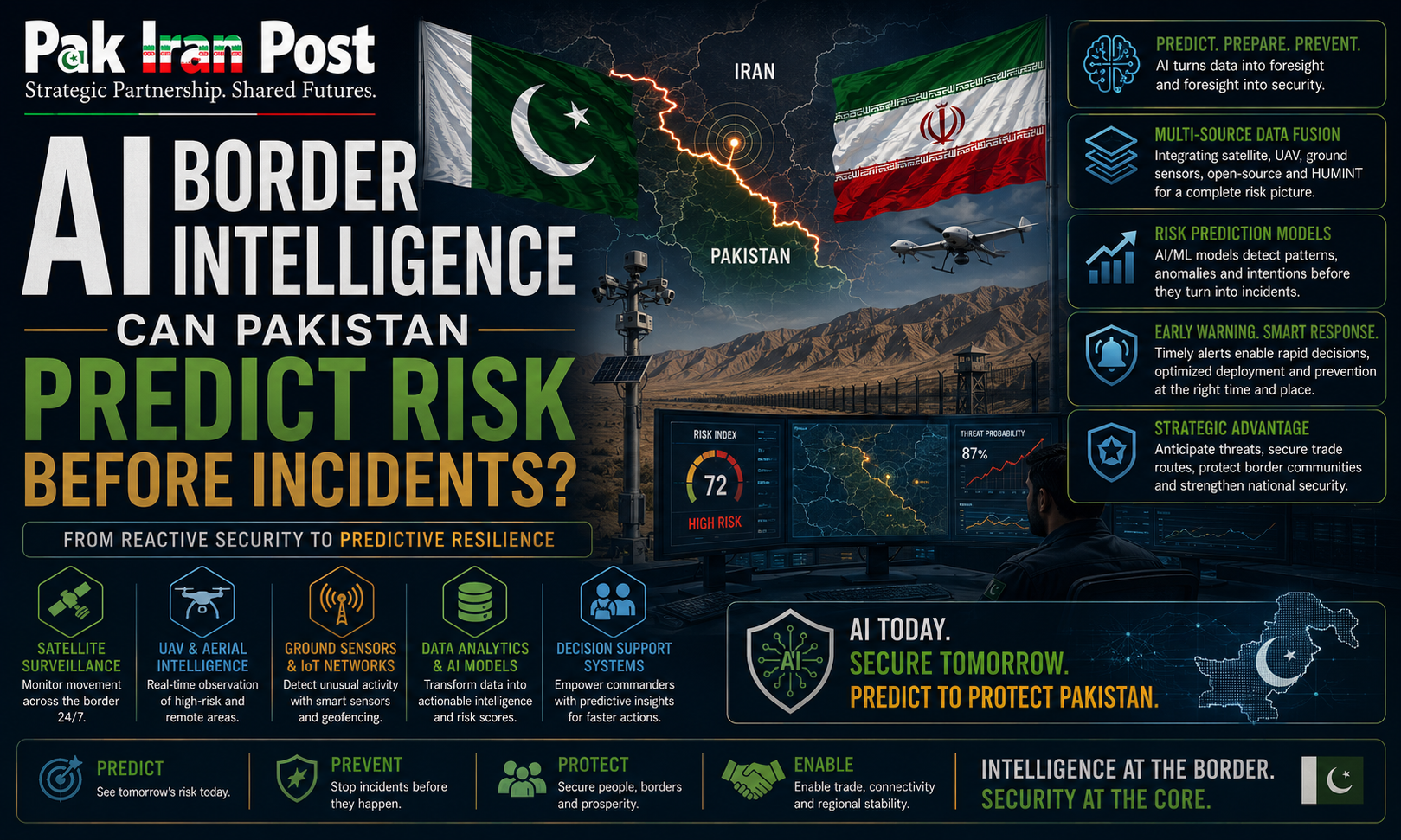
AI Border Intelligence Can Pakistan Predict Risk Before Incidents

Pak Iran Post confronts a frontier where security volatility, commercial necessity and human mobility intersect with unusual intensity. Along the Pakistan Iran boundary, the central intelligence problem is no longer simply identifying an intrusion after it occurs. It is determining whether a vehicle

Digital Sovereignty Without Owning the Digital Stack
In the twentieth century, weaker states worried about who controlled their sea lanes, pipelines and skies. In the twenty first, the more consequential question may be who controls their chips, clouds, cables, payment rails and satellite links. Pakistan and Iran sit on opposite

Data Sovereignty and Cyber Resilience in Emerging Power Structures
The architecture of global power is undergoing a quiet but irreversible transition, in which territorial depth and conventional military capacity are being progressively supplemented by intangible but decisive capabilities rooted in data sovereignty, cyber resilience, semiconductor access, and indigenous technological ecosystems. Across South
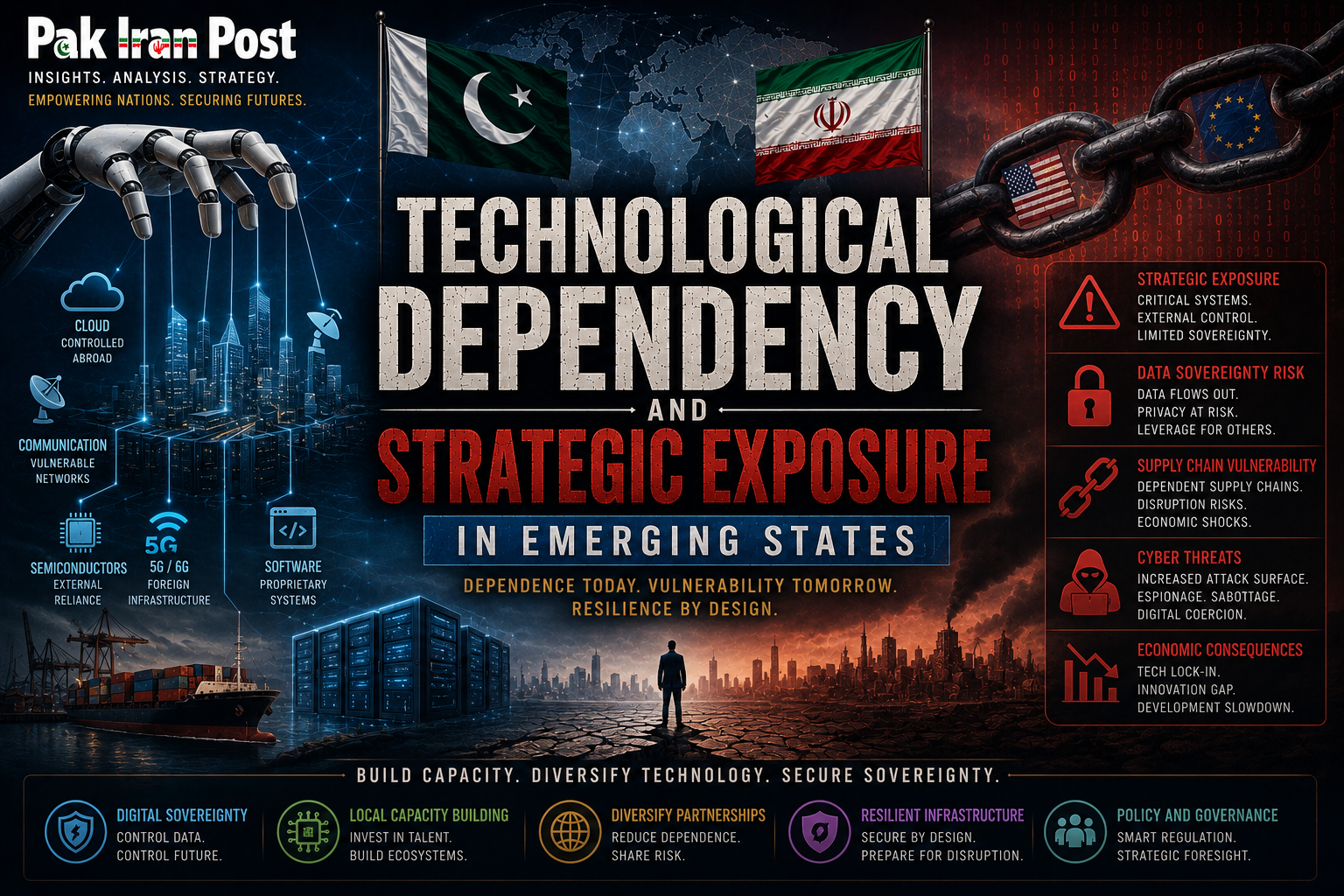
Technological Dependency and Strategic Exposure in Emerging States
Technological dependency, once framed as a developmental lag in industrial capacity or scientific advancement, has now evolved into a structural condition of strategic exposure that shapes sovereignty, fiscal autonomy, and geopolitical agency. Across South and West Asia, the accelerating digitisation of governance, finance,

Artificial Intelligence and Strategic Power Reordering Across Asia
Artificial intelligence is no longer an auxiliary technological instrument; it has become a structural determinant of state behaviour, security architecture, and economic hierarchy across South and West Asia. In contemporary policy corridors from Islamabad to Tehran, and in parallel analytical rooms in Washington,

Borderless Surveillance Futures and Pakistan Iran Security Algorithm
The contemporary Pakistan–Iran frontier is increasingly being reconstituted as a technologically mediated security continuum rather than a conventional geopolitical boundary. What is emerging is not merely an upgrade in border enforcement mechanisms but a structural transformation in the epistemology of sovereignty itself. Artificial

Energy Transition and Hydrocarbon Reality in Regional Transformation
The energy future of Pakistan and Iran is increasingly defined by a structural contradiction that resists easy policy resolution. On one side stands the global narrative of energy transition, driven by decarbonization commitments, renewable energy scaling, and technological optimism surrounding solar, wind, and
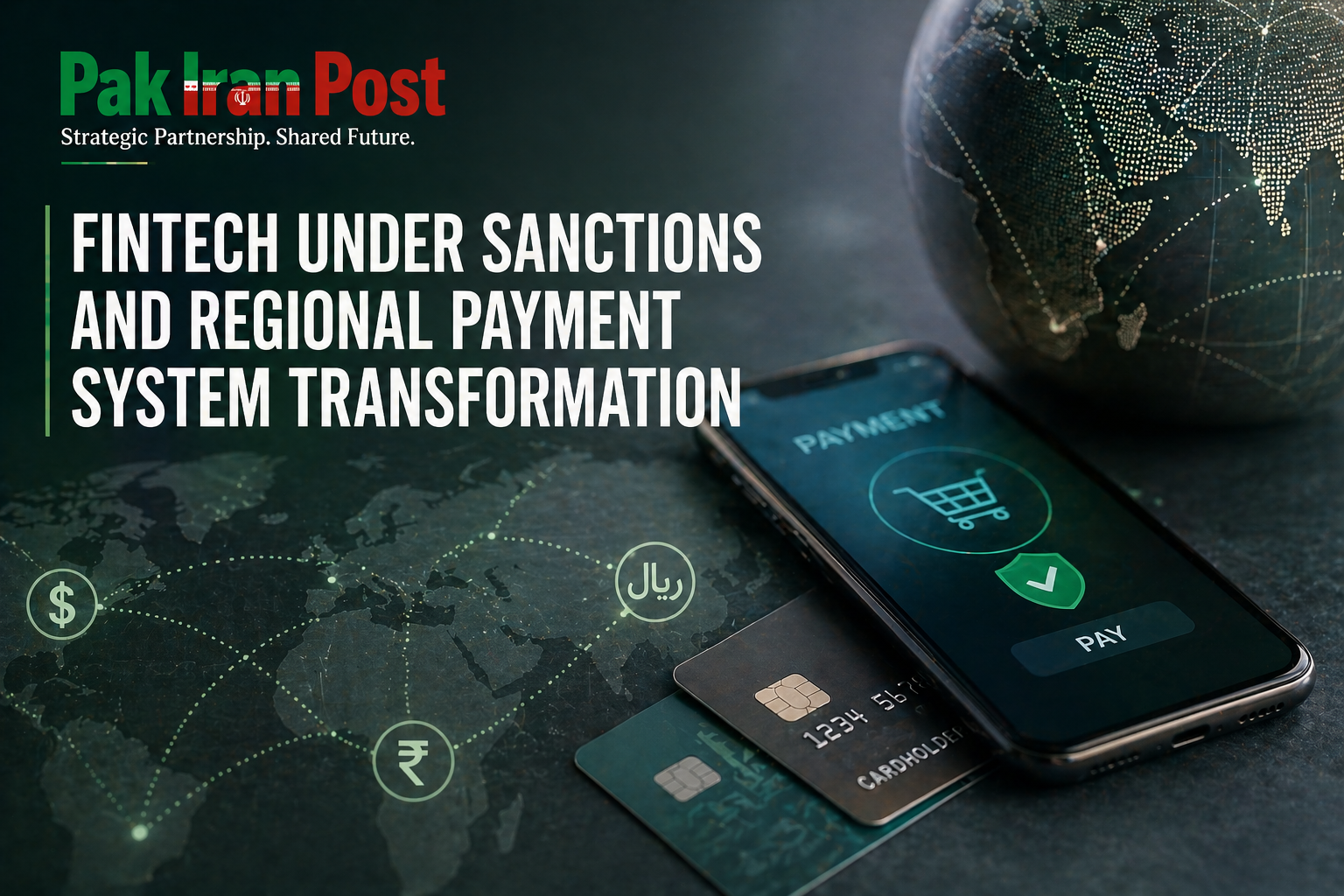
Fintech Under Sanctions and Regional Payment System Transformation
The evolution of financial technology in the Pakistan Iran economic corridor is increasingly shaped not by market-driven innovation alone but by the structural constraints of sanctions regimes, currency fragmentation, and restricted access to global financial infrastructure. In this constrained environment, fintech does not
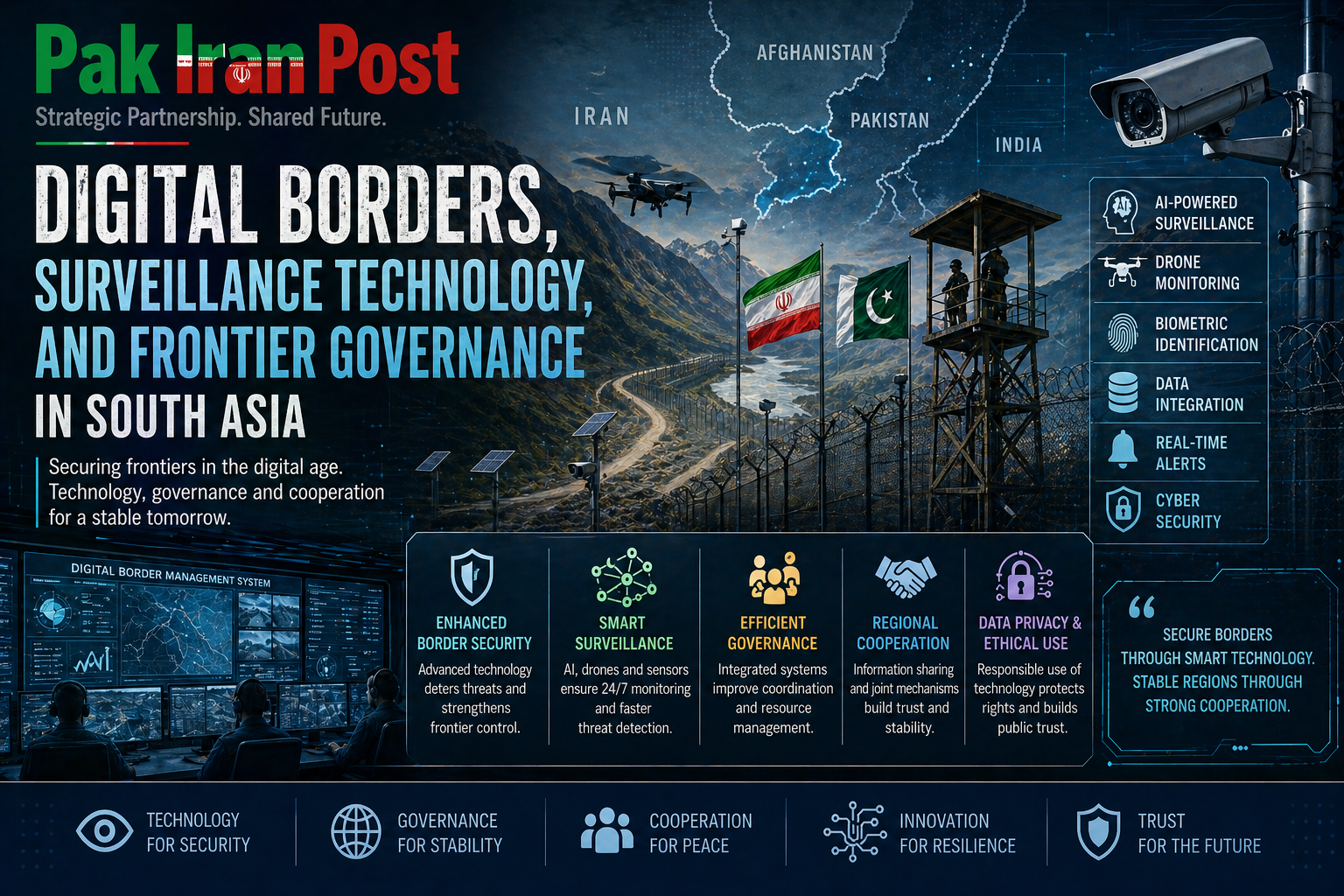
Digital Borders Surveillance Technology and Frontier Governance in South Asia
The Pakistan Iran frontier is quietly becoming one of the most technologically mediated borders in Asia, not through dramatic political declarations but through incremental accumulation of surveillance systems, biometric infrastructures, and algorithmic governance tools that are reshaping how sovereignty is exercised, narrated, and