
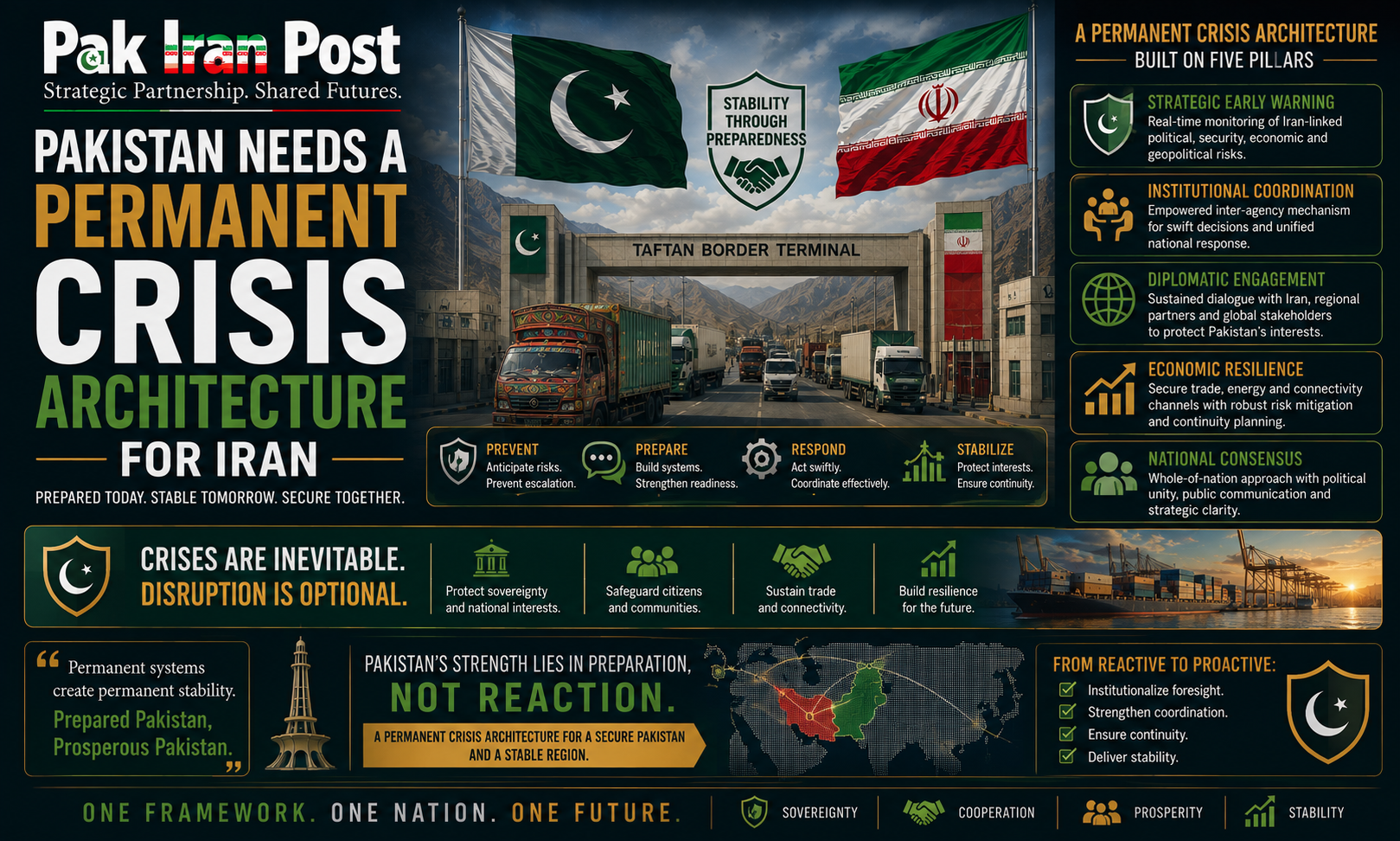
Pakistan Needs A Permanent Crisis Architecture For Iran

Pak Iran Post must treat cross border disruption with the same institutional seriousness accorded to conventional security contingencies, because the events of March 2026 demonstrated that instability inside Iran can rapidly become a Pakistani administrative, humanitarian, economic and security problem. When regional hostilities

The Border Economy Needs Evidence, Not Enforcement Cycles

Pak Iran Post approaches the Pakistan Iran border economy as a governance problem with direct implications for fiscal sovereignty, internal security, provincial stability and the credibility of Pakistan’s wider economic engagement with its western neighbour. The recurring pattern is familiar. Restrictions tighten after
Pakistan Iran border governance needs an integrated state architecture

Pak Iran Post enters the border governance question at a moment when the western frontier is becoming simultaneously more consequential and more demanding. Pakistan’s boundary with Iran is no longer adequately understood as a line administered through isolated checkpoints. It is a composite
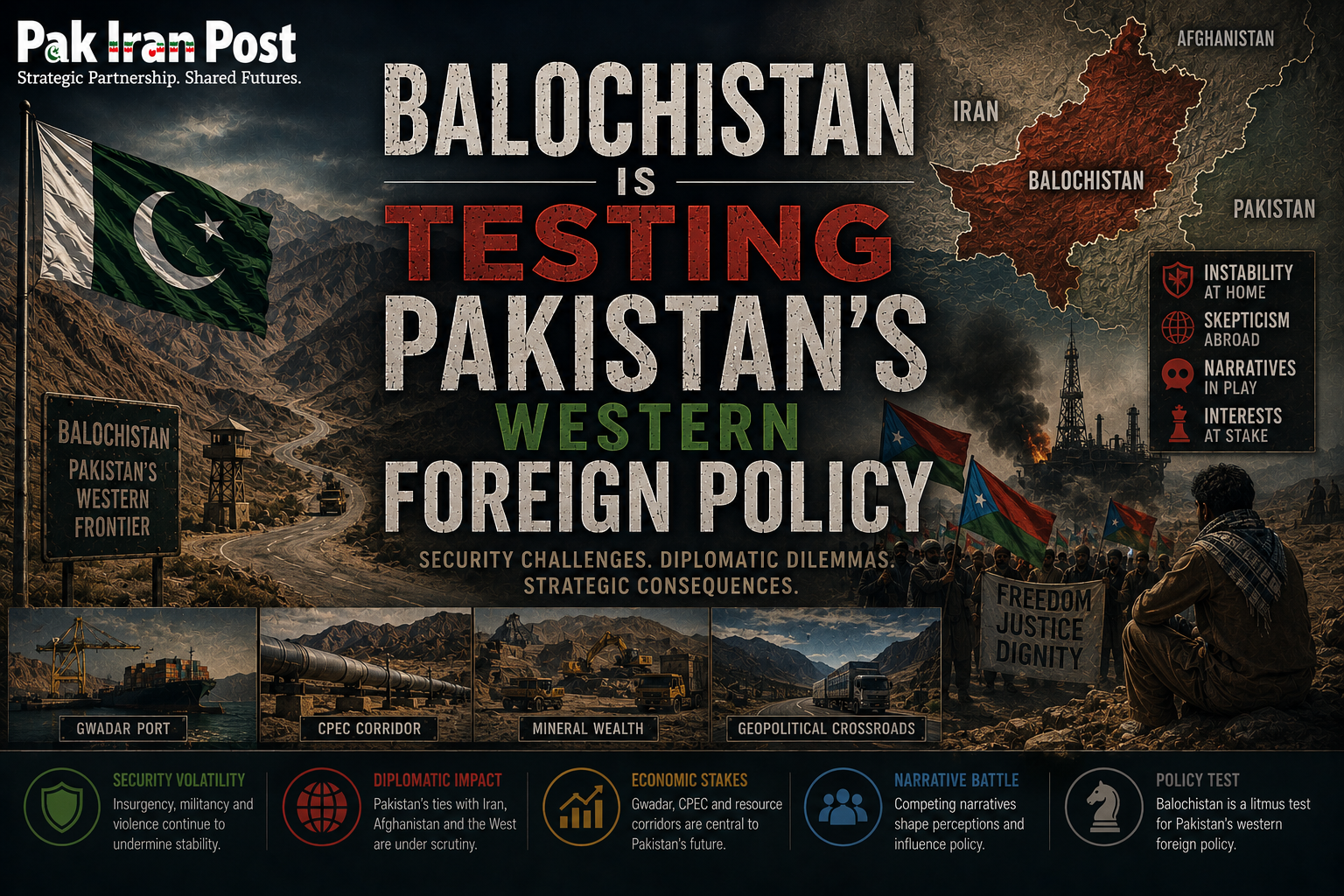
Balochistan is Testing Pakistan’s Western Foreign Policy
Pakistan’s Iran policy is usually discussed as if it were conceived in Islamabad, negotiated in capitals, and executed through formal instruments of state. The vocabulary is strategic. Trade corridors, sanctions exposure, border markets, energy routes, regional mediation, western connectivity. Yet the actual weight

Can Pakistan Govern a Sanctions Border Responsibly
Pakistan’s debate over Iran is often staged as a question of foreign policy courage. Should Islamabad deepen trade with a neighbouring state under sanctions pressure. Should it revive the gas pipeline. Should it convert mediation into commercial advantage. Should it use geography more

Pakistan Between Tehran, Riyadh, Beijing and Washington
Pakistan’s Iran policy has always rested on a difficult proposition: that geography compels engagement with Tehran, economics requires accommodation with the Gulf, security prudence demands a working relationship with Washington, and long-term strategic insurance lies with China. For years, Islamabad managed these contradictions
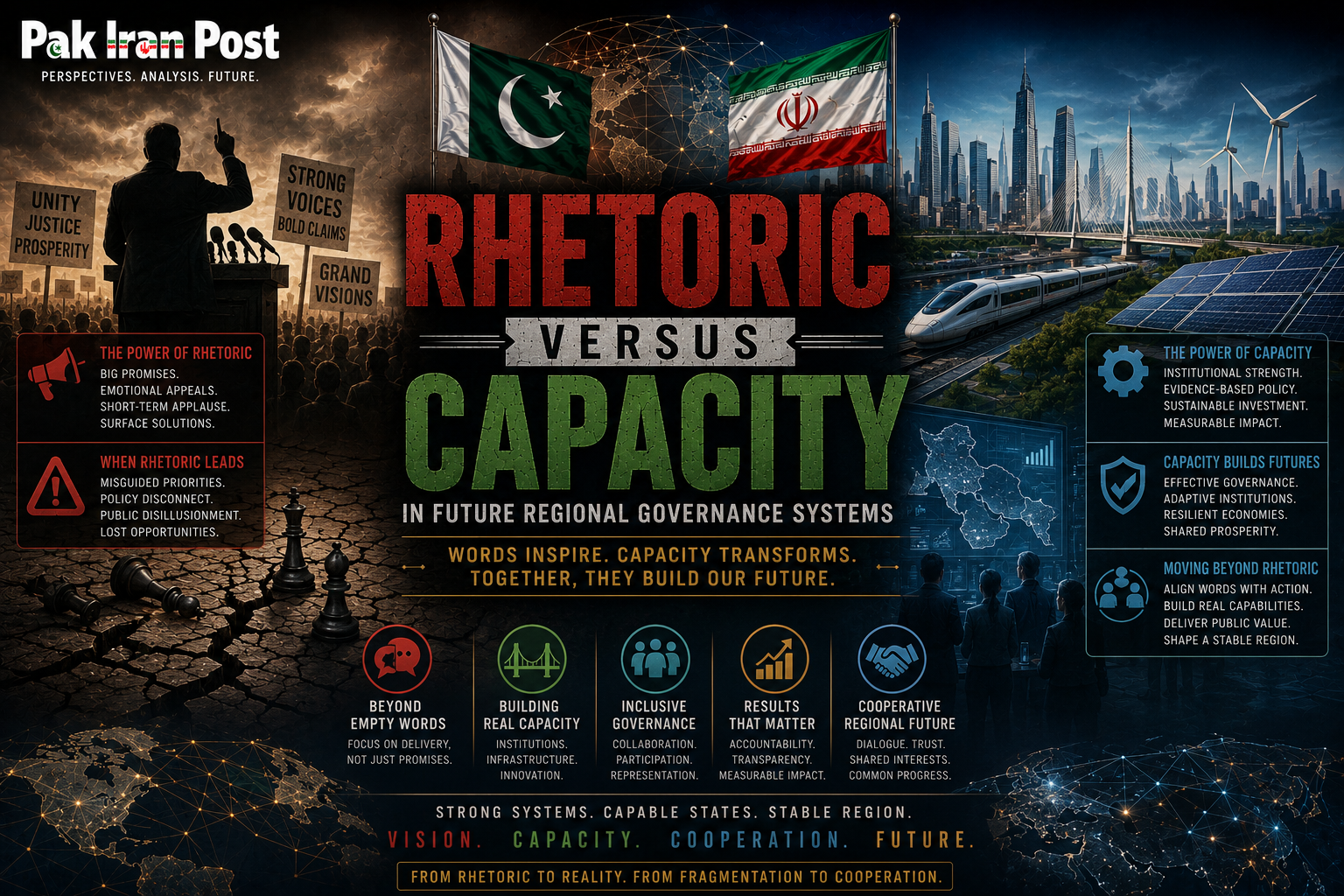
Rhetoric Versus Capacity I n Future Regional Governance Systems
In the evolving grammar of statecraft across South Asia and the broader Middle Eastern strategic arc, a quiet but decisive shift is underway in how governance success is evaluated, articulated, and ultimately legitimised. The historical dominance of political rhetoric, symbolic sovereignty assertions, and

Policy Continuity and Strategic State Capacity in Pakistan Iran Systems
In contemporary geopolitical and economic environments defined by prolonged volatility, institutional discontinuity has emerged as one of the most consequential yet under-analysed constraints on state performance. For states such as Pakistan and Iran, where governance systems are repeatedly subjected to external economic pressures,
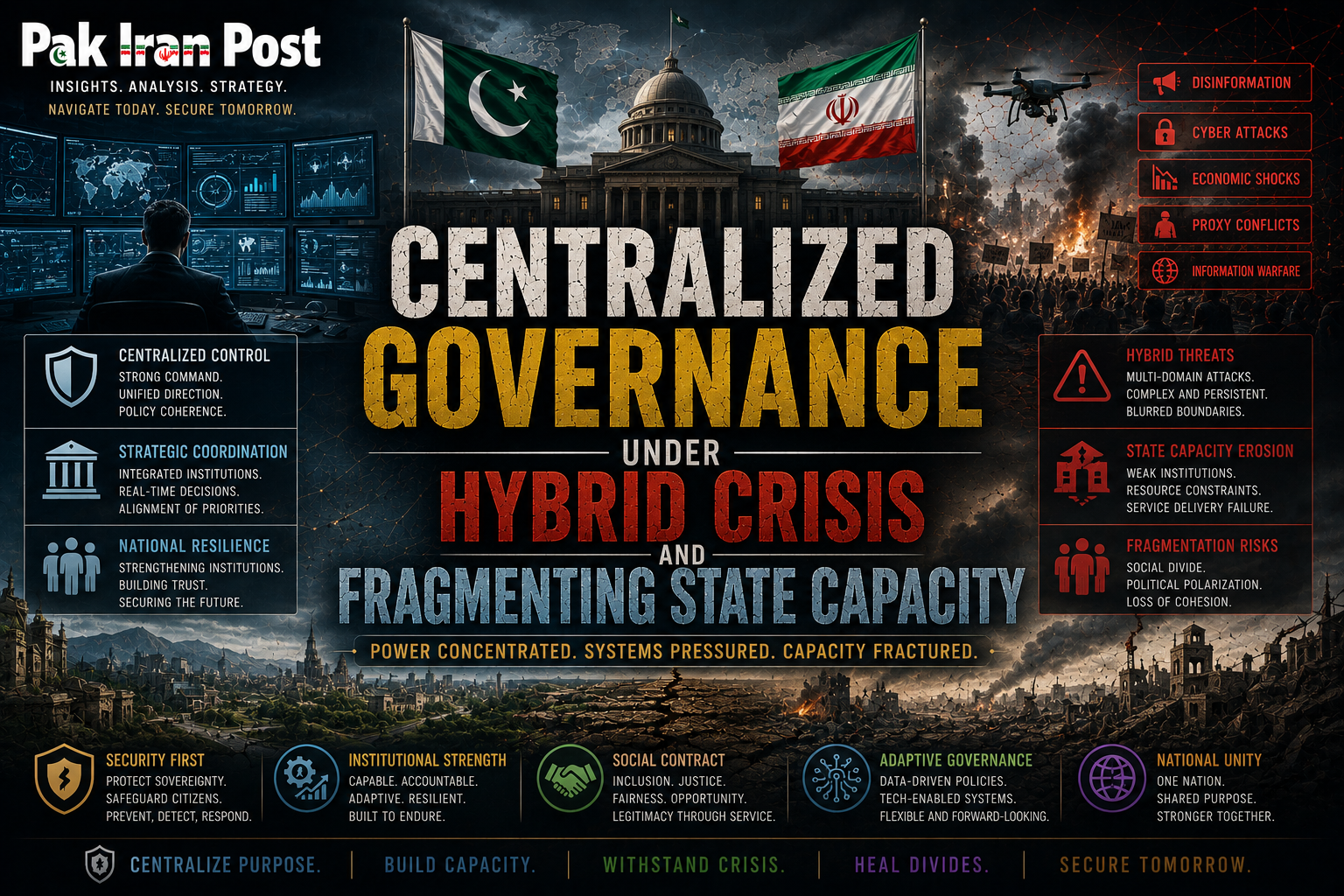
Centralized Governance Under Hybrid Crisis and Fragmenting State Capacity
In the evolving architecture of global governance, centralized policy structures are increasingly being subjected to a form of stress-testing that was not envisaged in classical administrative theory. The contemporary state no longer operates in a linear crisis environment where economic downturns, security

Institutional Legitimacy Under Economic Stress and Digital Accountability Era Transitions
In an international policy environment increasingly defined by macroeconomic compression, accelerated digital transparency, and the intensification of public expectation regimes, the question of institutional legitimacy has shifted from a constitutional abstraction into a continuously stress-tested operational variable. For states situated at the intersection