
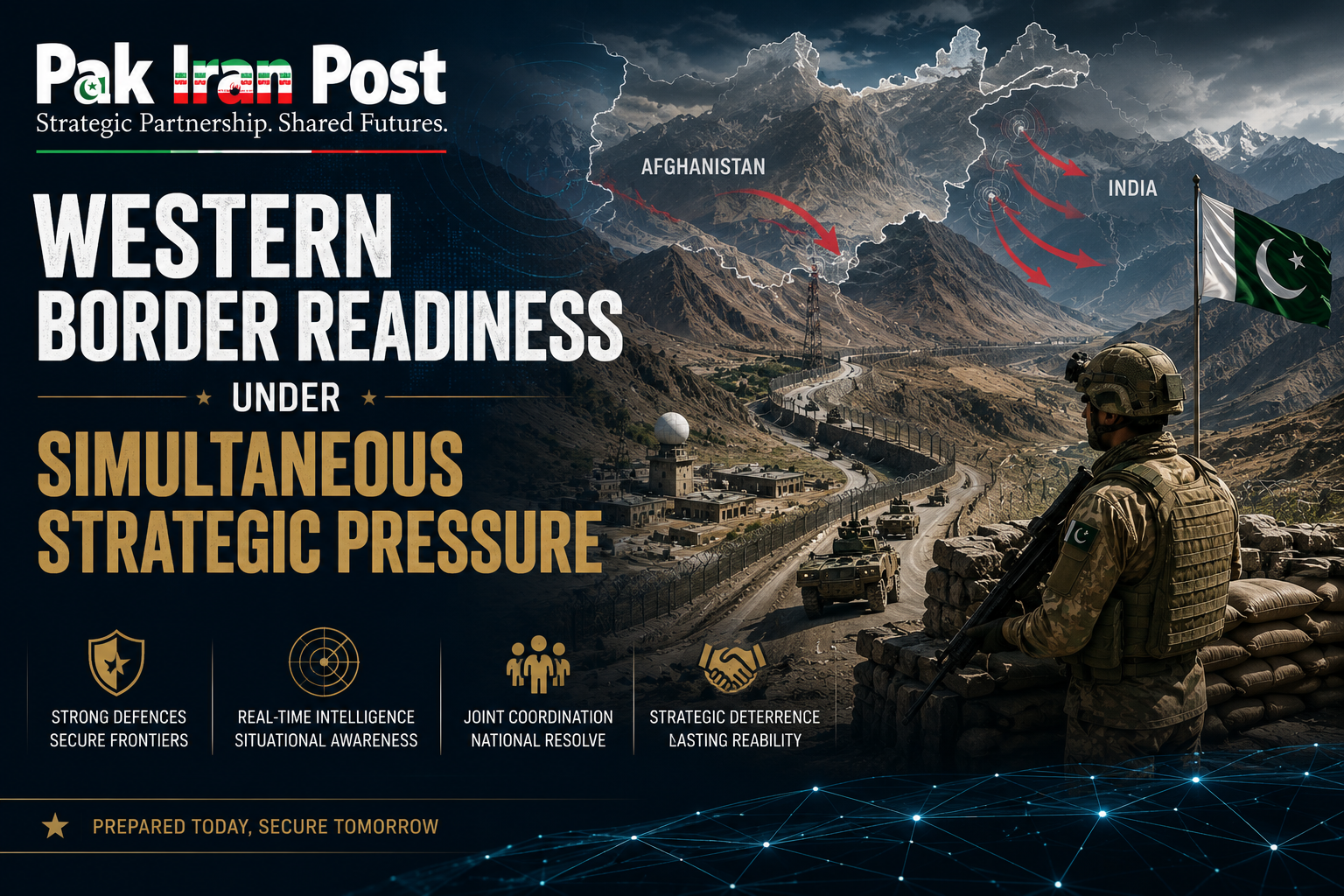
Western Border Readiness Under Simultaneous Strategic Pressure

Pak Iran Post must treat Pakistan’s western security environment as a single interconnected theatre rather than three geographically separated contingencies. The strategic problem is no longer whether Pakistan can reinforce one frontier after an incident occurs, but whether the state can absorb simultaneous
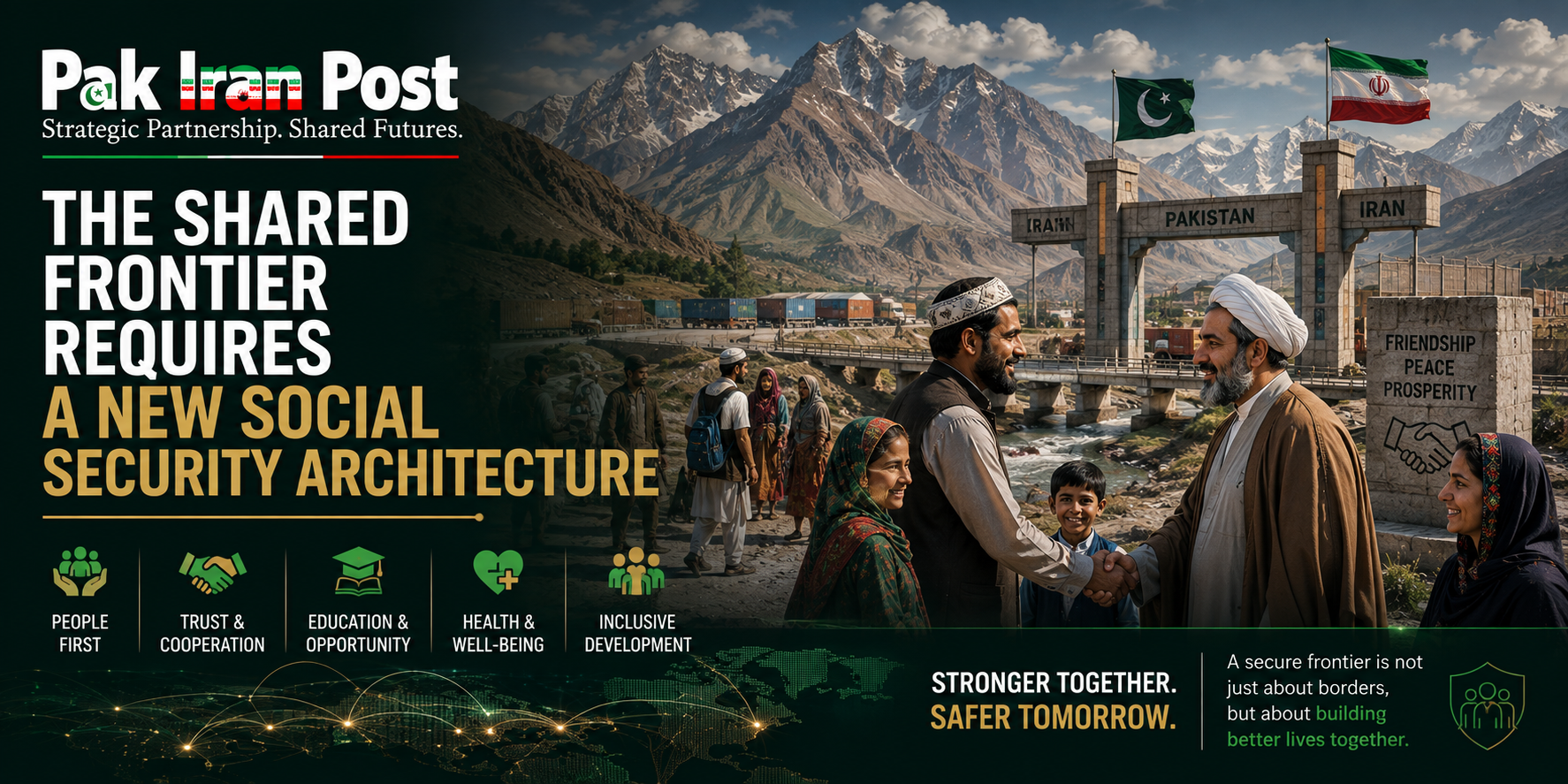
The Shared Frontier Requires A New Social Security Architecture
Pak Iran Post must treat the Sistan Balochistan and Pakistani Balochistan frontier as a social security environment rather than merely a territorial line requiring greater physical control. The strategic difficulty arises from a population whose linguistic affinities, kinship structures, commercial practices, historical memories

Pak Iran Border Security Needs An Architecture Beyond Deterrence
Pak Iran Post views the Pakistan Iran frontier as a security environment in which the distinction between border management, intelligence collection and crisis diplomacy is becoming progressively less tenable. The frontier is no longer adequately described through the vocabulary of checkpoints, fencing, patrols
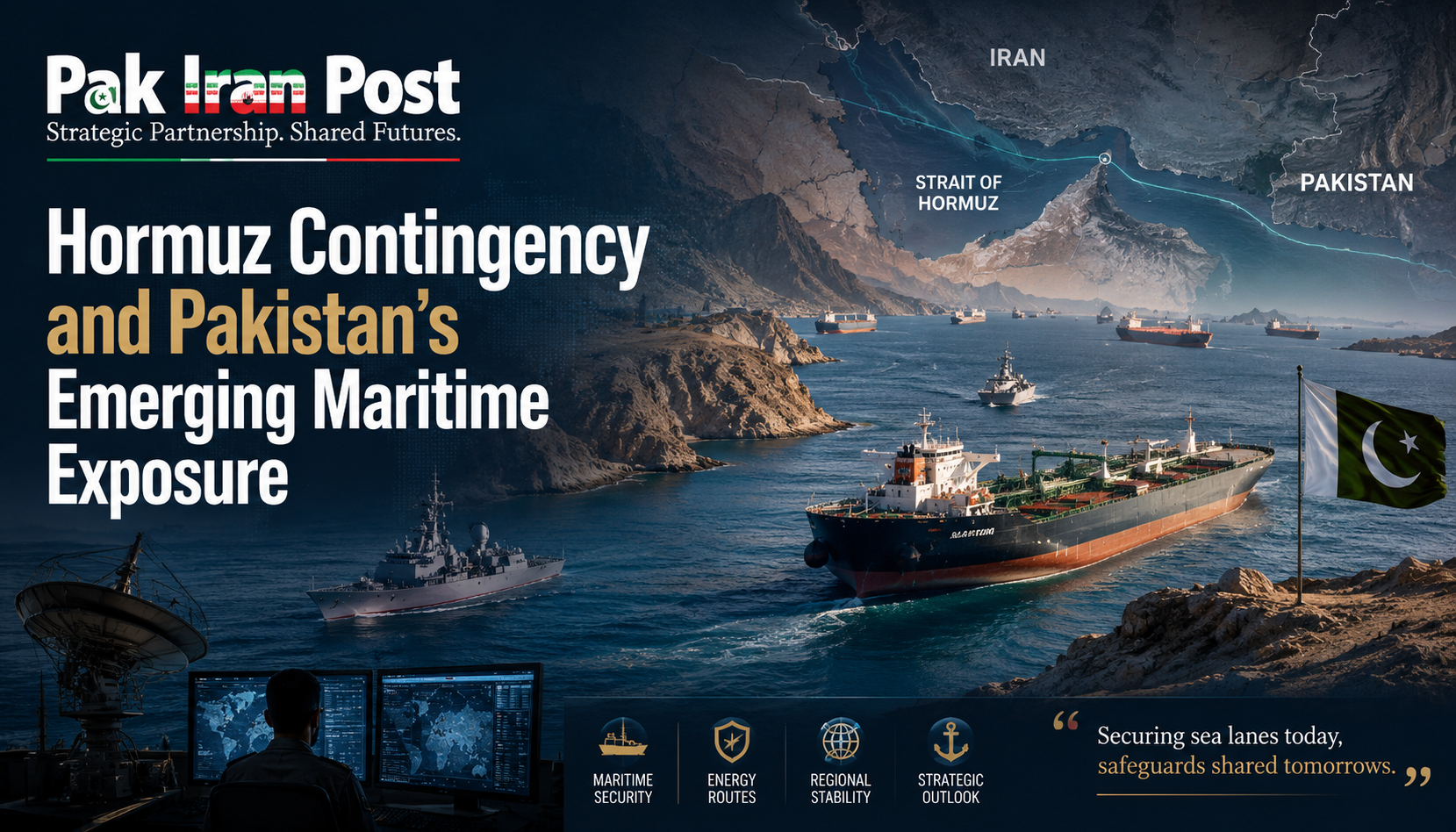
Hormuz Contingency and Pakistan’s Emerging Maritime Exposure
Pak Iran Post examines the Strait of Hormuz crisis not as a distant Gulf confrontation but as an expanding maritime contingency with direct implications for Pakistan’s energy security, commercial shipping, naval posture and diplomatic latitude. The assumption that Pakistan is insulated because its
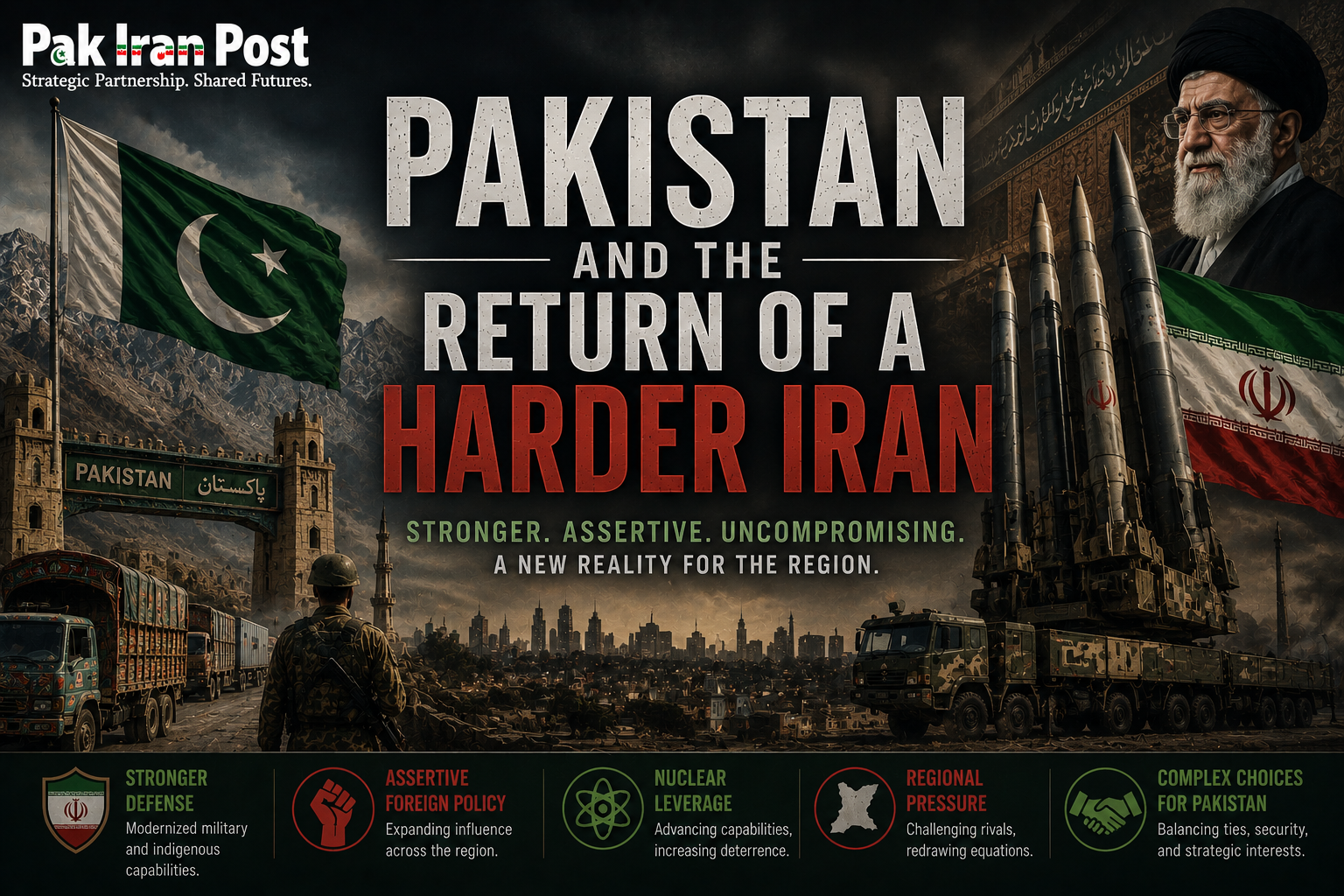
Pakistan and the Return of a Harder Iran
For much of the past two decades, Pakistan’s Iran policy has rested on a comforting ambiguity. Tehran was difficult, often confrontational, and frequently disruptive in the wider region, yet it was still assumed to be governed by a layered internal order in which

Iran’s Shadow Inside Pakistan’s Fractured Religious Order
Pakistan’s relationship with Iran has never been merely a matter of embassies, border posts and official communiqués. It has always carried a domestic afterlife. The relationship passes through seminaries and processions, sectarian memory and regional loyalties, clerical networks and security anxieties, Balochistan and

Border After Fire. Pakistan, Iran and the New Frontier
For years, Pakistan’s frontier with Iran sat in the hierarchy of national security as a troublesome but secondary theatre: important enough to require periodic military attention, diplomatic management and border coordination, but rarely central enough to reorder the state’s strategic imagination. That hierarchy

Pakistan Iran Borderlands Emerge As Central Geopolitical Contest Zone Today
The long neglected frontier stretching across Pakistan and Iran is undergoing a structural transformation that is quietly altering the strategic geometry of South West Asia. What was once treated as a peripheral security margin, defined largely by low intensity movement, informal trade networks,
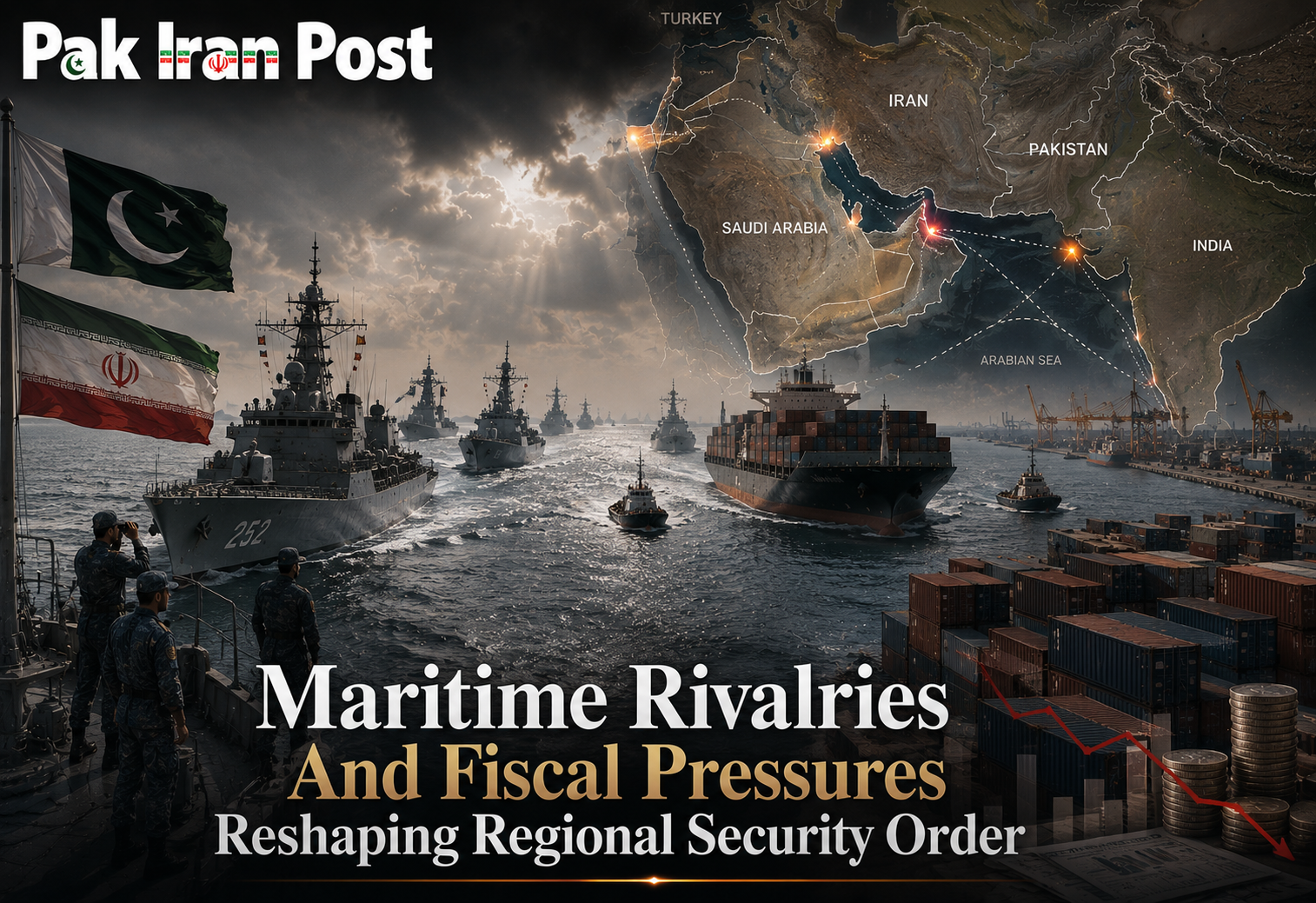
Maritime Rivalries And Fiscal Pressures Reshaping Regional Security Order
The evolving strategic environment across the Arabian Sea and wider Eurasian corridor is increasingly defined by a convergence of maritime rivalry, fiscal constraint, and institutional recalibration under external financial oversight mechanisms. Pakistan and Iran, positioned at the geographic hinge of these transformations, are

Faultlines Beneath Emerging Eurasian Connectivity And Regional Security Doctrines Today
The future of Pakistan Iran relations is increasingly being shaped by a silent strategic contest between two contradictory regional forces. One is the logic of connectivity, driven by trade corridors, energy integration, logistical interdependence, and Eurasian commercial restructuring. The other is the logic