
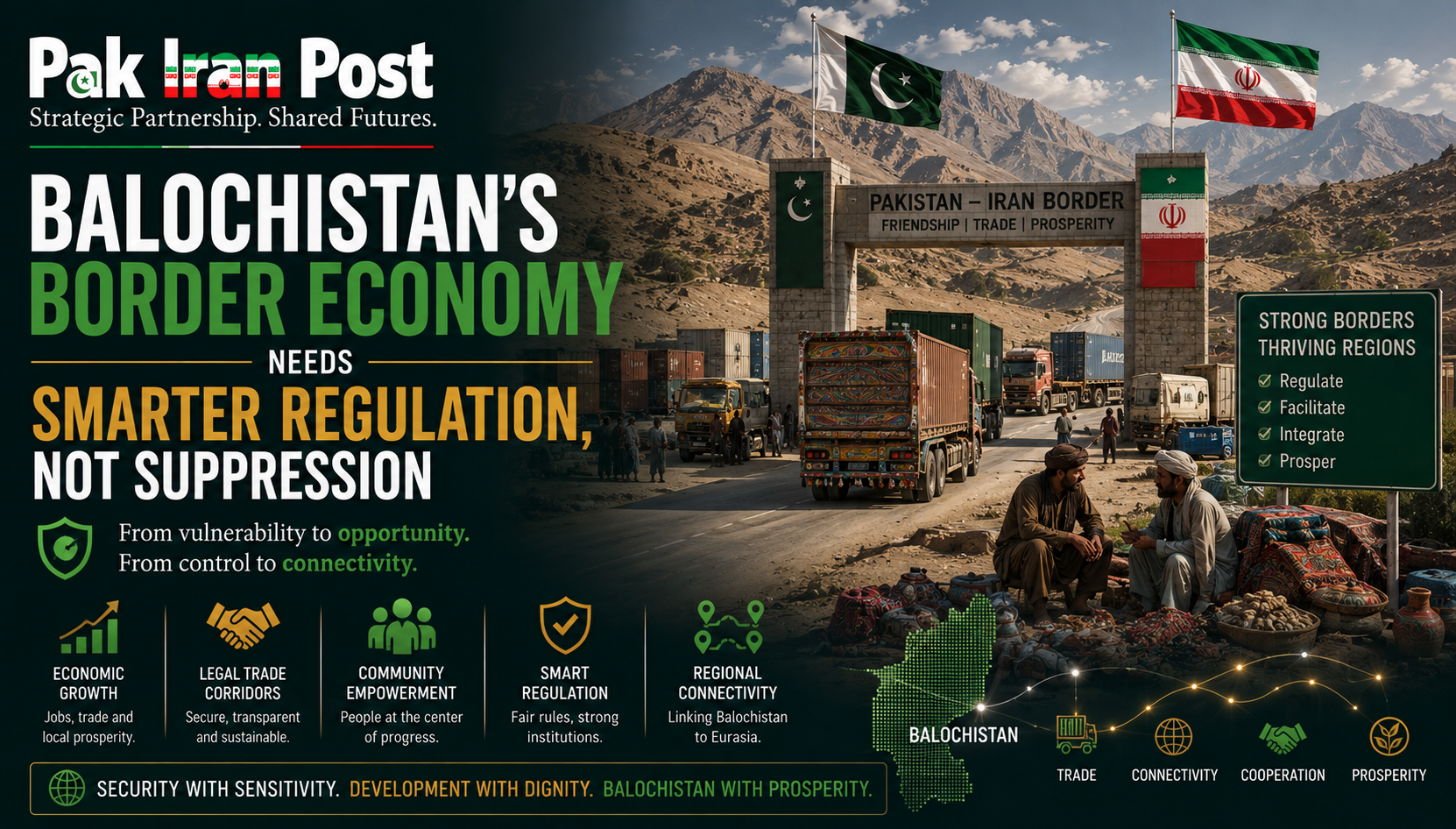
Balochistan’s Border Economy Needs Smarter Regulation, Not Suppression

Pak Iran Post confronts a border economy that cannot be understood through the vocabulary of smuggling alone. Across the Pakistan Iran frontier, the movement of fuel, food, household commodities, spare parts and other consumer goods has become embedded in the commercial survival architecture
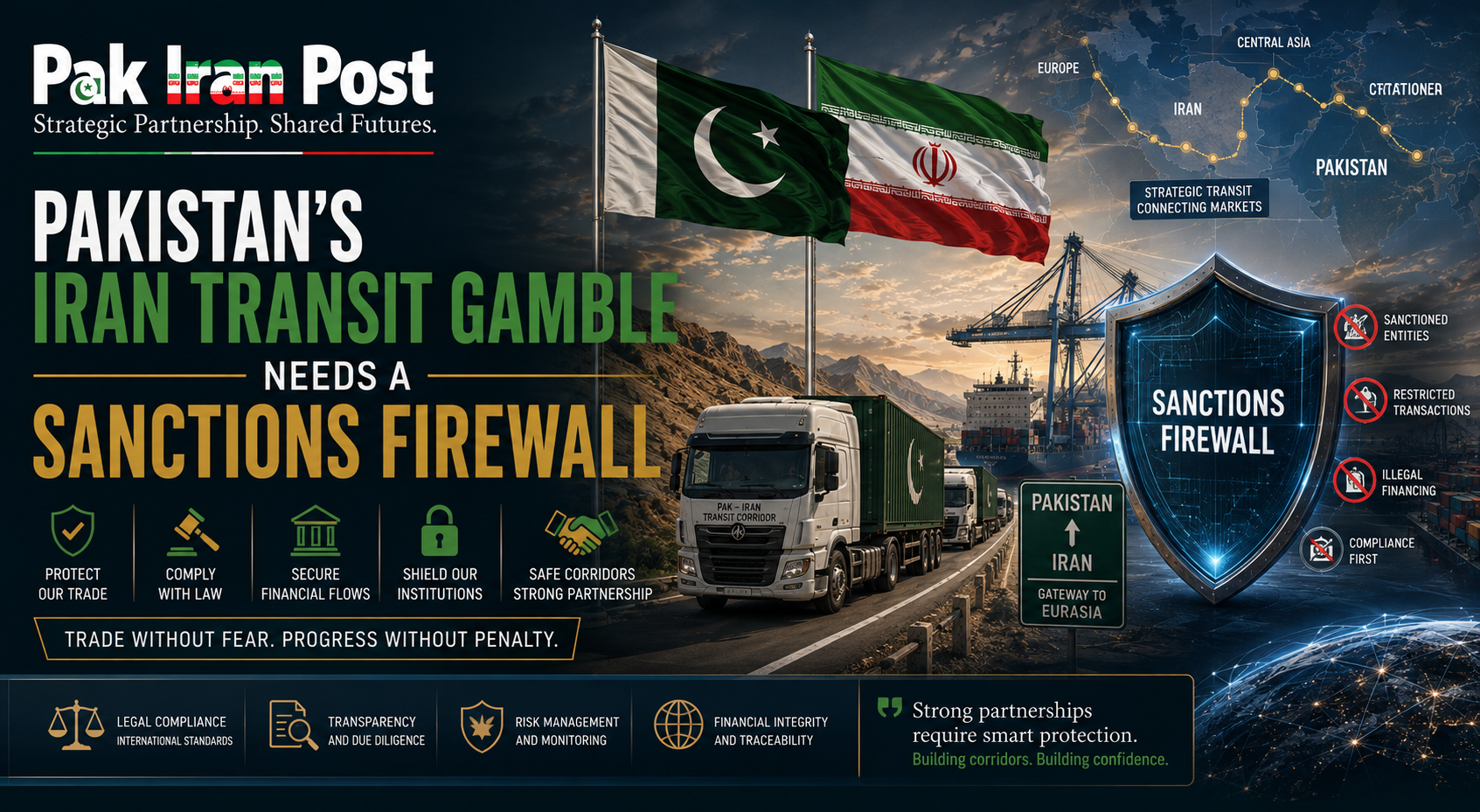
Pakistan’s Iran Transit Gamble Needs A Sanctions Firewall
Pak Iran Post examines a commercial opening that could materially alter Pakistan’s western economic geography, but only if Islamabad can distinguish transit facilitation from sanctions exposure. Pakistan’s Ministry of Commerce brought the Transit of Goods through Territory of Pakistan Order 2026 into force
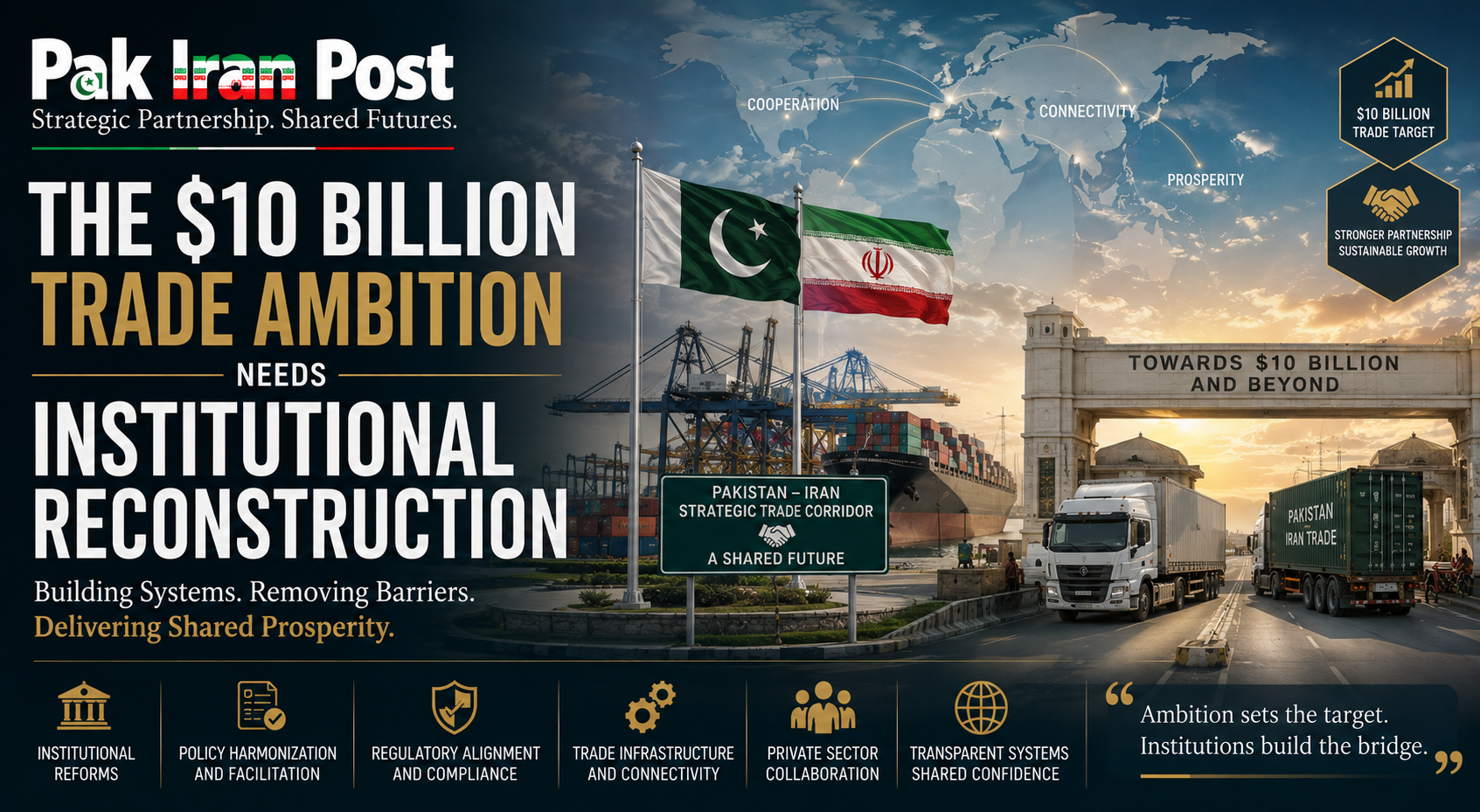
The $10 Billion Trade Ambition Needs Institutional Reconstruction
Pak Iran Post must treat the repeatedly invoked $10 billion bilateral trade ambition not as a rhetorical benchmark but as an institutional stress test of Pakistan’s capacity to convert geopolitical proximity into commercially bankable activity. The distance between political declarations and merchandise flows

Turning Iranian Energy Into Reliable Pakistani Border Infrastructure
Pak Iran Post confronts an energy paradox that is increasingly becoming a question of national economic resilience rather than merely bilateral commerce. Pakistan’s western districts remain physically closer to Iranian electricity and petroleum markets than to several domestic supply nodes, yet the institutional
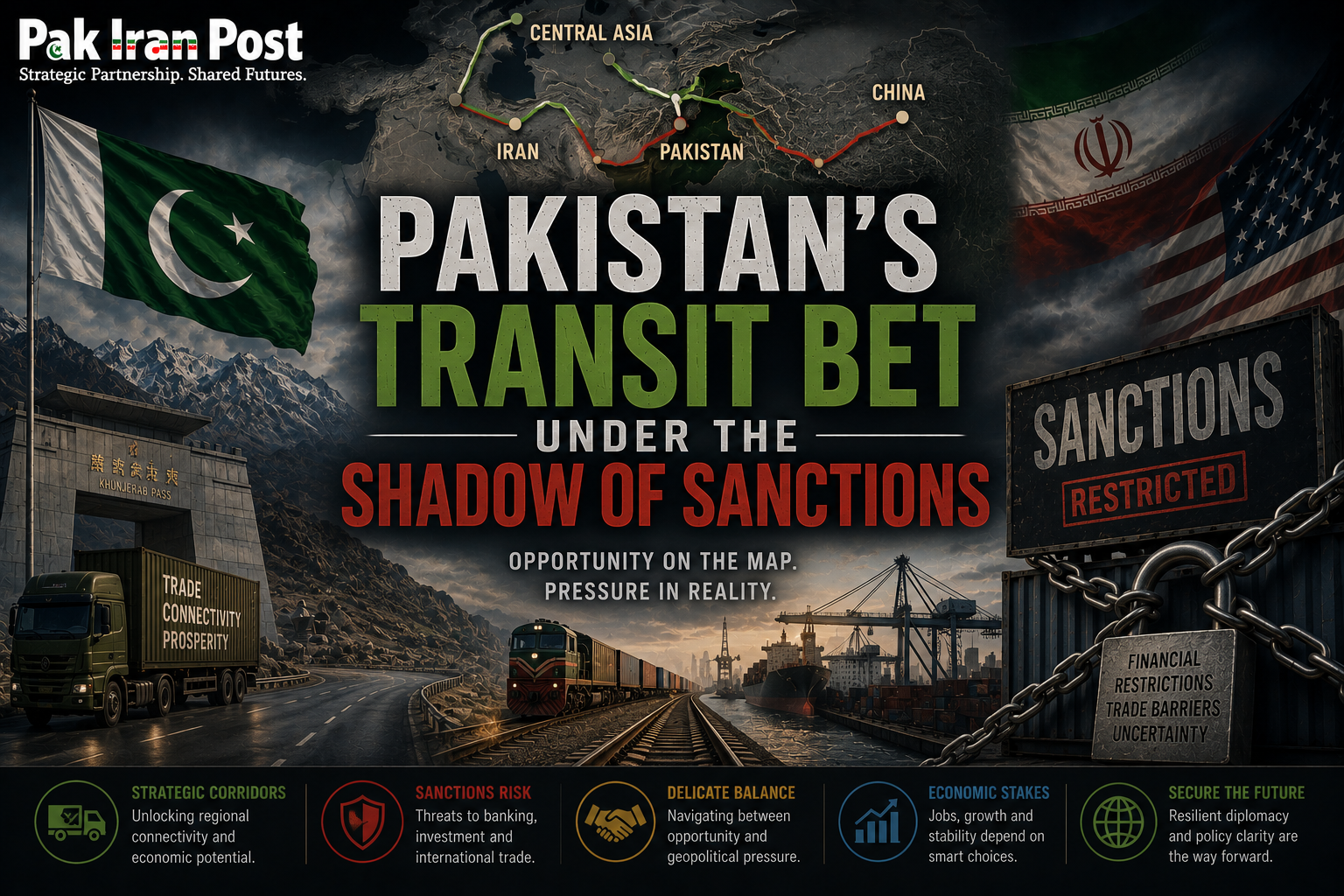
Pakistan’s Transit Bet Under the Shadow of Sanctions
There are moments in regional commerce when geography stops being a static fact and becomes a strategic instrument. Pakistan may be entering one of those moments. What looks, at first glance, like a technical adjustment in transit policy, the notification of six overland

Pakistan’s Iran Dilemma Between Cheap Energy And Sanctions
Pakistan’s economic relationship with Iran has long been suspended between obvious geography and persistent fear. Geography says the logic of engagement is straightforward. Iran is next door, energy-rich, undertraded, and connected to Pakistan by a border that should, in theory, make electricity, fuel,

Sanctions Ecology Reshapes Pakistan Iran Survival Trade
The evolving Pakistan–Iran geo-economic interface is increasingly being redefined by a deeper structural transformation in global economic governance, namely the normalization of sanctions as a semi-permanent feature of international financial architecture rather than a temporary coercive instrument. In 2026, this normalization is producing

Maritime Shock Economy Redefines Pakistan Iran Corridor
The Pakistan–Iran geo-economic interface is increasingly being reshaped by a less visible but structurally decisive variable: the growing instability of maritime energy corridors and the resulting transformation of regional trade into what can be described as a shock-responsive economic system. In 2026, this

IMF Energy Tax Pressure Rewrites Pakistan Iran Trade
The evolving economic relationship between Pakistan and Iran is increasingly being shaped not only by bilateral diplomacy or regional connectivity ambitions but by a deeper and more structural force: the intersection of International Monetary Fund supported fiscal consolidation frameworks in Pakistan and the

Energy Corridor Fragility Shapes Pakistan Iran Future
The Pakistan–Iran geo-economic interface in 2026 is increasingly being reshaped by an accumulation of structural pressures that are neither fully diplomatic nor purely commercial in nature. It is instead the product of overlapping constraints, including tightening external financial governance under IMF-supervised fiscal adjustment