Energy Security and Strategic Influence: Pakistan’s Opportunity in the Gulf Crisis

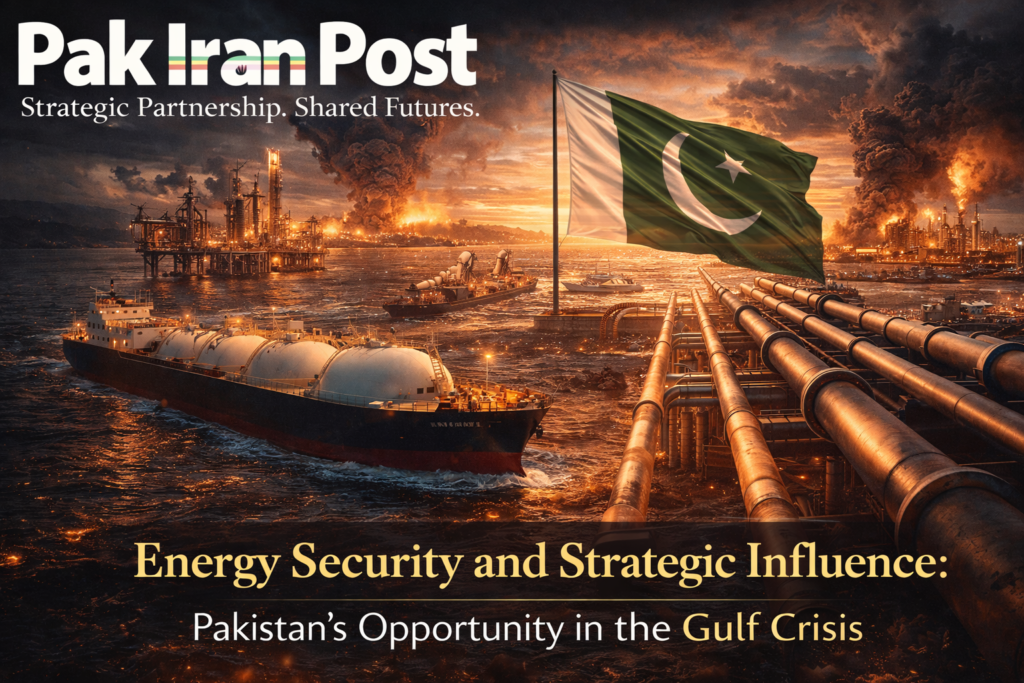
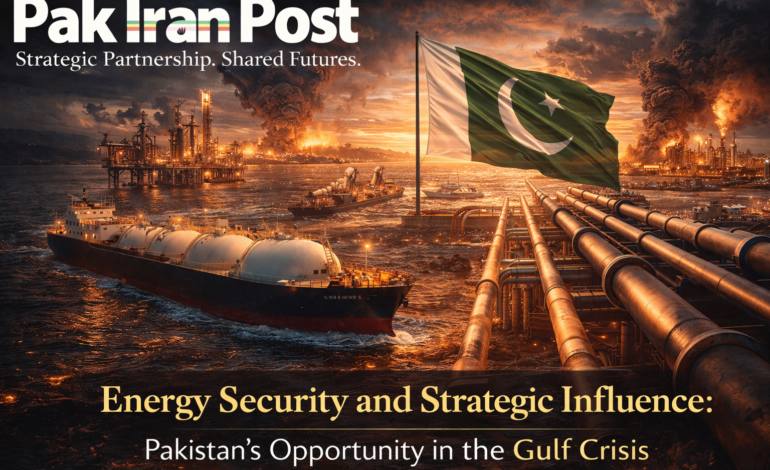
The Gulf region has long been the epicenter of global energy supply and a strategic theater of international diplomacy. The ongoing crisis involving major powers has revealed not only the vulnerabilities of energy transit routes but also the extent to which energy security is intertwined with national and regional stability. The Strait of Hormuz, responsible for a significant portion of the world’s petroleum exports, is no longer merely a navigational passage. It has become a focal point of geopolitical competition, strategic bargaining, and economic leverage. In this context, Pakistan faces a historic opportunity to convert energy vulnerability into strategic influence. The challenge is to design and implement a comprehensive framework that integrates diplomacy, infrastructure development, maritime security, and economic policy to ensure national advantage while maintaining equilibrium with regional and global stakeholders.
The disruption of energy supply chains has immediate implications for Pakistan. The country remains heavily reliant on oil and gas imports for industrial consumption, electricity generation, and transportation. Fluctuations in global prices, compounded by the potential for restricted passage through strategic chokepoints, threaten to destabilize domestic markets, inflate fiscal deficits, and strain foreign exchange reserves. These risks are magnified by Pakistan’s limited energy diversification, dependence on external financial support, and vulnerability to global commodity shocks. Strategic engagement in the Gulf, therefore, is not merely a matter of diplomacy; it is a core component of economic resilience and national security.
Pakistan’s geostrategic position offers unique leverage. Bordering Iran, with maritime access through Gwadar Port and diplomatic relations with Gulf states, Islamabad is well placed to act as a conduit for energy transit, a mediator for dispute resolution, and a participant in emerging economic arrangements. The first priority must be to institutionalize Pakistan’s role in energy corridor management, ensuring that it is recognized as a legitimate and capable partner in facilitating the secure flow of energy. This includes negotiating guarantees for uninterrupted access, securing participation in transit fee structures, and integrating its port infrastructure into regional supply chains.
Gwadar Port emerges as a central asset in this strategy. Its deep-water capacity, proximity to international shipping lanes, and integration with overland transport networks position Pakistan to serve as a logistics and redistribution hub. By linking Gwadar to energy and industrial centers, Pakistan can attract transshipment operations, energy storage facilities, and commercial shipping services, generating revenue while enhancing its strategic relevance. Infrastructure investment in port capacity, digital logistics, and secure cargo handling is essential to transform Gwadar from a national asset into a regional energy gateway.
Security integration is critical to maintaining Pakistan’s credibility. The Gulf remains a theater of volatility, with risks of conflict escalation, piracy, and disruption to commercial shipping. Pakistan’s navy, coast guard, and intelligence apparatus can contribute to corridor monitoring, escort operations, and emergency response frameworks. Coordinated maritime security not only protects national interests but also strengthens Pakistan’s position as a responsible and capable actor in regional energy stability. Joint exercises with regional partners, intelligence sharing, and rapid response protocols create operational trust and demonstrate Pakistan’s commitment to maintaining the integrity of energy corridors.
Diplomacy is central to this strategy. Pakistan must cultivate relationships with Iran, Gulf states, China, and other stakeholders to facilitate negotiation on corridor access, energy pricing, and security arrangements. Transparency and multilateral engagement are key to avoiding the perception of alignment with one bloc against another. Pakistan’s role should be framed as stabilizing and facilitative, emphasizing collective security, economic benefit, and adherence to international law. Active diplomacy also enables Pakistan to influence regional decision-making, secure energy agreements, and reduce exposure to unilateral sanctions or economic pressure.
Energy diversification complements strategic engagement. While participation in Gulf transit corridors is vital, Pakistan must also pursue alternative supply arrangements, including regional pipelines, liquefied natural gas imports from multiple sources, and renewable energy integration. Revitalizing the Iran-Pakistan gas pipeline, negotiating flexible payment mechanisms, and exploring cooperative infrastructure projects can reduce vulnerability to single-channel risk. Combined with Gwadar’s logistical capabilities, these initiatives position Pakistan to manage supply disruptions while leveraging energy access as a tool for influence and negotiation.
Economic benefits extend beyond energy security. Participation in corridor management and maritime facilitation creates revenue streams through transit fees, insurance coordination, and port services. Integration of Gwadar into regional trade and energy networks generates employment, attracts investment, and strengthens industrial capacity. By aligning energy security with economic development, Pakistan can achieve a multiplier effect, where strategic positioning directly reinforces fiscal stability, reduces current account deficits, and enhances foreign exchange reserves.
Institutional capacity is critical to sustaining influence. Pakistan should establish a dedicated Energy Security and Maritime Coordination Center to manage diplomacy, logistics, and operational oversight. Staffed with experts in energy economics, international law, and naval operations, the center ensures continuity, strategic foresight, and coordinated action. Institutional mechanisms allow Pakistan to move from ad hoc engagement to structured, long-term influence, capable of responding to crises while maintaining strategic advantage.
Technology plays a pivotal role in operational effectiveness. Advanced vessel tracking, secure communication networks, and predictive analytics enhance corridor management, improve risk assessment, and enable rapid response to emergent threats. Cybersecurity investments protect critical infrastructure and ensure integrity in logistics and energy operations. Leveraging technology as a strategic enabler positions Pakistan as a credible, modern, and capable actor in a high-stakes regional environment.
Risk mitigation must remain central to Pakistan’s approach. The Gulf’s volatility, potential for escalation, and competing geopolitical interests require comprehensive contingency planning. Pakistan should develop alternative trade and energy routes, maintain diversified energy sourcing, and establish diplomatic backchannels to manage crises. Scenario planning and stress-testing of supply chains, combined with multilateral coordination, reduce the likelihood of disruption and protect national interests.
Policy recommendations are both immediate and long-term. Pakistan should negotiate formal agreements with Iran, Gulf states, and neutral partners to secure corridor participation and energy transit guarantees. Gwadar Port must be upgraded to handle increased energy logistics, transshipment, and commercial operations. Security measures should include joint maritime monitoring, naval coordination, and intelligence sharing. Investment in institutional capacity, technological infrastructure, and human capital ensures sustained operational effectiveness. Energy diversification strategies, including pipeline revitalization, LNG imports, and renewable integration, enhance resilience and reduce dependence on a single channel.
Strategic and diplomatic dividends are substantial. By embedding itself in energy security frameworks, Pakistan gains influence over critical global flows, strengthens economic resilience, and secures long-term diplomatic credibility. Participation in corridor management and energy stabilization elevates Pakistan’s regional standing, ensuring recognition as a stabilizing actor capable of balancing competing interests. These advantages extend to negotiation leverage with global powers, preferential access to energy and trade opportunities, and enhanced influence in multilateral forums.
Pakistan’s engagement also carries broader geostrategic implications. By acting as a mediator, facilitator, and operational partner, Islamabad projects influence beyond its immediate neighborhood. Its role demonstrates the capacity of regional actors to shape outcomes in high-stakes crises and establishes Pakistan as a model for proactive engagement in energy diplomacy. The success of this strategy strengthens Pakistan’s autonomy, reinforces its international credibility, and positions it to participate actively in shaping regional norms, infrastructure development, and security frameworks.
The execution of this strategy requires a phased approach. Phase one focuses on securing formal recognition as a corridor partner, establishing operational protocols, and initiating infrastructure upgrades at Gwadar Port. Phase two emphasizes security integration, maritime coordination, and technological deployment. Phase three embeds institutional mechanisms, capacity building, and long-term strategic planning. This structured approach ensures that Pakistan’s engagement is systematic, credible, and capable of delivering measurable strategic and economic outcomes.
International collaboration enhances legitimacy and effectiveness. Engagement with China, the United States, and multilateral institutions provides investment, technical expertise, and diplomatic support. Partnerships reinforce credibility, facilitate operational efficiency, and reduce the risk of unilateral pressure. Multilateral engagement also positions Pakistan as a responsible actor in global energy security, capable of coordinating with multiple stakeholders to maintain stability and continuity in critical supply chains.
In conclusion, the Gulf crisis represents a historic opportunity for Pakistan to convert vulnerability into strategic influence. By integrating diplomacy, security, infrastructure, and economic policy, Pakistan can assert itself as a central actor in regional energy security. Participation in corridor management, coupled with energy diversification and institutional capacity building, ensures stability in supply chains, strengthens economic resilience, and elevates Pakistan’s diplomatic stature.
Pakistan’s success will be measured by its ability to institutionalize influence, generate economic value, and project credibility as a stabilizing partner. Through proactive engagement, technological integration, and strategic foresight, Islamabad can shape energy flows, influence regional outcomes, and secure tangible national advantages. By converting crisis into opportunity, Pakistan transitions from a passive consumer of energy security risks to an active architect of regional stability, economic growth, and geopolitical relevance.
The Gulf energy crisis is more than a regional challenge; it is a strategic inflection point for Pakistan. The country’s ability to navigate competing pressures, operationalize its infrastructure, and leverage its diplomatic relationships will define its long-term position in regional geopolitics. Effective execution transforms Pakistan into a recognized energy security partner, a credible mediator, and a central actor shaping the post-conflict order. By embracing this opportunity, Pakistan ensures that it emerges from crisis not only resilient but strategically empowered, economically stronger, and internationally respected.
A Public Service Message