
Between Riyadh and Tehran Strategic Equilibrium and Pakistani Statecraft

simultaneity in which survival is contingent upon sustaining equilibrium between two historically antagonistic yet structurally indispensable regional powers, namely the Kingdom of Saudi Arabia and the Islamic Republic of Iran. This equilibrium is not a product of diplomatic elegance but of geopolitical compulsion,

Diaspora Clergy Influencers Shape Pakistan Iran Narrative Order
In the contemporary architecture of international relations, the monopoly of states over narrative production has steadily eroded, replaced by a more dispersed and volatile ecosystem of meaning makers who operate across borders, platforms, and ideological registers. Nowhere is this transformation more visible than
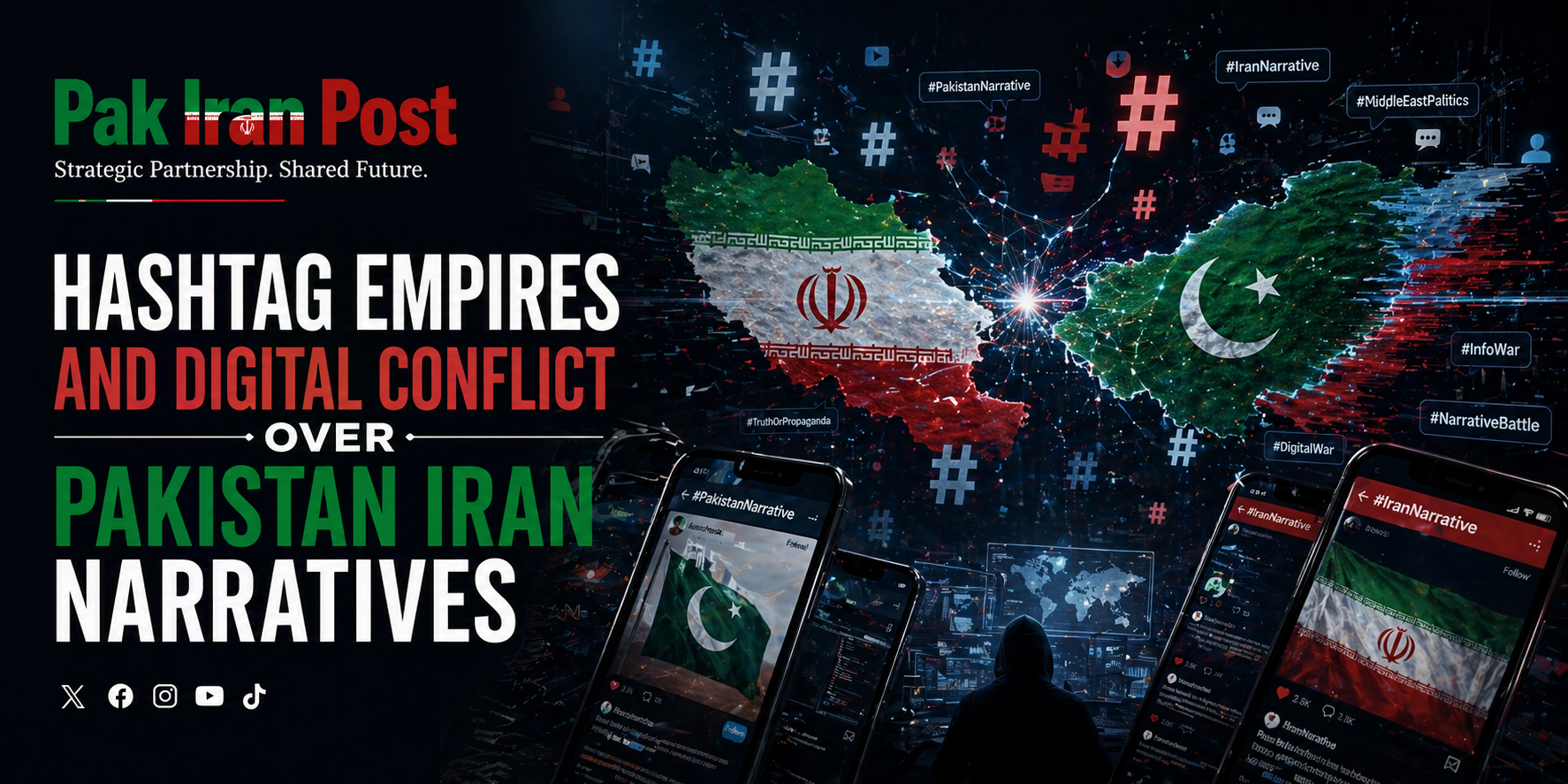
Hashtag Empires And Digital Conflict Over Pakistan Iran Narratives
In the contemporary geopolitical imagination of South Asia and the wider Middle East, conflict is no longer primarily authored in diplomatic communiqués, battlefield reports, or formal state broadcasts. It is increasingly assembled in real time through the fragmented but powerful architecture of social
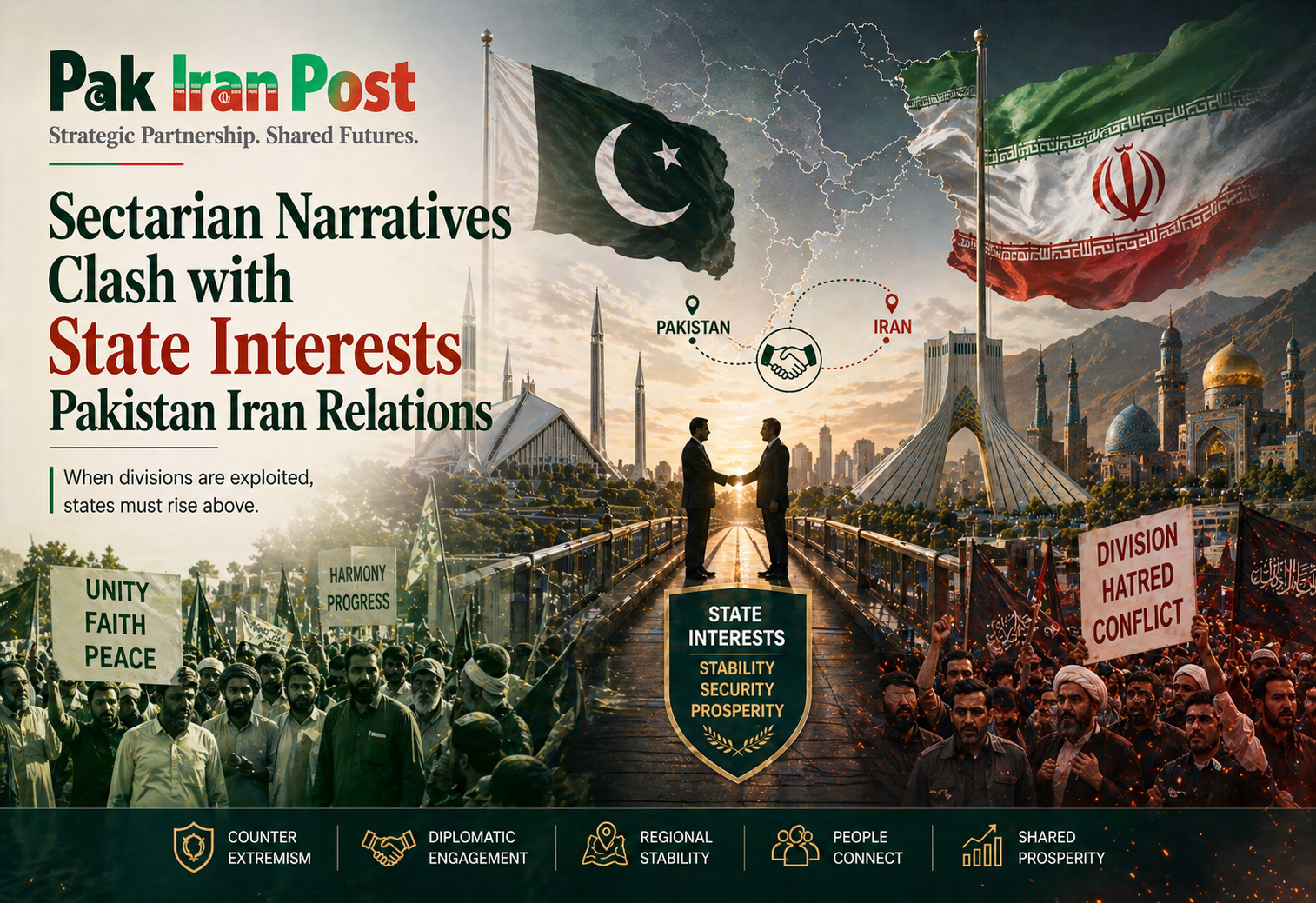
Sectarian Narratives Clash with State Interests Pakistan Iran Relations
In the contemporary evolution of Pakistan Iran relations, one of the most persistent yet least formally acknowledged tensions lies in the widening gap between state level strategic reasoning and the fragmented, often emotionally charged narratives circulating through media ecosystems, religious networks, and digital

DISINFORMATION AND SECTARIAN MOBILIZATION IN PAKISTAN
The digital information order in Pakistan has evolved into a highly contested communicative environment where geopolitical tensions, particularly those connected to Iran–Saudi rivalry, are refracted through sectarian sensibilities, algorithmic amplification, and fragmented media authority. What appears on the surface as episodic online polarization

MEDIA NARRATIVES OF THE IRAN CRISIS IN PAKISTAN: BETWEEN RELIGIOUS SOLIDARITY, STRATEGIC REALISM AND ECONOMIC ANXIETY
Pakistan’s media response to the Iran crisis has evolved into a layered and often contradictory interpretive system in which ideological inheritance, geopolitical necessity, and economic fragility intersect in unstable equilibrium. The way television networks, newspapers, and digital platforms frame Iran is no longer
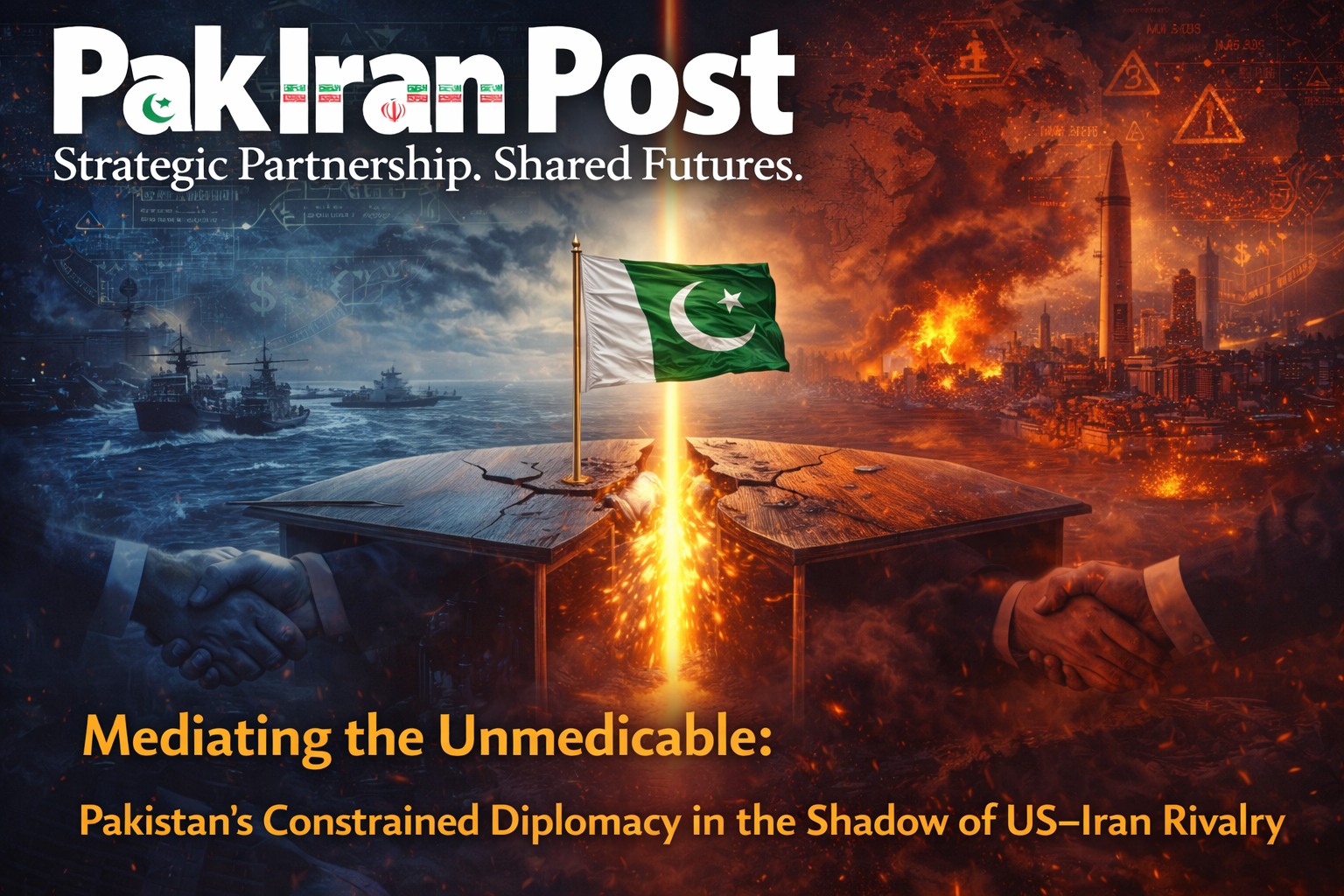
Mediating the Unmedicable: Pakistan’s Constrained Diplomacy in the Shadow of US–Iran Rivalry
In the enduring theatre of antagonism between the United States and Iran, the role of intermediary states has often oscillated between symbolic facilitation and substantive influence, yet rarely has such mediation occurred without imposing structural constraints upon the mediator itself. For Pakistan, the
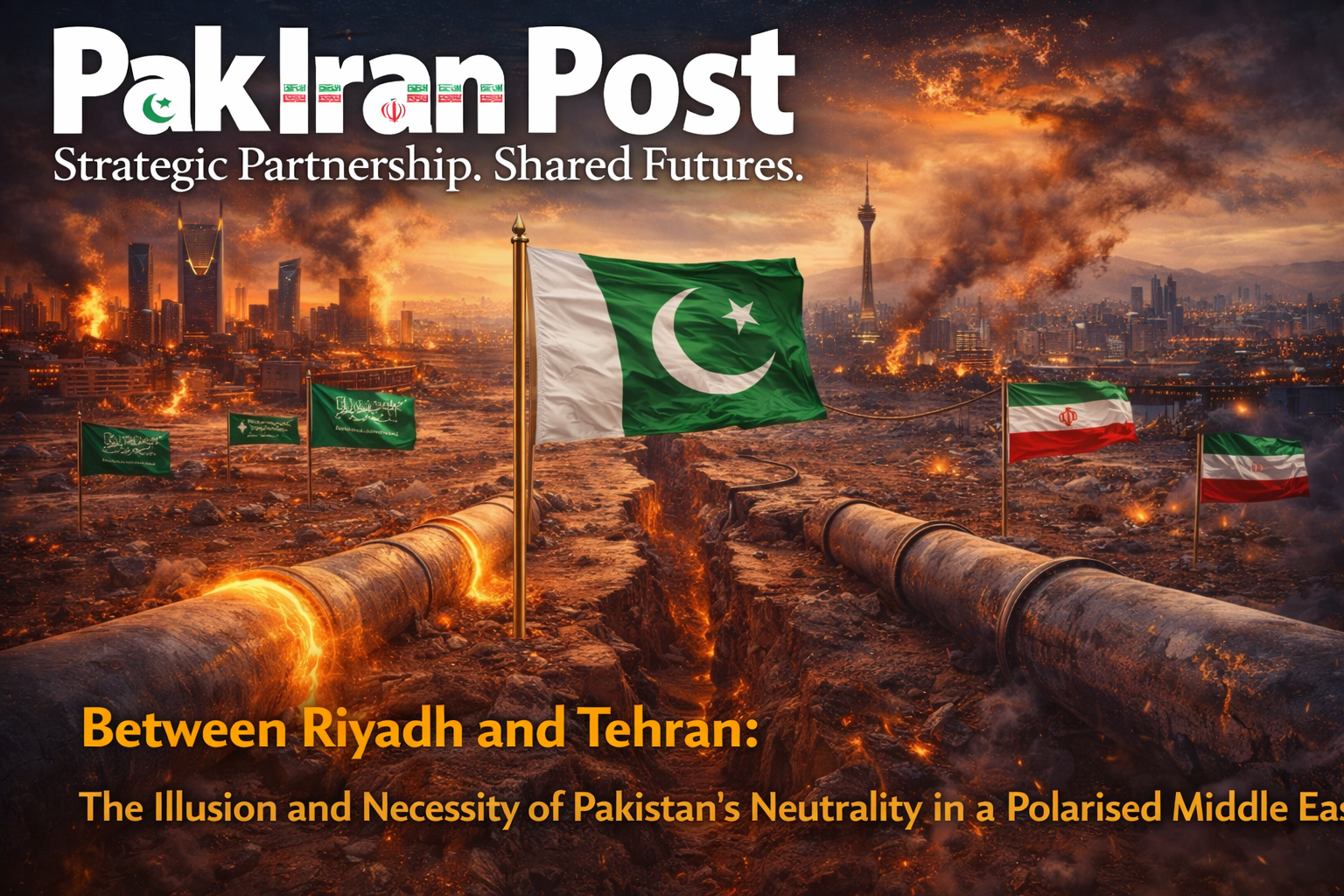
Between Riyadh and Tehran: The Illusion and Necessity of Pakistan’s Neutrality in a Polarised Middle East
In the shifting geometry of Middle Eastern geopolitics, few states embody strategic ambivalence as acutely as Pakistan, whose foreign policy in the 2026 crisis reveals a delicate, almost paradoxical attempt to sustain neutrality between Iran and Saudi Arabia, two rival poles whose contest

The Lotus in the Desert: Iran as a Symbol of Emergent Multipolarity and the Philosophical Dimensions of Power in a Transforming World
In the arid geography of power and constraint, amidst sands shaped by millennia of history and shifts in empire, a lotus blooms. This is no ordinary flower, fragile and ephemeral in lush wetlands, but a metaphorical lotus rising from political adversity, economic isolation,

The Information Void and Digital Repression in Iran: How Internet Blackouts, Social Media Censorship, Reshaping Public Discourse
In the rapidly evolving landscape of digital communications, Iran stands at an inflection point where the instruments of information control have become tools for political containment, social engineering, and national security policy. Recent developments have pushed the country toward one of the most