
Mediating the Unmedicable: Pakistan’s Constrained Diplomacy in the Shadow of US–Iran Rivalry


In the enduring theatre of antagonism between the United States and Iran, the role of intermediary states has often oscillated between symbolic facilitation and substantive influence, yet rarely has such mediation occurred without imposing structural constraints upon the mediator itself. For Pakistan, the 2026 crisis has once again resurrected the delicate possibility of acting as a diplomatic conduit between Washington and Tehran, a role that promises visibility but simultaneously circumscribes strategic autonomy. The paradox embedded within Pakistan’s involvement in US–Iran negotiations is therefore not merely diplomatic but existential, revealing the extent to which middle powers can exercise agency within a system dominated by asymmetrical rivalries.
Pakistan’s engagement in this triangular dynamic is neither incidental nor entirely voluntary. Its geopolitical location, straddling South Asia and the Middle East, combined with its historical relationships with both Washington and Tehran, renders it an almost inevitable interlocutor in moments of heightened tension. Yet this very positioning creates a dual burden: to be sufficiently trusted by both parties to facilitate dialogue, while remaining sufficiently detached to avoid the perception of partiality. The difficulty of maintaining this equilibrium is exacerbated by the deep-seated mistrust that defines US–Iran relations, where even indirect channels of communication are imbued with suspicion.
From the perspective of the United States, Pakistan’s utility as an intermediary is conditioned by a broader strategic calculus that extends beyond the immediate context of Iran. Washington’s engagement with Islamabad has historically been transactional, shaped by shifting priorities ranging from Cold War alignments to counterterrorism imperatives. In the current crisis, Pakistan is viewed less as a strategic partner in its own right and more as a functional conduit, a state capable of transmitting messages and facilitating backchannel communications without fundamentally altering the parameters of negotiation. This instrumental perception limits the scope of Pakistan’s influence, confining it to the margins of decision-making even as it occupies a visible role in the process.
For Iran, the calculus is equally complex but differently structured. Tehran’s perception of Pakistan is filtered through a lens of cautious pragmatism, recognising the potential advantages of engaging a neighbouring state with access to Washington, while remaining wary of Islamabad’s historical proximity to American strategic objectives. Iran’s experience with intermediaries has been shaped by episodes of both cooperation and betrayal, leading to a preference for channels that offer plausible deniability rather than full transparency. In this context, Pakistan’s credibility as a mediator is contingent upon its ability to demonstrate a degree of independence from US influence, a requirement that sits uneasily alongside its broader foreign policy alignments.
The act of mediation, therefore, becomes a performative exercise in calibrated ambiguity. Pakistan must simultaneously signal reliability to Washington and independence to Tehran, crafting a diplomatic posture that satisfies both without fully aligning with either. This requires not only rhetorical finesse but also a careful orchestration of policy actions, where even minor deviations can disrupt the fragile balance of perceptions. The challenge is compounded by the asymmetry inherent in the US–Iran relationship itself, where the disparity in power and influence shapes the expectations placed upon any intermediary.
Beyond the immediate dynamics of negotiation, Pakistan’s involvement in US–Iran diplomacy has broader implications for its bilateral relationships. Engagement with Washington offers potential dividends in the form of economic assistance, security cooperation and access to international financial institutions. These benefits, while not guaranteed, provide a powerful incentive for Pakistan to remain engaged in the mediation process. However, the pursuit of such gains must be weighed against the potential costs of alienating Iran, whose cooperation is essential for border security, regional connectivity and the management of cross-border insurgencies.
This duality underscores the constricted nature of Pakistan’s diplomatic space. By inserting itself into the US–Iran rivalry, Pakistan seeks to expand its relevance on the global stage, positioning itself as a constructive actor capable of bridging divides. Yet this very involvement exposes it to competing pressures that limit its freedom of action. The more Pakistan engages, the more it becomes entangled in the structural constraints of the rivalry, reducing its ability to pursue an independent course.
The notion of diplomatic space is therefore central to understanding Pakistan’s predicament. It is not merely a question of whether Pakistan can mediate effectively, but whether it can do so without compromising its broader strategic objectives. The risk is that mediation becomes an end in itself, driven by the desire for international recognition rather than a clear assessment of national interest. In such a scenario, Pakistan may find itself overextended, investing diplomatic capital in a process over which it has limited control.
The internal dimension of this engagement further complicates the picture. Pakistan’s domestic political landscape, characterised by competing institutional interests and periodic instability, imposes additional constraints on its foreign policy. The conduct of diplomacy is not insulated from internal dynamics; rather, it is shaped by them. Divergent priorities within the state apparatus can lead to inconsistencies in messaging and policy execution, undermining the coherence required for effective mediation. In a context where trust is already fragile, such inconsistencies can have disproportionate consequences.
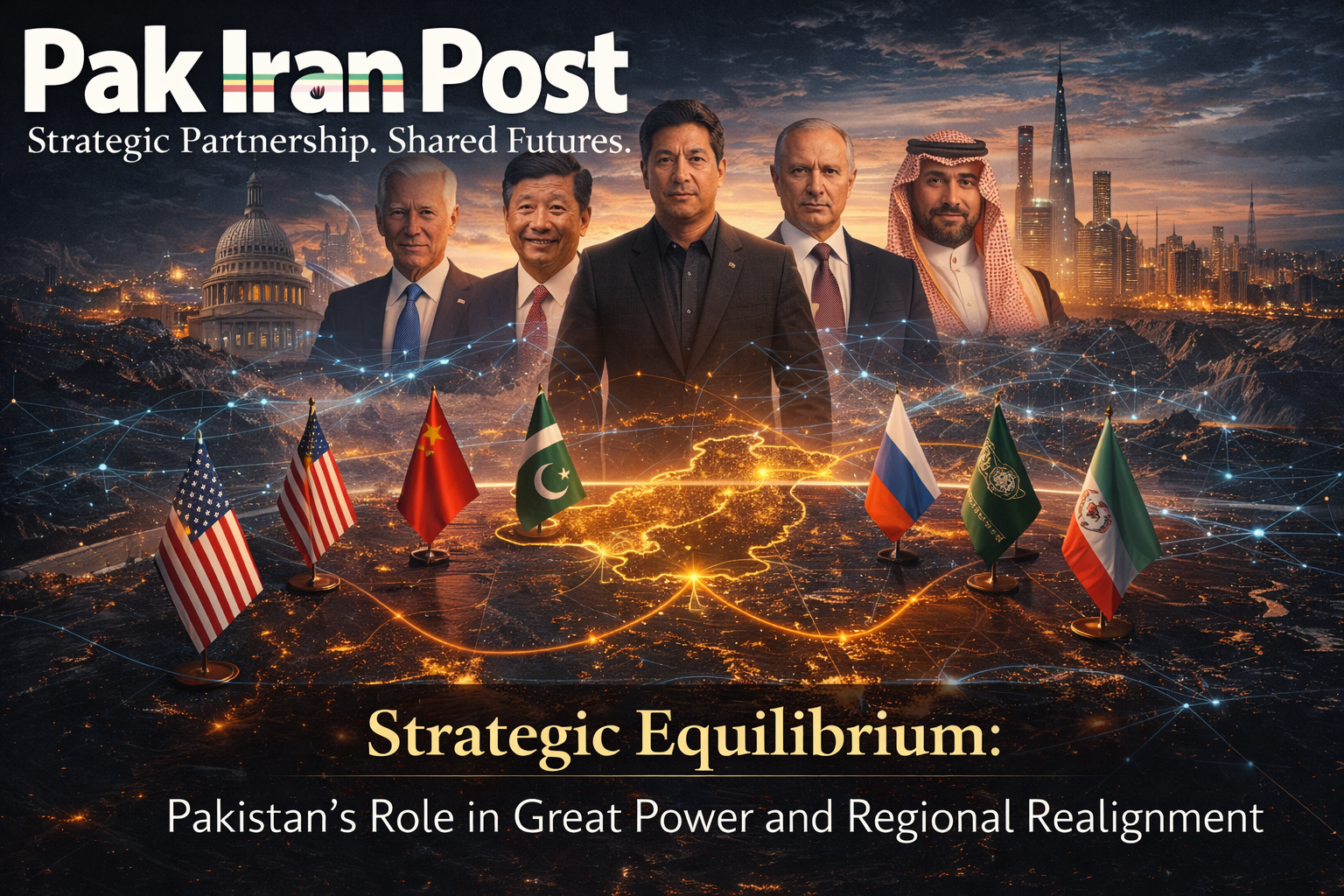
Moreover, the broader regional environment in which US–Iran tensions are embedded introduces additional variables. The interests of other actors, including Saudi Arabia and China, intersect with the rivalry in ways that influence Pakistan’s diplomatic calculations. Saudi Arabia’s alignment with US strategic objectives and its own rivalry with Iran create expectations that Pakistan will not deviate significantly from the Saudi position. China, by contrast, emphasizes stability and dialogue, encouraging Pakistan to play a constructive role in de-escalation. Navigating these intersecting expectations requires a level of strategic coherence that is difficult to sustain in practice.
In this environment, the limits of mediation become increasingly apparent. Pakistan’s ability to influence the substantive outcomes of US–Iran negotiations is inherently constrained by the asymmetry between the two primary actors. At best, it can facilitate communication, reduce misunderstandings and create conditions conducive to dialogue. At worst, it risks becoming a peripheral actor whose involvement is largely symbolic, providing the appearance of engagement without materially altering the trajectory of the conflict.
Yet it would be reductive to dismiss Pakistan’s role as inconsequential. Even symbolic mediation can carry strategic value, particularly in a context where direct communication between adversaries is limited. By maintaining channels of dialogue, Pakistan contributes to the management of tensions, reducing the likelihood of miscalculation and escalation. This function, while modest, is not insignificant, especially in a volatile regional environment.
The challenge lies in calibrating the extent of involvement. Pakistan must engage sufficiently to remain relevant, yet avoid overcommitment that could entangle it in the conflict. This requires a clear understanding of the limits of its influence and a willingness to exercise restraint. Diplomacy, in this context, is as much about recognising what cannot be achieved as it is about pursuing what can.
Ultimately, Pakistan’s involvement in US–Iran negotiations reflects a broader tension between aspiration and constraint. It aspires to play a meaningful role in shaping regional dynamics, leveraging its position to enhance its international standing. Yet it is constrained by structural realities that limit the scope of its agency. The interplay between these forces defines the contours of Pakistan’s diplomatic space, shaping its choices and their consequences.
As the 2026 crisis unfolds, this space is likely to remain contested and fluid. The trajectory of US–Iran relations will continue to influence Pakistan’s options, as will the actions of other regional and global actors. In this uncertain environment, the sustainability of Pakistan’s diplomatic engagement will depend on its ability to navigate these complexities with precision and restraint, maintaining a balance between involvement and autonomy that is as difficult to achieve as it is essential to preserve.
A Public Service Message