
The Information Void and Digital Repression in Iran: How Internet Blackouts, Social Media Censorship, Reshaping Public Discourse

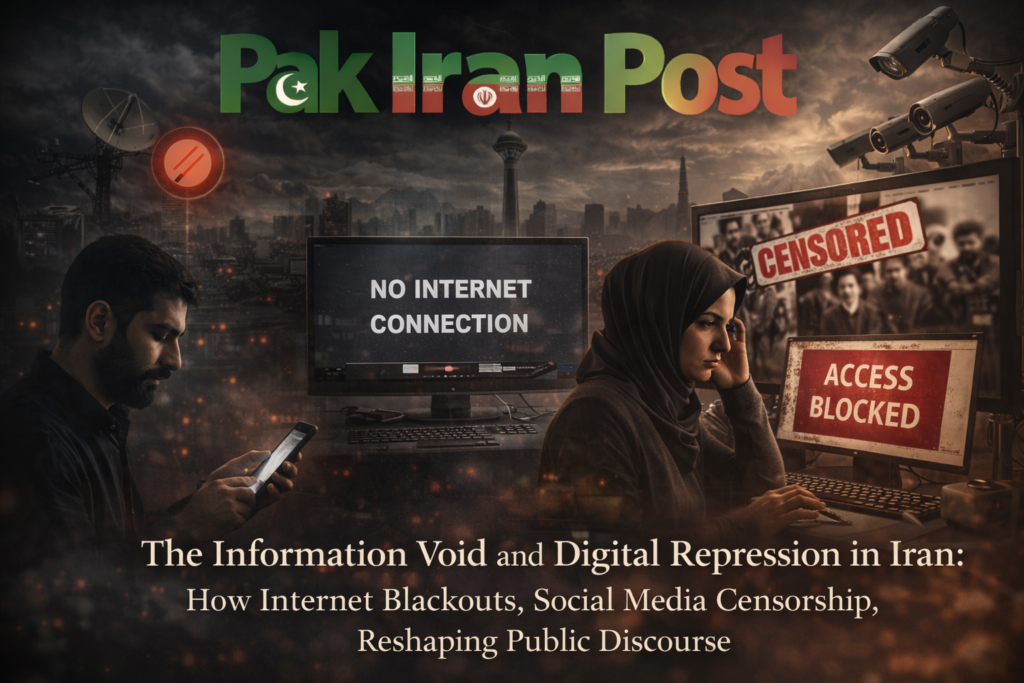
In the rapidly evolving landscape of digital communications, Iran stands at an inflection point where the instruments of information control have become tools for political containment, social engineering, and national security policy. Recent developments have pushed the country toward one of the most severe forms of digital repression in decades: expansive internet shutdowns, targeted throttling of global connections, restrictions on social media platforms, and the construction of a state‑centric intranet that isolates large segments of the population from the global information ecosystem. These measures have profound implications not only for Iranian society but also for neighboring states, regional media ecosystems, and international norms on digital rights and freedom of expression. The pattern of digital repression emerging in Iran is not merely episodic censorship but reflects a broader strategic turn toward controlled information environments, where the state attempts to assert dominance over public discourse, restrict dissent, and shape narratives both domestically and abroad.
Understanding this shift requires a deep analysis of how internet blackouts and censorship mechanisms have altered the nature of communication inside Iran and the broader consequences for social stability, youth expression, and regional information flows. At the same time, it demands exploration of the ethical, technical, and policy challenges faced by journalists, civil society, and regional actors including Pakistan that are navigating an environment where digital repression blurs the lines between national security and human rights.
For over a decade, Iran has sporadically restricted internet access during periods of protest, political tension, or heightened security concerns. These shutdowns historically took the form of temporary throttling, blocking of specific social media platforms, or restrictions on video sites. However, the latest iteration goes far beyond targeted censorship. In several recent instances, entire national networks have been cut off at critical moments, limiting both international connectivity and internal communication. These blackouts are often accompanied by what analysts describe as a national intranet model a closed, state‑approved digital environment that replaces global platforms with domestic alternatives that are easier to monitor, regulate, and control.
The consequences of these policies are multifaceted. First, information flows within Iran become fragmented and controlled rather than open and organic. Citizens who seek news, social connection, or avenues for collective action find themselves restricted to state‑approved networks or forced to rely on VPNs and other circumvention tools. This not only limits access to timely information but also erodes trust in digital platforms, as the lines between state messaging, propaganda, and independent reporting become blurred.
Second, the ability of journalists, human rights organizations, and independent media to document abuses, share eyewitness reporting, or broadcast critical accounts is severely constrained. Iran’s internet shutdowns invariably cut off international satellite links and global internet exchange points, making it difficult or impossible for media outlets to transmit content beyond domestic borders. This digital blockade isolates internal reporting from external audiences, reducing global awareness of on‑the‑ground developments and limiting pressure from international actors.
Third, social fragmentation emerges as a core social consequence. When digital spaces are controlled, segmented, or only partially accessible, citizens resort to fractured communication channels encrypted messaging, peer‑to‑peer sharing, or localized intranet sites that are difficult to verify, unreliable, and vulnerable to manipulation. In such an environment, misinformation and disinformation thrive. Rumors, partial truths, and unverified reports fill vacuums left by blocked mainstream communication channels. The result is not only reduced access to information but also a deepening sense of informational uncertainty and mistrust.
Iran’s approach is emblematic of a broader trend in authoritarian‑leaning states: leveraging digital infrastructure to maintain political control while claiming national security imperatives. By controlling connectivity, the state seeks to restrict mobilization, reduce the spread of dissenting narratives, and assert dominance over collective memory. For communities inside Iran, particularly youth who have grown up with global social media platforms, this truncation of digital freedom represents not only a policy shift but a rupture in cultural and social development.
The youth demographic is particularly salient. Iranian youth are among the most digitally connected populations in the region. They rely on platforms like Instagram, Twitter‑X, Telegram, and online forums to express cultural identity, share creative content, and build communities that transcend local boundaries. When access to these platforms is choked off, these youth already coping with economic pressures, limited opportunities, and social constraints face an additional layer of alienation. The rupture between the lived digital experiences of young Iranians and the controlled information environment imposed by the state exacerbates generational fissures and fuels frustration.
These dynamics also affect Iran’s diaspora communities, which often play a critical role in information dissemination. In the absence of open domestic platforms, diaspora journalists, activists, and citizen reporters become conduits for testimonies, imagery, and narratives that would otherwise be suppressed. Diaspora networks bridge the digital divide, submitting content to global audiences and helping international media cover developments that would otherwise remain hidden. However, this process is fraught with risk: verification challenges, state accusations of foreign interference, and ethical dilemmas about exposing individuals to retaliation.
Compounding this digital environment is the rise of sophisticated disinformation campaigns that exploit social fragmentation. Analysts have documented instances of AI‑generated content, coordinated inauthentic behavior, and strategic narratives emerging from both state and non‑state sources. These campaigns blur truth and falsehood, making it increasingly difficult for citizens to discern reliable information. In the absence of robust independent media within Iran, global audiences are left to navigate a complex information ecosystem where state narratives, diaspora reporting, and unverified digital content converge and compete for legitimacy.
The implications extend beyond Iran’s borders, affecting neighboring countries and regional media ecosystems. In Pakistan, for instance, Iranian news, social media trends, and citizen reporting circulate widely among Persian speakers and transnational communities. Pakistani media outlets frequently cover developments in Iran, and social media discourse among Pakistani youth reflects Iranian events, narratives, and digital trends. When Iranian digital repression intensifies, these cross‑border information channels are disrupted, creating gaps in regional understanding and reducing the availability of real‑time analysis for Pakistan’s media and policy communities.
From a policy perspective, regional actors must grapple with a complex set of questions: How should neighboring countries respond to digital repression that affects free expression and the flow of information? What responsibilities do media institutions have in reporting on environments where access is restricted and verification is difficult? And how can civil society organizations, journalists, and technology advocates support information flows without inadvertently exposing individuals to harm?
For Pakistan, these questions have both ethical and strategic dimensions. Pakistan shares social, cultural, and media linkages with Iran. There are Persian language media consumers in Pakistan, and Pakistani media houses routinely cover Iranian affairs. Media policy in Pakistan must therefore consider mechanisms to responsibly cover digital repression in Iran, amplify independent voices without exposing sources to risk, and enhance media literacy to counter misinformation that emerges from controlled information environments.
One step forward is the establishment of cross‑border networks for safe communication. Pakistani media organizations, academic institutions, and civil society groups can collaborate with Iranian counterparts including diaspora journalists to create channels that document digital repression, collect testimony, and verify content. These networks would require stringent ethical protocols, data protection measures, and secure communication infrastructure that prioritizes the safety of contributors inside Iran. Pakistan has a growing cybersecurity and digital rights community that can contribute to such efforts, offering technical support, encryption expertise, and risk mitigation strategies.
Another critical policy direction is the development of media literacy initiatives tailored to audiences in Pakistan and the broader region. As state‑influenced narratives and misinformation campaigns become more prevalent, enhancing public capacity to critically evaluate digital content is vital. Pakistani educational institutions, media organizations, and civil society organizations can co‑develop curricula that teach critical thinking, digital verification skills, and awareness of disinformation tactics. These programs can be disseminated through online platforms, community workshops, and collaborations with regional media outlets to ensure wide reach.
Pakistan can also engage with international advocacy bodies to highlight digital repression in Iran within global forums. Digital rights organizations such as the Electronic Frontier Foundation, Access Now, and Reporters Without Borders regularly monitor internet shutdowns and censorship. Pakistani civil society and media coalitions can amplify these findings, ensuring that international policy discussions around digital sovereignty, internet freedom, and human rights incorporate the lived realities of Iranian citizens. Such engagement reinforces Pakistan’s commitment to open information ecosystems, even as it navigates its own media policy challenges.
At an institutional level, Pakistan’s government can consider diplomatic channels that advocate for digital freedom as part of broader human rights dialogues. While sensitive to the complexities of state sovereignty, Pakistan’s foreign policy can articulate concerns about digital repression in environments where information access directly impacts human dignity, social cohesion, and transnational understanding. Diplomatic engagement may include dialogues with international partners, joint statements in multilateral forums, or participation in regional initiatives that promote open internet access and protection of journalists.
Collaborations with technology companies are also essential. Major platforms such as Twitter‑X, Meta, Telegram, and regional messaging services play a critical role in how information circulates. Pakistan can encourage these companies to implement crisis‑response protocols that prioritise uninterrupted access for citizens in conflict zones or under digital blackout conditions. This requires negotiation with platform governance teams, creation of emergency access mechanisms, and engagement with global digital rights coalitions to ensure that technological solutions do not inadvertently become instruments of repression.
Ethics and verification are central to covering environments under digital repression. Journalistic standards must adapt to conditions where information is sparse, user‑generated content is unverifiable, and state narratives dominate. Pakistani media outlets can contribute to the development of verification frameworks that use cross‑checking, satellite imagery, temporal metadata analysis, and corroborative sourcing to validate content emerging from Iran. Collaboration with international newsrooms and fact‑checking networks enhances the credibility and accuracy of reporting, reducing the risk of amplifying unverified claims or state propaganda.
Regional civil society organizations can also contribute through documentation and archiving projects. By systematically collecting digital artifacts including shutdown patterns, censorship documents, and testimonies from affected citizens these organizations help build historical records that support future accountability and policy analysis. Pakistan’s human rights organizations can partner with Iranian diaspora groups, academic research centers, and technology advocates to ensure that these archives are preserved, contextualized, and made accessible for global audiences.
The role of youth and cultural expression in resisting digital repression cannot be understated. Iranian youth have creatively circumvented restrictions using proxy networks, encrypted apps, and offline digital campaigns. Pakistani media and technology communities can offer platforms for showcasing these forms of cultural resistance, highlighting innovative digital practices that sustain dialogue even in constrained environments. By amplifying these voices through cross‑border digital platforms, Pakistan reinforces the importance of youth agency in shaping information ecosystems and resisting attempts to control narratives.
Ultimately, the struggle over information in Iran reflects broader questions of power, legitimacy, and human dignity in the digital age. When states restrict digital environments, they do not merely control access to networks; they attempt to influence identities, memories, and collective consciousness. For neighboring countries like Pakistan, witnessing these developments imposes both a responsibility and an opportunity: to defend open information ecosystems, to support ethical journalism, to build resilient media frameworks that withstand censorship, and to engage in policy dialogue that protects digital rights.
Pakistan’s media institutions, civil society, and policy makers must therefore adopt a multifaceted approach one that combines ethical reporting, digital rights advocacy, technological support, and regional cooperation. Such an approach ensures that as Iran’s information environment evolves, the voices of its citizens are not silenced, the truths of their experiences are not lost, and regional actors such as Pakistan play a constructive role in fostering open, resilient, and inclusive digital public spheres.
The information void created by digital repression is not simply an Iranian problem; it is a regional challenge with implications for truth, trust, and transnational understanding. By confronting this challenge through policy, technology, and principled engagement, Pakistan can help shape an information ecosystem that values freedom, fosters truth, and upholds the dignity of all citizens in an increasingly interconnected world.