
Empowering the Future: Pakistan’s Role in Addressing Iranian Youth Vulnerabilities through Humanitarian and Social Policy

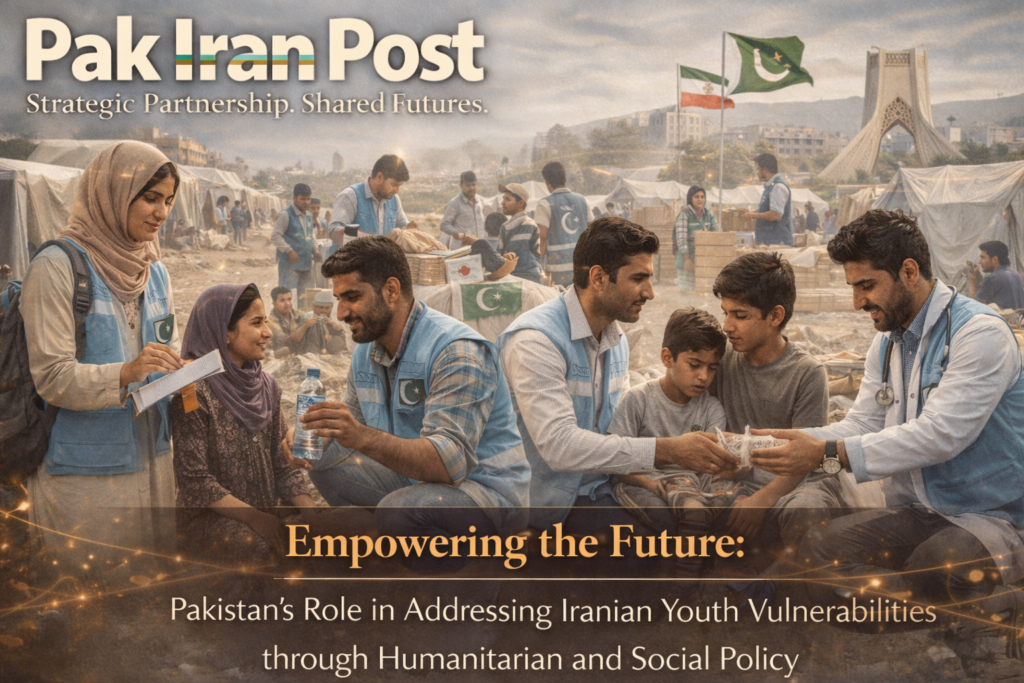
The future stability, resilience, and prosperity of Iran are increasingly dependent on the ability of its society to provide opportunities and support for its youth. Approximately sixty percent of Iran’s population is under the age of thirty, a generation that is technologically connected, socially conscious, and globally aware. This demographic faces significant social, economic, and cultural constraints, including limited employment opportunities, restricted civic participation, economic uncertainty, and pressures arising from international sanctions. For Pakistan, these challenges present both a responsibility and an opportunity. By strategically engaging in humanitarian and social policy initiatives targeting Iranian youth, Islamabad can build goodwill, reinforce bilateral relations, and create a platform for long-term regional influence.
Iranian youth face structural unemployment and underemployment. High levels of education and aspirations meet a labor market constrained by sanctions, limited investment, and economic volatility. This mismatch contributes to social disillusionment, migration pressures, and a sense of disenfranchisement. Pakistan can design programs that provide targeted vocational training, cross-border employment opportunities, and entrepreneurship support. By leveraging existing regional connectivity and labor demand, Pakistan can facilitate legal and structured employment for Iranian youth in sectors such as technology, energy, health services, education, and creative industries. This not only addresses immediate humanitarian needs but also strengthens economic ties and establishes Pakistan as a constructive partner in regional development.
Education is a cornerstone of humanitarian and social policy engagement. Pakistani universities, technical institutes, and professional training centers can offer scholarships, joint degree programs, online courses, and exchange programs for Iranian youth. These initiatives should prioritize accessibility for marginalized populations, particularly in border regions and economically disadvantaged areas. Exposure to Pakistani educational institutions provides knowledge, practical skills, and professional networks that enhance employability, personal development, and social resilience. Education-focused humanitarian initiatives also serve as a platform for cultural exchange, fostering mutual understanding, trust, and long-term engagement between Pakistani and Iranian youth.
Healthcare and psychosocial support are critical components of social policy. Many young Iranians face stress, anxiety, and mental health challenges due to economic pressures, social restrictions, and uncertainty about the future. Pakistan can collaborate with Iranian institutions to offer counseling programs, mental health awareness campaigns, and community-based psychosocial support networks. Integrating health initiatives with education, vocational training, and civic engagement ensures a holistic approach that addresses both immediate and long-term vulnerabilities. Programs that combine practical skill development with psychosocial resilience contribute to the overall well-being of youth and reinforce the perception of Pakistan as a partner capable of delivering meaningful social impact.
Humanitarian initiatives must also address access to basic resources and infrastructure. Border regions in both Iran and Pakistan experience challenges in education, healthcare, clean water, and energy access. Joint development programs targeting these areas can improve living conditions, create employment opportunities, and foster a sense of shared responsibility. Pakistan can leverage expertise in infrastructure development, project management, and logistics to implement cross-border initiatives that have tangible impact on youth communities. Such projects demonstrate commitment to human development, enhance regional trust, and create networks of cooperation that endure beyond immediate interventions.
Youth participation and leadership are essential for sustainable social policy outcomes. Pakistan can establish platforms for Iranian youth to participate in community development projects, decision-making processes, and regional forums. By providing mentorship, project management training, and leadership development, Pakistan empowers young people to take active roles in shaping their communities. This not only enhances the effectiveness of humanitarian programs but also builds long-term networks of engaged, capable, and socially conscious youth who maintain ties with Pakistan, reinforcing soft power influence and bilateral trust.
Digital platforms play a transformative role in addressing Iranian youth vulnerabilities. Virtual education, online skill-building programs, digital mentorship, and collaborative project spaces allow Pakistani initiatives to reach youth across Iran, including those in remote or socially restricted regions. Secure online platforms also facilitate cross-border collaboration on entrepreneurship, innovation, and social development projects. Digital engagement ensures scalability, efficiency, and accessibility, maximizing the humanitarian impact of programs while establishing Pakistan as a leader in innovative regional social policy solutions.
Labor mobility and regional integration are key policy levers. By creating structured mechanisms for Iranian youth to access employment in Pakistan and regional initiatives, Islamabad can address unemployment challenges, enhance cross-border economic linkages, and foster practical engagement. Legal frameworks ensuring labor rights, recognition of qualifications, fair compensation, and mobility protections are essential. Integrating humanitarian objectives with labor mobility creates a win-win scenario: Iranian youth gain opportunities for economic participation and skill development, while Pakistan benefits from a reliable labor pool and strengthened regional cooperation.
Entrepreneurship promotion addresses both social and economic vulnerabilities. Joint incubation programs, start-up accelerators, and cross-border innovation hubs can target young Iranian and Pakistani entrepreneurs. These initiatives should provide technical guidance, seed funding, mentorship, and market access for ventures focused on renewable energy, agriculture, technology, and social enterprise. By equipping youth with entrepreneurial skills and resources, Pakistan contributes to long-term economic resilience, fosters innovation networks, and generates cross-border partnerships that strengthen regional cohesion.
Humanitarian engagement also includes disaster preparedness and climate resilience. Iran’s youth are affected by natural hazards, water scarcity, and environmental degradation. Pakistan can collaborate on cross-border programs that enhance awareness, provide training in climate adaptation, and support community resilience initiatives. These programs integrate environmental knowledge with practical skills, creating opportunities for youth participation in sustainable development projects. Climate-focused humanitarian initiatives enhance credibility, demonstrate regional leadership, and contribute to long-term security and stability.
Institutional frameworks are essential to operationalize these initiatives effectively. Pakistan can establish an inter-ministerial task force encompassing youth affairs, education, foreign policy, social development, and information technology to coordinate humanitarian programs targeting Iranian youth. Partnerships with universities, NGOs, private sector actors, and international development agencies ensure operational efficiency, program legitimacy, and scalability. Institutional coordination allows for evidence-based planning, impact monitoring, and adaptation to emerging challenges, reinforcing Pakistan’s capacity to deliver sustainable social policy interventions.
Monitoring, evaluation, and data-driven design are critical to ensuring impact. Pakistan can implement robust frameworks that track program participation, skill development outcomes, employment placements, entrepreneurial success, psychosocial improvements, and cross-border collaboration. Evidence-based assessment allows for continuous refinement, scaling of successful initiatives, and accountability to stakeholders. Longitudinal tracking of participants, alumni networks, and community impact ensures that humanitarian and social policy initiatives generate measurable and sustained benefits.
Financial sustainability is central to long-term success. Pakistan can mobilize government funding, private sector contributions, philanthropic partnerships, and international development grants to support education, vocational training, health services, digital infrastructure, and entrepreneurship initiatives. Structured financial planning ensures predictability, resource efficiency, and program continuity. Investments in humanitarian and social policy create long-term multiplier effects in terms of goodwill, regional influence, and bilateral cooperation.
Strategic communication and media engagement enhance visibility and credibility. Pakistan can highlight success stories, youth achievements, program outcomes, and cross-border collaboration through social media, digital platforms, and traditional media outlets. Strategic communication amplifies impact, encourages participation, fosters pride, and positions Pakistan as a constructive partner in regional humanitarian and social policy initiatives. Transparent reporting and storytelling reinforce legitimacy, trust, and public support both within Pakistan and across Iran.
Humanitarian engagement should prioritize inclusivity and equity. Programs must ensure participation of marginalized groups, including women, ethnic minorities, and youth from economically disadvantaged areas. Inclusive initiatives strengthen social cohesion, reduce disparities, and foster regional stability. Pakistan’s focus on equitable access demonstrates a commitment to fairness, enhances program credibility, and increases long-term engagement and impact.
Strategic policy recommendations for Pakistan include the establishment of joint vocational training and skill development programs, creation of structured cross-border labor mobility frameworks, expansion of educational scholarships and exchange programs, development of entrepreneurship incubators and innovation hubs, implementation of psychosocial support initiatives, promotion of climate resilience projects, institutional coordination through inter-ministerial task forces, and investment in digital platforms for scalable engagement. Collaboration with civil society, international development organizations, and private sector partners strengthens legitimacy, operational efficiency, and sustainability.
The impact of these initiatives extends beyond immediate humanitarian benefits. By addressing Iranian youth vulnerabilities, Pakistan fosters long-term social resilience, strengthens regional networks of influence, and enhances bilateral trust. Youth engaged in skills development, entrepreneurship, education, and civic projects become long-term advocates for collaboration, contributing to shared development objectives and regional stability. Humanitarian and social policy engagement also positions Pakistan as a credible actor capable of providing practical solutions to complex regional challenges.
International partnerships amplify effectiveness. Collaboration with UN agencies, development banks, regional universities, and international NGOs provides technical expertise, funding support, and access to global best practices. Alignment with international standards ensures program quality, transparency, and accountability. These partnerships enhance Pakistan’s credibility, demonstrate commitment to humanitarian principles, and reinforce the strategic impact of youth-focused interventions in Iran.
In conclusion, humanitarian and social policy engagement targeting Iranian youth represents a strategic opportunity for Pakistan to create long-term influence, foster regional stability, and strengthen bilateral relations. By addressing unemployment, educational gaps, psychosocial needs, and entrepreneurship potential, Pakistan can empower youth, promote cross-border collaboration, and contribute to social resilience. Integrated programs that combine education, vocational training, health, entrepreneurship, climate resilience, and community development create sustainable impact and reinforce Pakistan’s role as a constructive regional partner.
Pakistan’s strategic engagement in humanitarian and social policy demonstrates that effective influence is not solely achieved through military, political, or economic means but through practical, people-centered initiatives that empower youth, address vulnerabilities, and foster mutual benefit. By investing in Iranian youth, Pakistan builds goodwill, creates professional and social networks, and strengthens regional stability while positioning itself as a hub for constructive engagement, innovation, and cross-border cooperation.
Through deliberate planning, structured implementation, institutional coordination, evidence-based evaluation, and strategic partnerships, Pakistan can maximize the humanitarian and social impact of its initiatives. The resulting networks of skilled, resilient, and engaged youth not only benefit Iran but also enhance Pakistan’s long-term influence, credibility, and leadership in regional affairs. Strategic investment in humanitarian and social policy engagement is therefore a vital tool for Pakistan to pivot effectively, strengthen bilateral ties, and contribute to a more stable, prosperous, and cooperative regional environment.
A Public Service Message