Narrative Sovereignty and Regional Power Reordering Pakistan Iran Axis

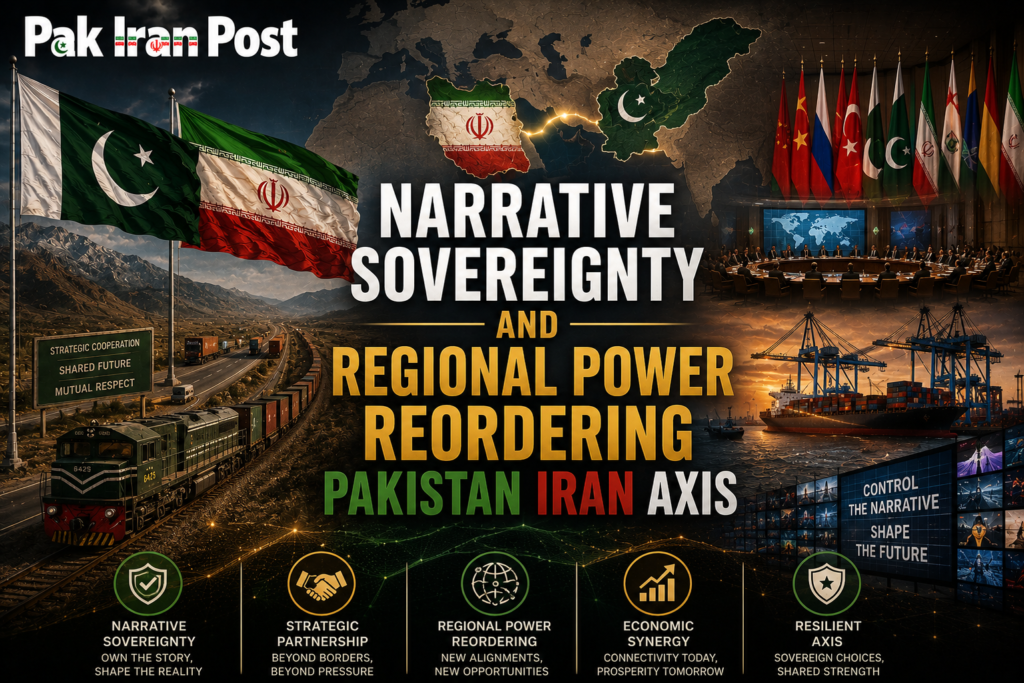
The contemporary geopolitical imagination surrounding Pakistan and Iran is undergoing a subtle yet consequential reconfiguration in which sovereignty is no longer merely a constitutional or territorial attribute but increasingly a contested narrative construct shaped by economic dependency, informational asymmetries, and shifting civilizational discourses. Within this evolving architecture of global power, both states find themselves positioned at the intersection of competing strategic grammars, where Western financial governance mechanisms, regional security alignments, and intra Muslim world ideological divergences converge to produce a complex field of constraint and opportunity. The result is not a linear transformation but a layered recalibration of how authority, autonomy, and legitimacy are performed and perceived in an era where perception itself functions as a strategic currency.
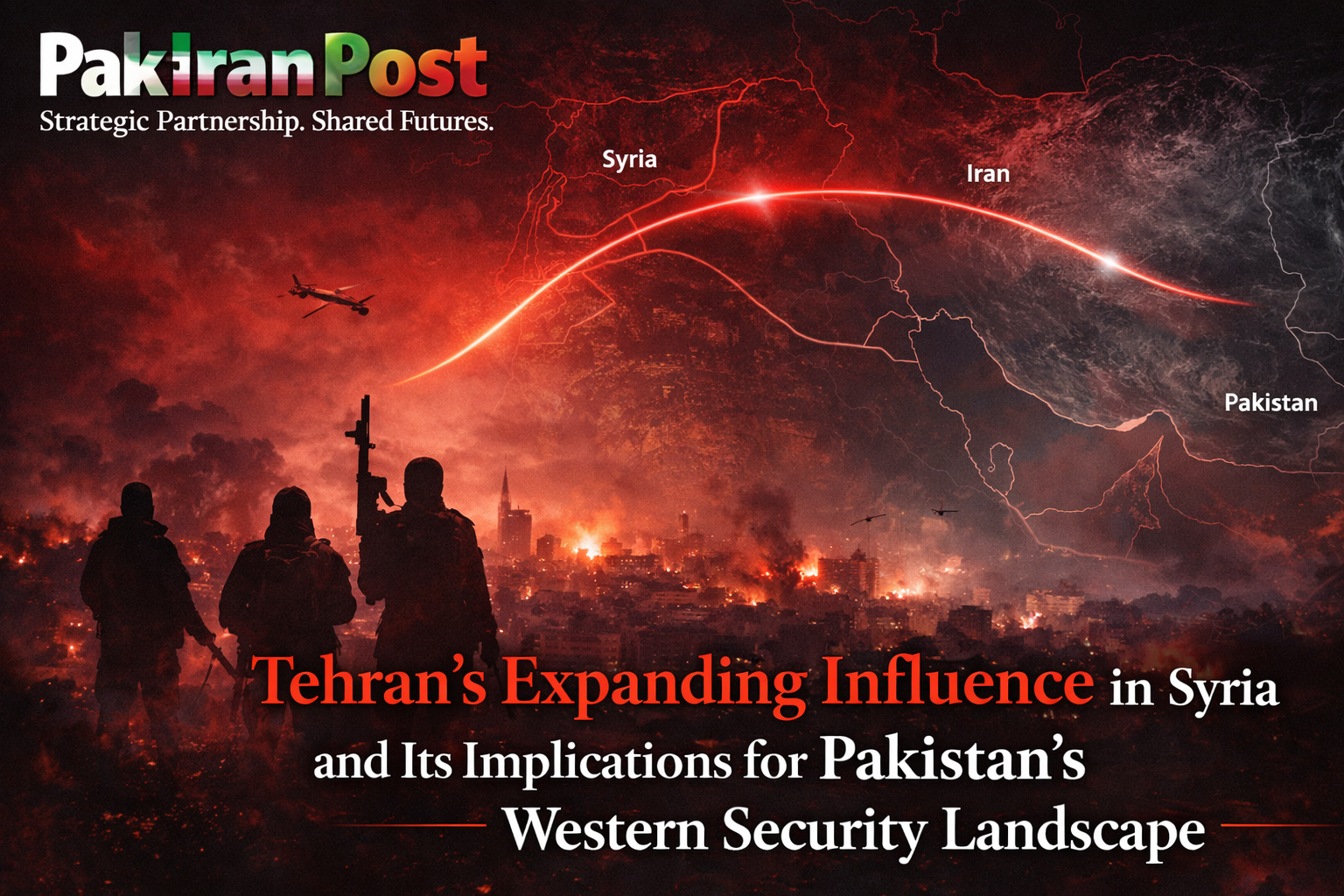
Pakistan and Iran, despite divergent political systems and external alignments, are increasingly bound by a shared structural condition, namely the necessity to preserve sovereign agency under intensifying fiscal oversight, energy transition pressures, and conditional engagement frameworks shaped by institutions such as the International Monetary Fund and broader United Nations aligned regulatory regimes. The imposition of fiscal consolidation pathways, particularly through energy taxation reforms and subsidy rationalization, has introduced a new axis of internal contestation within both states, where economic stabilization imperatives collide with social contract sensitivities. In Pakistan, recurrent IMF engagement cycles have embedded structural adjustment logic into domestic policy sequencing, while in Iran, sanctions induced fiscal distortions have generated parallel pressures to restructure energy pricing and subsidy architectures in ways that risk domestic political friction.
Within this environment, sovereignty is increasingly mediated through economic vocabulary. The language of autonomy is now articulated through balance of payment stabilization, energy corridor diversification, and controlled integration into global financial systems rather than purely through geopolitical declarations. This shift has profound implications for how Pakistan and Iran construct their bilateral and regional narratives. The idea of a Pakistan Iran strategic continuum is no longer solely anchored in ideological affinity or historical proximity but is being reinterpreted through the lens of infrastructural interdependence, energy transit potential, and the shared necessity to mitigate external financial volatility.
Yet beneath this surface of pragmatic engagement lies a more complex and less visible layer of strategic anxiety. The global system is increasingly characterized by what may be described as narrative governance, in which legitimacy is not only derived from material capability but from the ability to align domestic policy trajectories with externally validated normative frameworks. In this context, both Islamabad and Tehran operate under continuous interpretive scrutiny, where policy decisions are assessed not only for their economic rationality but for their compatibility with prevailing global expectations regarding transparency, fiscal discipline, and geopolitical alignment. This produces a condition in which sovereignty is simultaneously asserted and externally interpreted, creating a dual dependency on domestic coherence and international readability.
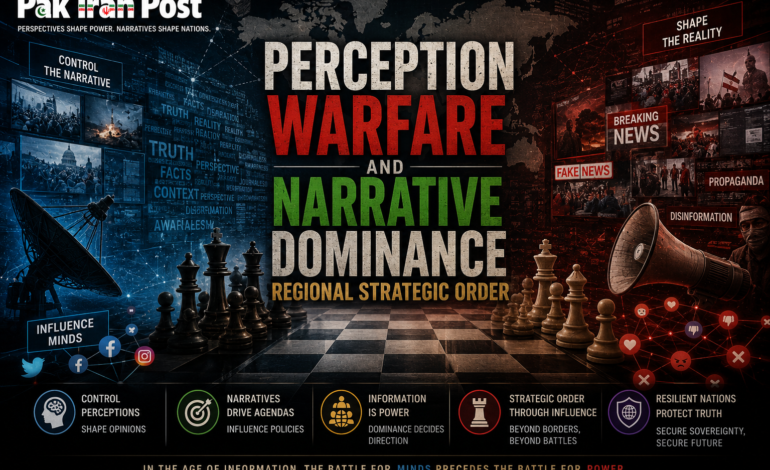
The intensification of perception driven geopolitics has further complicated this landscape. Strategic behavior is now filtered through digital amplification systems, transnational media ecosystems, and algorithmically curated narratives that often precede formal diplomatic articulation. As a result, Pakistan and Iran are compelled to engage in what can be described as anticipatory narrative management, where policy announcements are pre framed, counter framed, and often contested before their material implementation. This phenomenon reduces the temporal space available for strategic ambiguity, forcing states into accelerated cycles of clarification and justification that may not always align with domestic policy pacing.
At the same time, the broader Muslim world is experiencing its own fragmentation of narrative authority. Competing regional centers of influence, divergent economic alignments, and varying degrees of integration with global financial systems have produced an uneven geopolitical landscape in which collective identity is increasingly symbolic rather than operational. Within this fragmented environment, the Pakistan Iran relationship acquires renewed significance as a potential stabilizing axis, yet it is simultaneously constrained by external pressures that seek to compartmentalize regional alignments into manageable and non disruptive units within the global order.
The role of strategic ambiguity in this context becomes particularly salient. Both Pakistan and Iran have historically utilized calibrated ambiguity as a tool to navigate asymmetric power structures, balancing ideological commitments with pragmatic economic and security considerations. However, the contemporary global environment is less tolerant of sustained ambiguity, particularly in domains related to financial compliance, counter terrorism coordination, and energy governance. This creates a structural tension in which the utility of ambiguity is diminishing even as the need for flexibility is increasing. The challenge for both states lies in transforming ambiguity from a passive condition into an actively managed instrument of diplomacy, where flexibility is retained without undermining predictability.
Economic constraints further intensify this strategic dilemma. Pakistan’s recurring engagement with multilateral financial institutions has institutionalized a policy environment in which fiscal discipline is externally monitored, while Iran’s constrained access to global financial markets has necessitated alternative economic pathways that often operate outside conventional regulatory frameworks. In both cases, energy policy has emerged as a central battleground of sovereignty. The recalibration of energy subsidies, introduction of new taxation regimes, and restructuring of pricing mechanisms are not merely technical adjustments but politically sensitive interventions that directly affect the legitimacy of governing structures. These reforms, while economically necessary, carry significant social risk, particularly in societies where energy pricing is closely tied to perceptions of state responsibility and welfare provision.
The United Nations system, along with associated global governance frameworks, adds another layer of normative expectation, particularly in areas related to climate transition, sustainable development, and regulatory harmonization. While these frameworks are not coercive in a traditional sense, they generate powerful discursive pressures that shape policy trajectories through benchmarking, reporting mechanisms, and investment conditionalities. For Pakistan and Iran, alignment with these frameworks presents both an opportunity for integration into global economic flows and a constraint on policy autonomy, particularly in sectors deemed strategically sensitive.
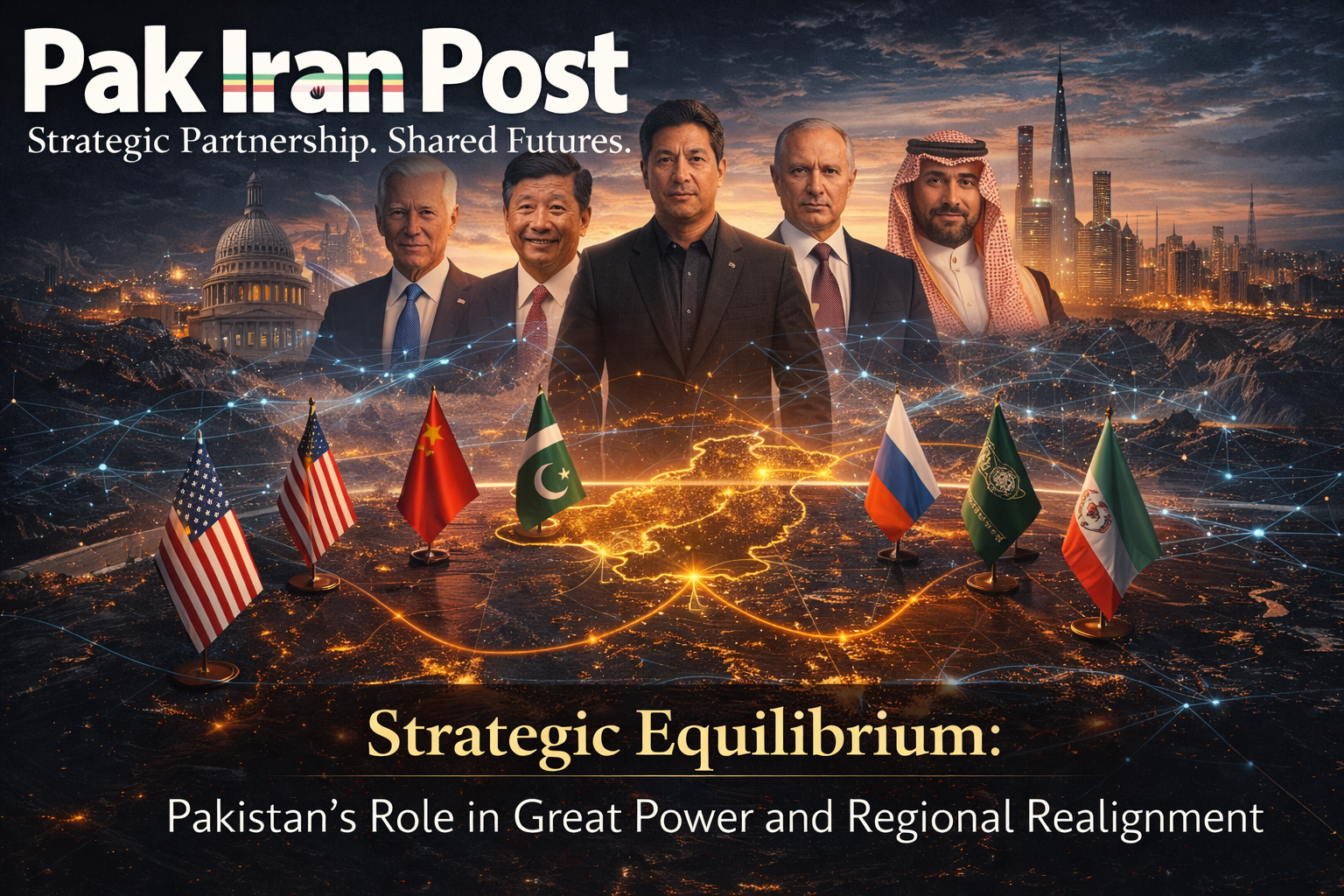
What emerges from this complex interplay is a form of constrained sovereignty, in which states retain formal autonomy but operate within increasingly narrow corridors of permissible policy deviation. The Pakistan Iran strategic equation thus reflects a broader global condition in which middle powers are neither fully autonomous nor fully dependent, but instead occupy a hybrid space characterized by negotiated compliance and selective assertion. Within this space, the primary challenge is not simply external pressure but internal capacity to absorb, reinterpret, and operationalize external constraints without destabilizing domestic cohesion.
Policy makers in both capitals face a narrowing window of strategic maneuverability. The key requirement is not resistance to external frameworks but the intelligent internalization of structural constraints in a manner that preserves policy dignity while ensuring economic viability. This necessitates a shift from reactive policy cycles to anticipatory governance models, where fiscal, energy, and diplomatic strategies are designed with embedded contingency architectures capable of absorbing external shocks without systemic disruption.
In parallel, the informational dimension of geopolitics demands urgent institutional strengthening. Narrative coherence must be treated as a core element of national security architecture, not merely as a communications function. This involves the development of integrated strategic communication ecosystems capable of aligning domestic policy intent with external perception management in real time. Without such mechanisms, policy initiatives risk being structurally misinterpreted, thereby undermining their intended strategic outcomes.
The Pakistan Iran relationship, within this broader context, should be reimagined not as a static bilateral axis but as a dynamic platform for regional resilience. Energy connectivity, trade facilitation, and infrastructural integration represent not only economic opportunities but also mechanisms for embedding both states more securely within regional stability frameworks. However, such integration must be carefully calibrated to avoid overdependence on any single external actor or corridor, thereby preserving strategic optionality.
Ultimately, the future of sovereignty in this region will be defined not by isolation or alignment but by the capacity to navigate complexity without strategic overload. Pakistan and Iran stand at a critical juncture where the traditional instruments of statecraft must be retooled for a world in which economic governance, narrative competition, and institutional conditionality are as consequential as military or diplomatic power. The success of this recalibration will depend on whether both states can transform constraint into structured adaptability, and ambiguity into disciplined flexibility, while maintaining the fragile equilibrium between internal legitimacy and external engagement.
In this sense, the emerging order is neither purely multipolar nor unipolar, but increasingly poly-narrative, where competing interpretations of reality shape the boundaries of permissible action. For Pakistan and Iran, survival and relevance will depend on mastering not only the material dimensions of power but also the increasingly decisive realm of narrative construction, where sovereignty is continuously negotiated, continuously interpreted, and continuously redefined.
A Public Service Message