
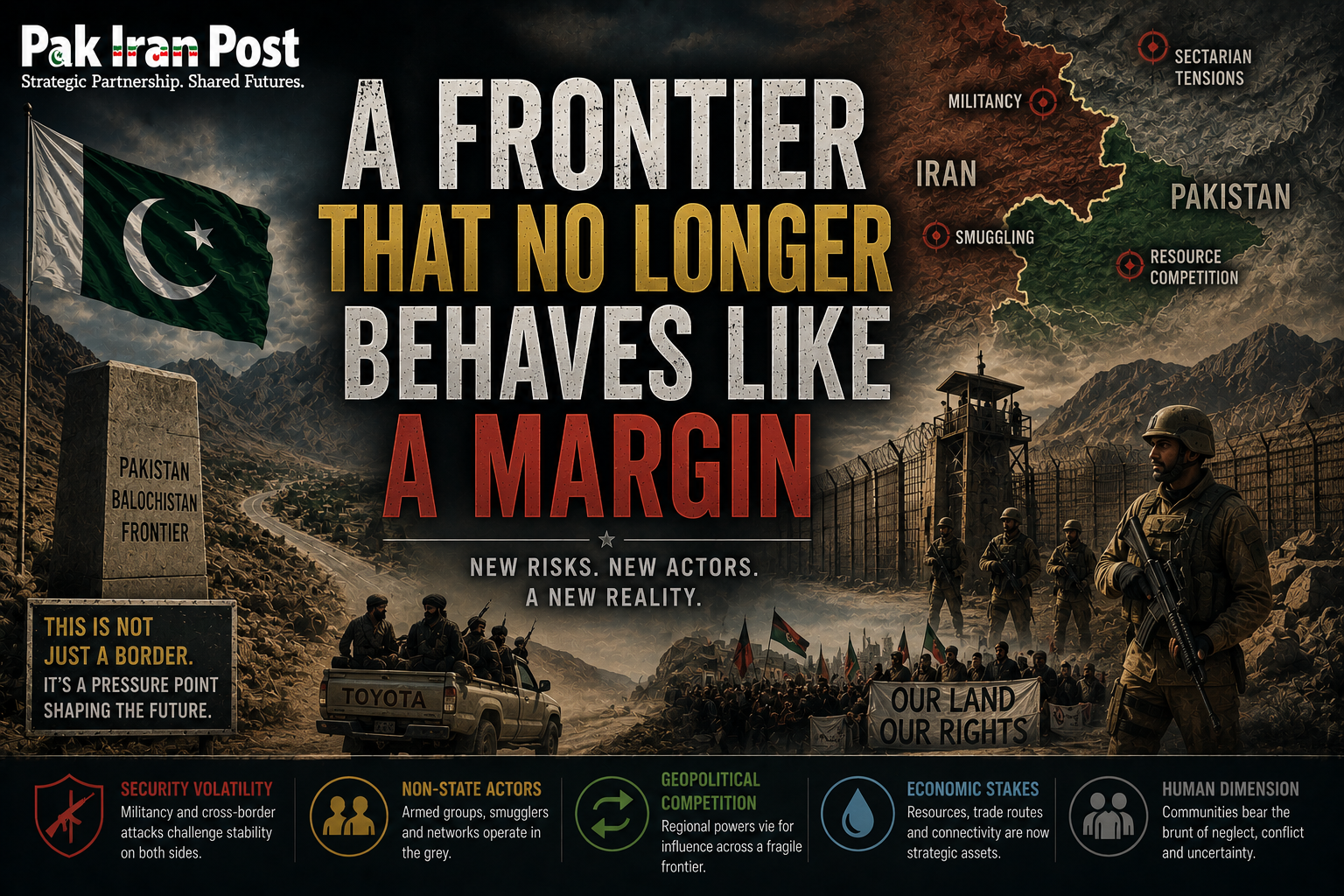
A Frontier That No Longer Behaves Like a Margin

Borders become dangerous not only when armies cross them, but when states stop governing what the border has already become. The Pakistan-Iran frontier has long been described as a remote security belt, a rough edge of sovereignty where smugglers, insurgents, tribes, and underfunded

Border After Fire. Pakistan, Iran and the New Frontier

For years, Pakistan’s frontier with Iran sat in the hierarchy of national security as a troublesome but secondary theatre: important enough to require periodic military attention, diplomatic management and border coordination, but rarely central enough to reorder the state’s strategic imagination. That hierarchy

A Realist Reset for Pakistan Iran Regional Stability Framework

The strategic geography linking Pakistan and Iran has long been described in diplomatic shorthand as a “natural corridor of civilizational adjacency,” yet in practical geopolitical terms it has functioned more as a managed tension zone than a coherent economic or security continuum. The
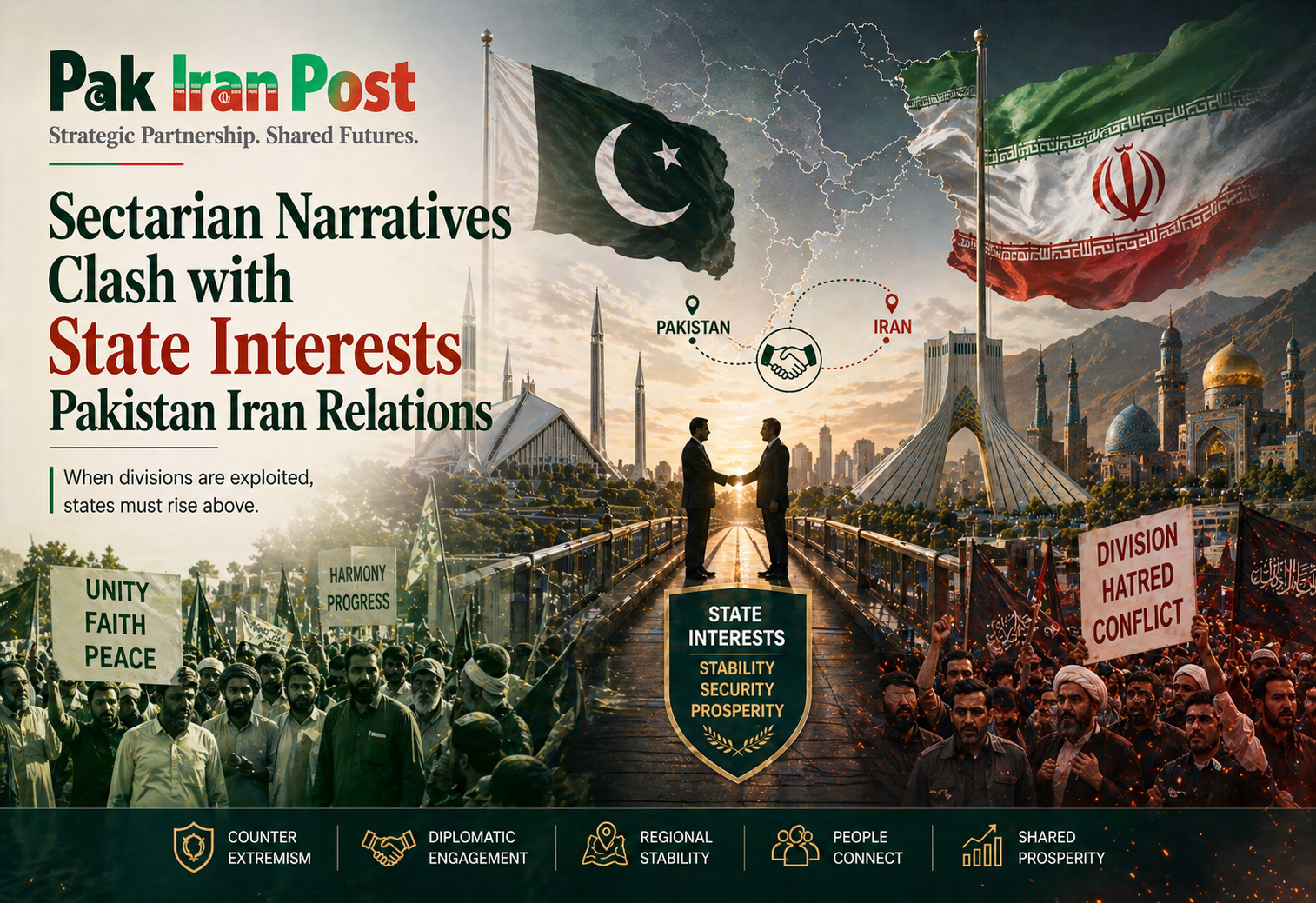
Sectarian Narratives Clash with State Interests Pakistan Iran Relations

In the contemporary evolution of Pakistan Iran relations, one of the most persistent yet least formally acknowledged tensions lies in the widening gap between state level strategic reasoning and the fragmented, often emotionally charged narratives circulating through media ecosystems, religious networks, and digital

Pakistan Iran Policy Reset After Crisis
Pakistan’s relationship with Iran has long existed in a narrow corridor between geographic inevitability and geopolitical constraint. It is a relationship shaped less by strategic design and more by episodic necessity, interrupted repeatedly by sanctions regimes, border insecurity, regional rivalries, and shifting external