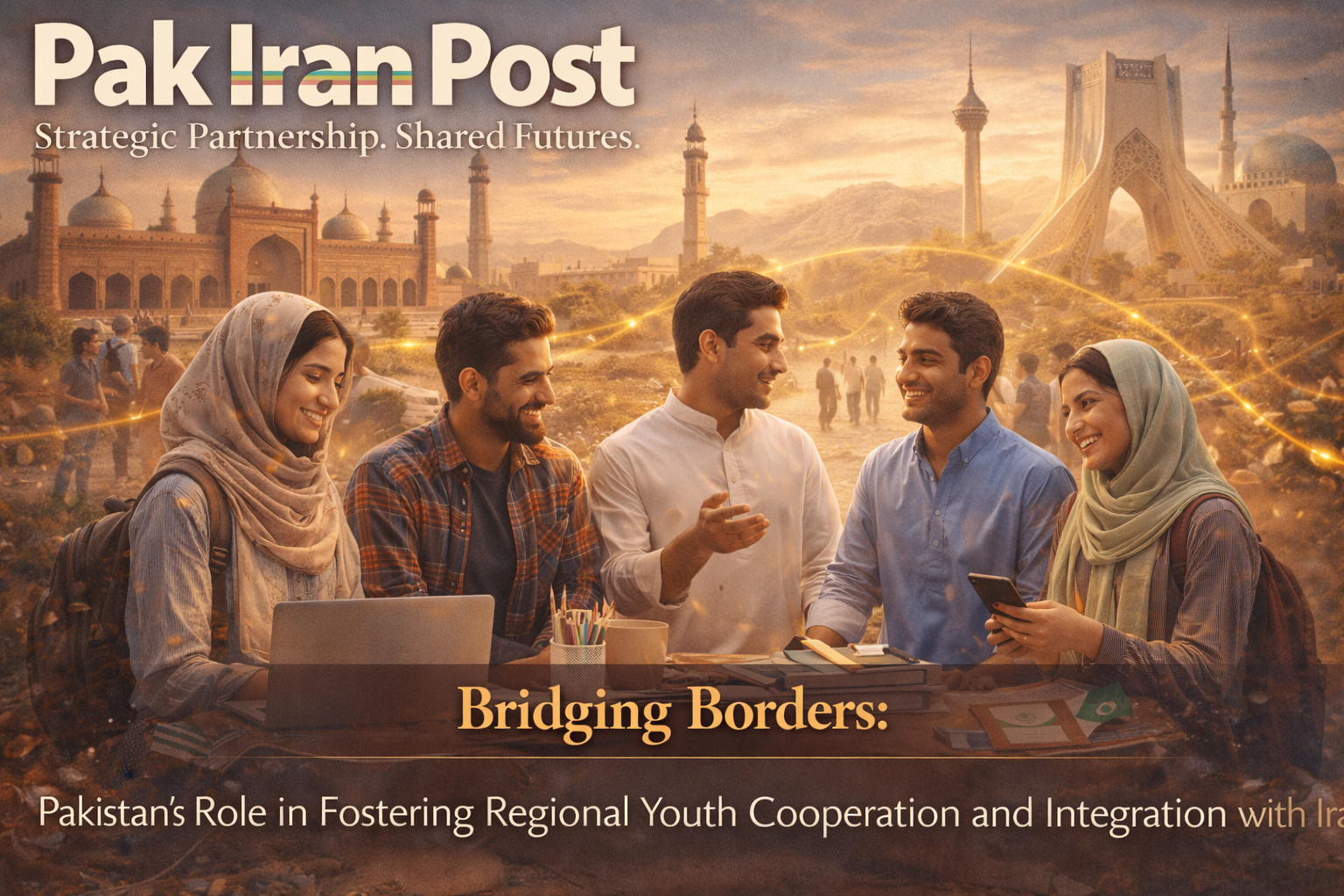

Pakistan Iran Policy Reset After Crisis


Pakistan’s relationship with Iran has long existed in a narrow corridor between geographic inevitability and geopolitical constraint. It is a relationship shaped less by strategic design and more by episodic necessity, interrupted repeatedly by sanctions regimes, border insecurity, regional rivalries, and shifting external alignments. In the aftermath of renewed regional tensions and periodic flare-ups along the Iran Pakistan frontier, this policy space has again reached a point where incremental adjustments are no longer sufficient. What is required is not tactical recalibration but structural redefinition.
At the core of Pakistan’s Iran policy lies a persistent contradiction. On one hand, Iran is an indispensable neighbor, sharing a 900 kilometer border, offering potential energy connectivity, and providing access to a broader West Asian economic geography. On the other hand, Iran is also embedded in a complex web of international sanctions, regional rivalries with Gulf monarchies, and security entanglements that place Pakistan in a constant balancing act between competing external pressures. This duality has produced a policy of managed ambiguity, where engagement is maintained at low intensity, periodically disrupted by crises, and then cautiously restored without long-term institutional depth.
This reactive posture is increasingly untenable. The regional environment is undergoing structural transformation. Energy insecurity is intensifying, maritime chokepoints are becoming more militarized, and global supply chains are fragmenting under geopolitical pressure. In such an environment, Pakistan’s proximity to Iran is no longer a diplomatic complication but a strategic asset that remains underutilized due to policy inertia. The question is not whether Pakistan should engage Iran, but how it can do so without inheriting secondary geopolitical costs.
A restructured Iran policy must begin with a clear conceptual shift from episodic diplomacy to structured interdependence. At present, engagement is largely event driven, responding to border incidents, sanctions relief windows, or external diplomatic pressure. This approach produces volatility in bilateral relations and prevents the accumulation of trust capital. A structured framework would instead embed engagement within institutional mechanisms that operate independently of political cycles.
The first dimension of this restructuring is border governance. The Iran Pakistan frontier has historically been treated as a security perimeter rather than an economic interface. Persistent issues of smuggling, militant movement, and informal trade have reinforced securitized perceptions on both sides. Yet the same frontier also holds potential for regulated economic corridors that could transform peripheral regions into zones of legal commerce. This requires the establishment of joint border management authorities, integrated customs systems, and coordinated surveillance mechanisms that distinguish between security threats and legitimate economic flows. Without such differentiation, the border will remain a site of perpetual tension rather than controlled connectivity.
The second dimension is energy pragmatism. Pakistan’s chronic energy deficit creates a structural incentive to engage Iran’s vast hydrocarbon resources. However, sanctions constraints have repeatedly stalled large scale infrastructure projects, most notably the proposed pipeline architecture. Rather than treating this as an all or nothing proposition, Pakistan must adopt a modular approach to energy cooperation. This would involve phased import agreements, segmented infrastructure development, and flexible contractual arrangements that allow partial commissioning without full system activation. In parallel, alternative settlement mechanisms such as barter trade, commodity swaps, and non dollar clearing arrangements can reduce exposure to sanctions related financial disruptions.
The third dimension is diplomatic insulation. Pakistan’s Iran policy has often been indirectly shaped by external actors, particularly Gulf states, the United States, and increasingly China. While these relationships are indispensable, overdependence on external validation has constrained Pakistan’s ability to pursue consistent bilateral engagement with Tehran. A more mature policy would establish a degree of diplomatic compartmentalization, where Pakistan’s engagement with Iran is not framed as a zero-sum extension of its Gulf relations. This does not imply neutrality in regional rivalries but rather strategic autonomy within clearly defined limits.
Security remains the most sensitive dimension of this relationship. Cross border militancy, sectarian spillovers, and criminal networks have repeatedly undermined trust between Islamabad and Tehran. Addressing this requires moving beyond periodic intelligence sharing to institutionalized security cooperation. Joint liaison centers, synchronized patrol schedules, and shared threat mapping systems can gradually reduce misperceptions and operational gaps. Crucially, both sides must decouple border security cooperation from broader geopolitical disputes, otherwise local security issues will continue to be amplified by regional rivalries.
Economic integration represents the most underdeveloped pillar of Pakistan Iran relations. Beyond energy, there exists significant potential in trade diversification, particularly in agriculture, livestock, pharmaceuticals, and cross border logistics services. However, current trade volumes remain far below potential due to financial restrictions, infrastructural bottlenecks, and regulatory asymmetries. Establishing special economic zones along the border, harmonizing customs procedures, and creating protected trade corridors could significantly expand legal economic exchange while reducing reliance on informal networks.
At the diplomatic level, Pakistan must also redefine its role not as a passive participant in Iran Gulf tensions but as a functional intermediary capable of reducing escalation risks. This requires careful calibration. Pakistan does not possess the leverage to impose solutions on regional disputes, but it does occupy a geographic and political position that allows it to facilitate dialogue. Structured diplomatic platforms involving Iran, Gulf Cooperation Council states, and China could provide a multilateral channel for managing regional tensions, particularly those linked to energy security and maritime stability.
However, any attempt to deepen engagement with Iran must also account for the limitations imposed by the international sanctions’ environment. Pakistan cannot afford secondary sanctions exposure that could destabilize its already fragile external financing position. Therefore, policy design must integrate legal risk management frameworks, diversified payment systems, and selective engagement strategies that prioritise sectors less vulnerable to sanction enforcement. This requires close coordination between financial regulators, foreign policy institutions, and trade authorities.
The broader strategic objective of recalibrating Pakistan’s Iran policy is not to align fully with any regional bloc but to maximize strategic flexibility in an increasingly fragmented international system. Pakistan’s geographic position places it at the intersection of competing energy corridors, security architectures, and economic networks. Iran is a critical node within this intersection, and ignoring this reality is no longer a viable policy option.
Ultimately, a post crisis Iran policy must move beyond the logic of containment and containment avoidance. It must instead be grounded in managed interdependence, where cooperation is structured, risks are compartmentalized, and engagement is insulated from external volatility. This is not a departure from Pakistan’s existing diplomatic posture but an evolution of it, from reactive balancing to proactive structuring.
The success of such a framework will depend not on grand declarations but on incremental institutionalization. Border mechanisms, energy contracts, financial arrangements, and diplomatic channels must all be embedded within durable systems that survive political transitions and external shocks. Only then can Pakistan transform its relationship with Iran from a source of recurring uncertainty into a managed strategic asset in a volatile regional order.
A Public Service Message