
Middle Powers Navigate Pakistan Iran Shift After Gulf Rapprochement


By : Shafqat Ali Qureshi
The recalibration of relations between Saudi Arabia and Iran has quietly altered the diplomatic geometry of West and South Asia, creating ripple effects that extend far beyond the Gulf. For Pakistan and Iran, two states long positioned at the intersection of competing regional blocs, the thaw between Riyadh and Tehran has not resolved structural tensions, but it has significantly reshaped the strategic environment in which those tensions are managed. What is emerging is not a post rivalry order, but a more fluid and less zero sum diplomatic space in which middle powers exercise constrained but noticeable room for manoeuvre.
For decades, Pakistan’s foreign policy towards Iran was indirectly shaped by the broader Saudi Iran rivalry. Islamabad’s balancing act was defined by the need to maintain strategic, financial, and religiously sensitive ties with Saudi Arabia while sustaining geographically unavoidable relations with Iran. This duality often produced a cautious, sometimes fragmented diplomatic posture, where engagement with one side was interpreted through the lens of relations with the other. Iran, similarly, viewed Pakistan not only as a neighbour but also as a state embedded in a wider regional alignment system influenced by Gulf politics, Western partnerships, and security dependencies.
The restoration of diplomatic engagement between Saudi Arabia and Iran has weakened, though not eliminated, this binary structure. It has reduced the intensity of zero sum interpretations that once shaped regional diplomacy, allowing states like Pakistan to engage Iran with slightly greater flexibility and fewer immediate concerns about antagonising a competing axis. At the same time, it has encouraged Iran to reimagine regional engagement less through confrontation and more through calibrated coexistence, particularly with neighbouring states that are not directly embedded in Gulf rivalry dynamics.
Yet this shift should not be misunderstood as a structural transformation of regional order. The underlying strategic competition in the broader Middle East remains intact, though it is now expressed through more subtle and diversified channels. For Pakistan and Iran, this means that diplomatic space has expanded at the margins, but core constraints remain firmly in place. Energy dependency, border security, sanctions regimes, and external alliances continue to shape the parameters of engagement.
In Pakistan’s case, the Saudi Iran rapprochement has marginally eased the pressure of alignment politics. Islamabad has historically relied on Saudi financial support, labour remittances, and energy cooperation, while simultaneously maintaining a complex and often cautious relationship with Iran due to geographic proximity and shared border security concerns. The easing of direct Saudi Iran hostility allows Pakistan to pursue more issue specific diplomacy with Tehran, particularly in areas such as cross border trade, energy connectivity discussions, and border management cooperation, without the same level of immediate geopolitical signalling attached.
However, this increased flexibility is not absolute. Pakistan’s strategic environment remains deeply embedded in broader Gulf security structures, and its economic vulnerabilities continue to influence foreign policy choices. As a result, while rhetorical space for engagement with Iran may have widened, substantive policy shifts remain incremental and carefully calibrated.
Iran, on the other hand, views the Saudi rapprochement as part of a broader strategic recalibration following years of regional isolation pressures. The reduction in direct hostility with Riyadh provides Tehran with an opportunity to diversify its regional engagements and reduce over reliance on confrontational paradigms. In this context, Pakistan becomes not a proxy arena of Gulf rivalry, but a potential partner in managing eastern border stability, trade routes, and limited regional connectivity initiatives.
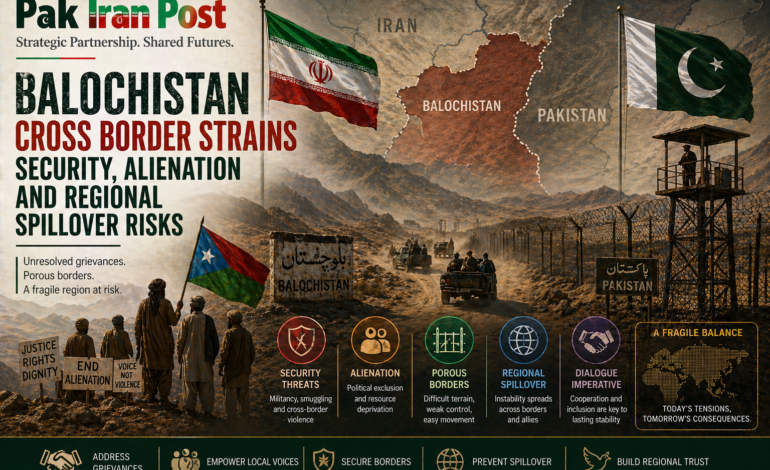
This does not eliminate existing tensions, but it reframes them. Border security incidents, previously interpreted through sharper geopolitical lenses, are now more likely to be managed within a framework of pragmatic containment. Diplomatic engagement between Islamabad and Tehran increasingly reflects a logic of issue specific cooperation rather than bloc based alignment.
One of the most significant yet under analysed consequences of the Saudi Iran rapprochement is the softening of narrative rigidity in regional media ecosystems. While state aligned media in both Pakistan and Iran continue to emphasise sovereignty, security, and national interest, there has been a noticeable reduction in overtly binary framing of regional politics. The language of inevitable confrontation has been partially replaced by narratives of managed coexistence, even if underlying suspicions persist.
This shift is particularly visible in commentary on Pakistan Iran relations, where previous interpretations often linked bilateral dynamics to broader sectarian or bloc based frameworks. Increasingly, however, analysis is moving towards more technocratic discussions of border management, trade facilitation, and regional connectivity. This does not eliminate ideological framing, but it dilutes its dominance.
Social media environments, however, remain more volatile. While official diplomatic narratives emphasise stability and pragmatism, digital platforms continue to host fragmented and often contradictory interpretations of regional developments. Influencer driven content, unverified reports, and ideologically charged commentary can rapidly reintroduce zero sum framings even in periods of official rapprochement. This creates a persistent gap between elite level diplomatic recalibration and mass level narrative perception.
Within this evolving context, Pakistan Iran relations can be understood as operating in a transitional diplomatic space. The reduction in Saudi Iran hostility has not fundamentally transformed bilateral relations, but it has altered the external pressure field within which those relations unfold. This shift is subtle but important. It reduces the likelihood that localised tensions will escalate into broader regional alignments, while also increasing the autonomy of bilateral engagement.
Trade and connectivity discussions provide a useful lens through which to observe this change. Both Pakistan and Iran have periodically expressed interest in enhancing cross border trade, energy exchange, and transport connectivity. However, these initiatives have historically been constrained by sanctions regimes, security concerns, and broader geopolitical alignments. In the current environment, there is a modest increase in rhetorical commitment to such initiatives, though implementation remains uneven.
Energy diplomacy, in particular, remains a structurally important yet politically sensitive domain. Iran’s energy resources and Pakistan’s chronic energy shortages create a natural complementarity, but this has repeatedly been constrained by external sanctions and financing limitations. The Saudi Iran rapprochement does not resolve these structural barriers, but it reduces the intensity of regional political signalling that previously complicated even exploratory discussions.
At the institutional level, both states continue to rely on security dominated frameworks for managing their border. This reflects the reality that despite diplomatic improvements, the Pakistan Iran border remains a complex security environment shaped by non state actors, smuggling networks, and uneven state capacity. As a result, security cooperation remains the most consistently operational dimension of bilateral engagement, even as political and economic discussions fluctuate.
The broader implication of the Saudi Iran rapprochement for Pakistan Iran relations is therefore not transformation but modulation. It has not created a new strategic order, but it has softened the edges of an existing one. It has introduced greater diplomatic elasticity, while leaving structural constraints largely intact.
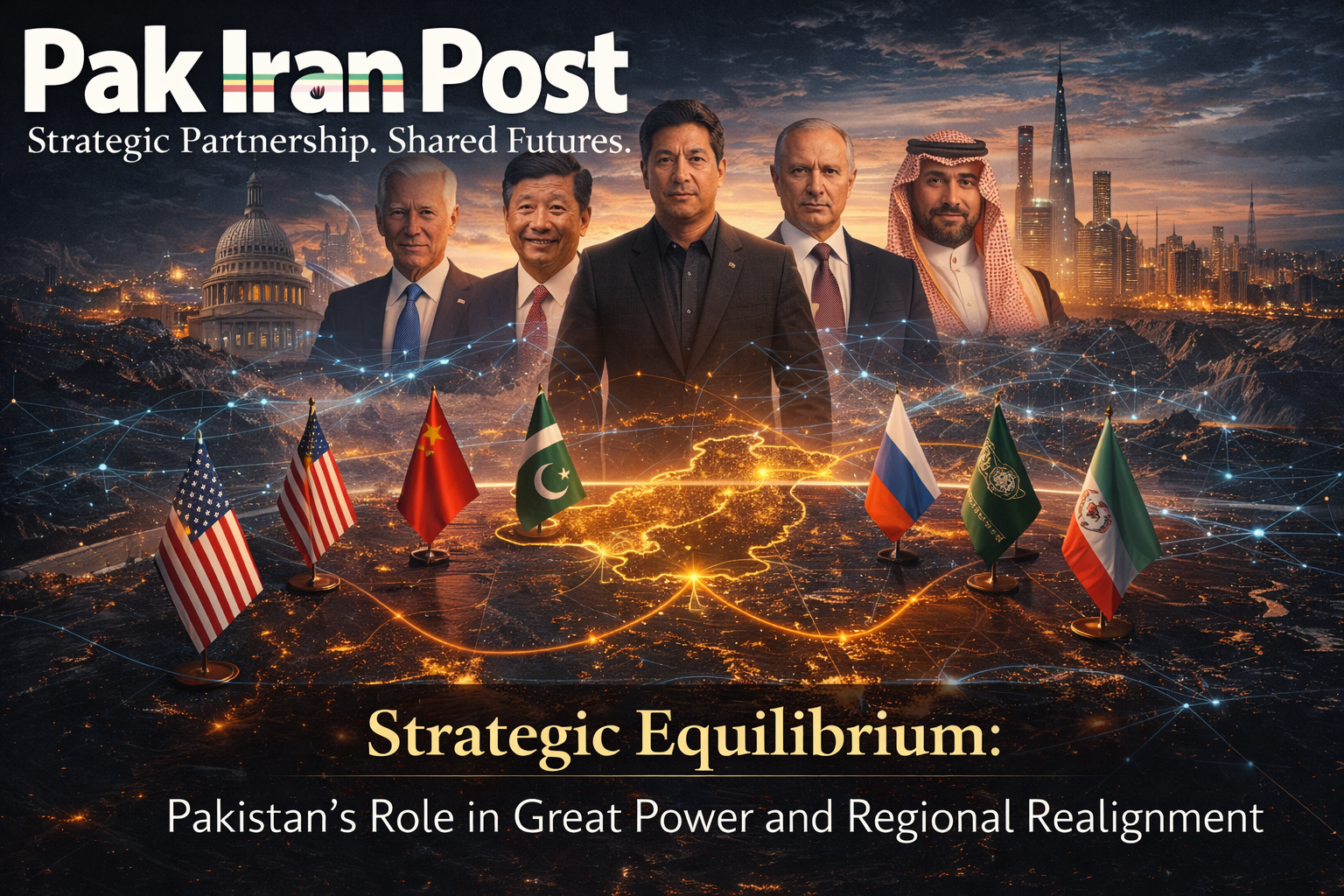
For middle powers like Pakistan, this environment presents both opportunity and ambiguity. On one hand, reduced regional polarisation allows for more flexible engagement with multiple actors without immediate fear of bloc based repercussions. On the other hand, the absence of clear alignments can also increase uncertainty, requiring more nuanced and adaptive diplomacy.
Iran faces a similar duality. The easing of regional hostility opens space for diversified engagement, but it does not eliminate sanctions pressures, internal economic challenges, or external security concerns. As a result, Tehran’s regional strategy remains a blend of cautious outreach and defensive consolidation.
In both cases, the role of perception becomes increasingly important. Diplomatic shifts are not only evaluated in terms of material outcomes but also in terms of how they are interpreted by domestic audiences and external observers. This places greater emphasis on narrative management, media framing, and symbolic signalling.
Ultimately, the Saudi Iran rapprochement has not redefined Pakistan Iran relations, but it has changed the conditions under which those relations evolve. It has reduced the intensity of external polarisation, increased the space for bilateral pragmatism, and introduced a more fluid regional diplomatic environment. Yet it has also preserved the underlying complexities that have historically defined this relationship.
What emerges is not a new order, but a recalibrated one, where middle powers navigate a landscape that is less rigidly divided but still deeply constrained. In this space, diplomacy is less about resolving contradictions and more about managing them with greater flexibility and fewer external pressures than before.
A Public Service Message