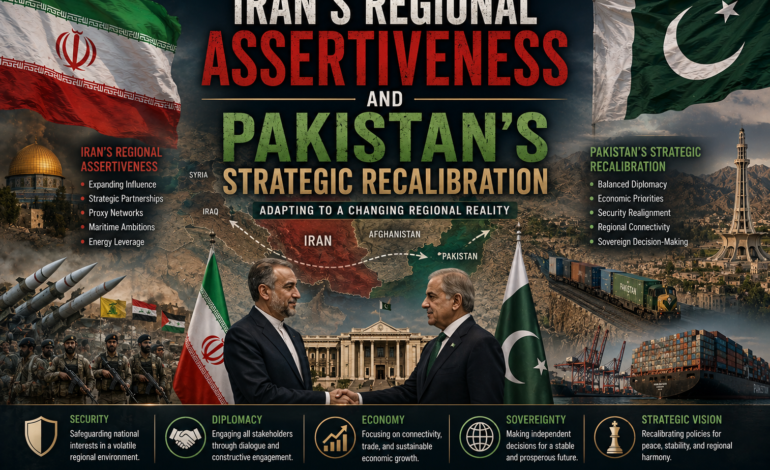
Iran’s Regional Assertiveness and Pakistan’s Strategic Recalibration

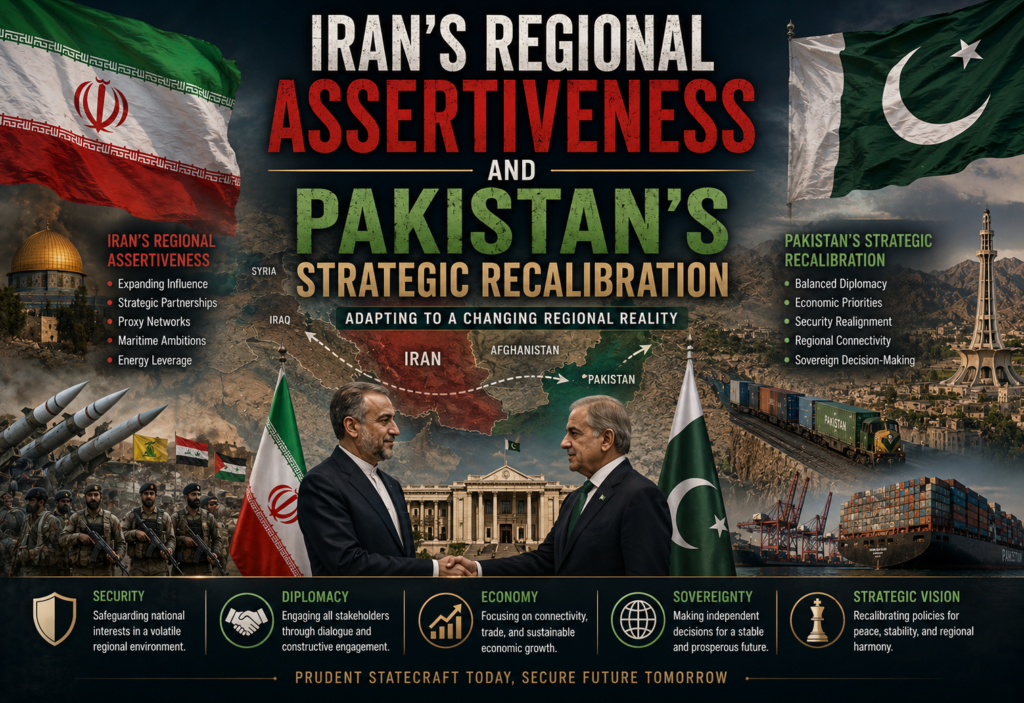
The expanding regional footprint of the Islamic Republic of Iran represents one of the most structurally consequential transformations in the contemporary West Asian geopolitical landscape, reshaping not only the balance of power across Iraq, Syria, and Yemen, but also recalibrating the strategic imagination of neighboring states such as Pakistan. This evolution is not merely the product of opportunistic expansion but of a sustained doctrinal adaptation shaped by decades of sanctions pressure, military containment, ideological consolidation, and asymmetric deterrence architecture. Iran’s regional presence has thus matured into a hybrid system of statecraft where conventional diplomacy, proxy networks, energy leverage, religious soft power, and informational influence converge into a singular but decentralized geopolitical instrument.
For Pakistan, this transformation introduces a complex recalibration challenge that transcends traditional bilateral diplomacy. Iran is no longer a peripheral neighbor to be managed through border security protocols alone, but a deeply embedded regional actor whose influence extends across interconnected theaters of Middle Eastern conflict and governance. The strategic implications of this reality are amplified by Pakistan’s own internal vulnerabilities, including energy insecurity, fiscal fragility, sectarian heterogeneity, and the persistent instability of its western frontier. Consequently, Pakistan’s engagement with Iran is increasingly shaped by a dual imperative: containment of spillover risks and exploration of latent connectivity opportunities.
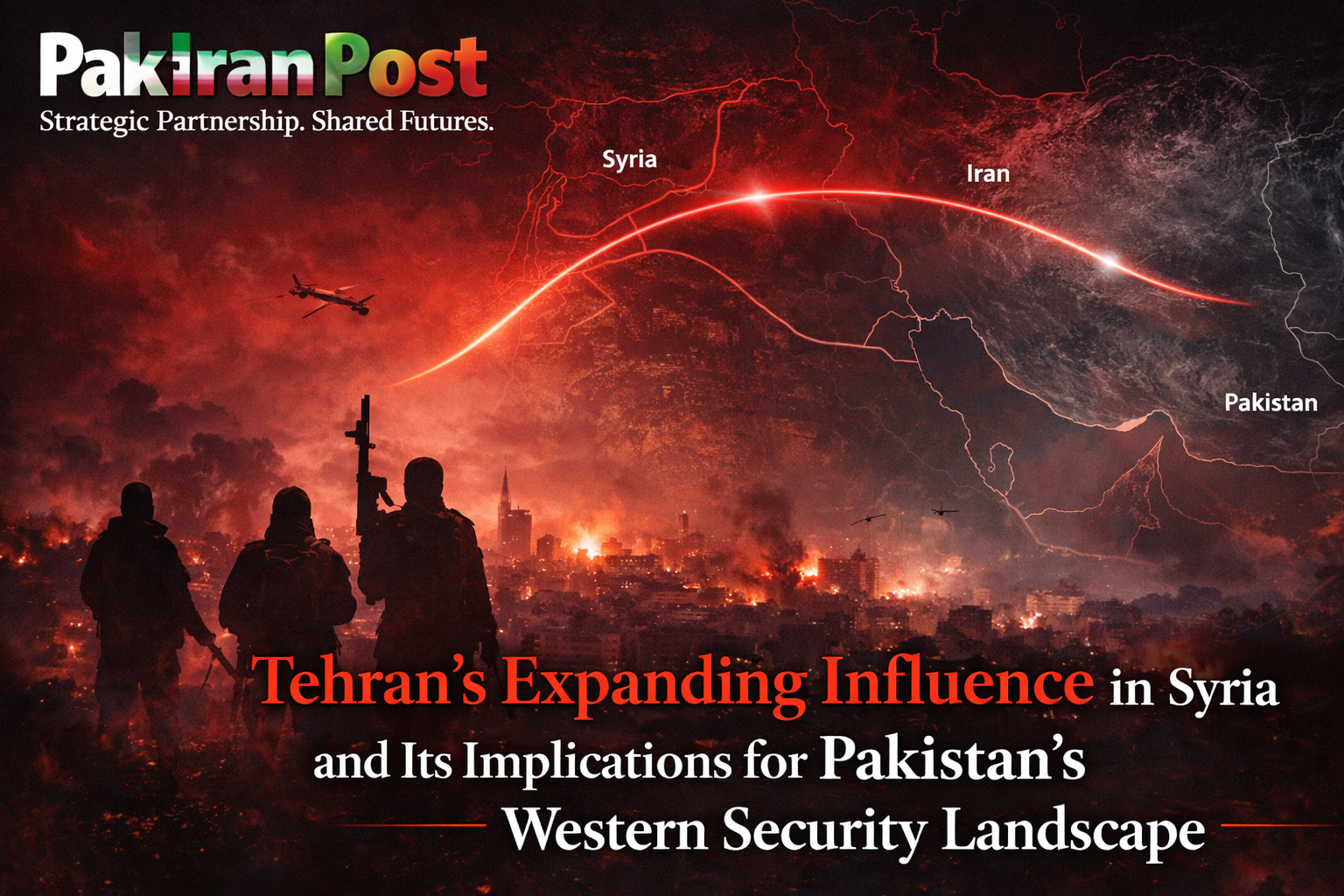
Iran’s regional assertiveness must be understood within the intellectual framework of strategic endurance under structural constraint. Unlike conventional great powers that project influence through overwhelming military superiority or expansive economic integration, Iran has developed a distributed model of regional engagement. This model relies on the cultivation of aligned non state actors, the institutionalization of ideological affinity networks, and the strategic exploitation of governance vacuums in fragmented states. In Iraq, Iran’s influence is embedded within political coalitions and militia ecosystems; in Syria, it is structured through survival assistance and military advisory presence; in Yemen, it operates through asymmetric support mechanisms that complicate traditional deterrence paradigms. The cumulative effect is the emergence of a regionally embedded influence architecture that is both resilient and difficult to dismantle.
The informational dimension of this assertiveness is equally significant. Competing narratives surrounding Iran are disseminated through transnational media ecosystems that simultaneously depict it as a destabilizing revolutionary force and as a symbol of anti hegemonic resistance. These narratives are amplified through digital platforms, diaspora networks, ideological publications, and regional broadcasting systems, producing a fragmented epistemic environment in which perception often outweighs empirical geopolitical assessment. Within Pakistan, these narratives are further refracted through domestic ideological filters, where Iran is alternately framed as a sectarian concern, a strategic opportunity, or an anti Western ideological partner depending on the political orientation of the observer.
Pakistan’s response to this evolving Iranian posture has historically oscillated between cautious engagement and strategic distancing. The geographical proximity of Iran’s Sistan Baluchestan region to Pakistan’s Balochistan province introduces an immediate security dimension, where cross border mobility of non state actors, smuggling networks, and insurgent groups generates persistent instability risks. Simultaneously, Iran’s potential role as an energy supplier and transit corridor partner offers structural relief to Pakistan’s chronic energy deficit, particularly in the context of long term gas pipeline discussions and regional connectivity frameworks. This duality ensures that Pakistan cannot adopt a purely adversarial or purely cooperative posture, but must instead operate within a constrained continuum of selective engagement.
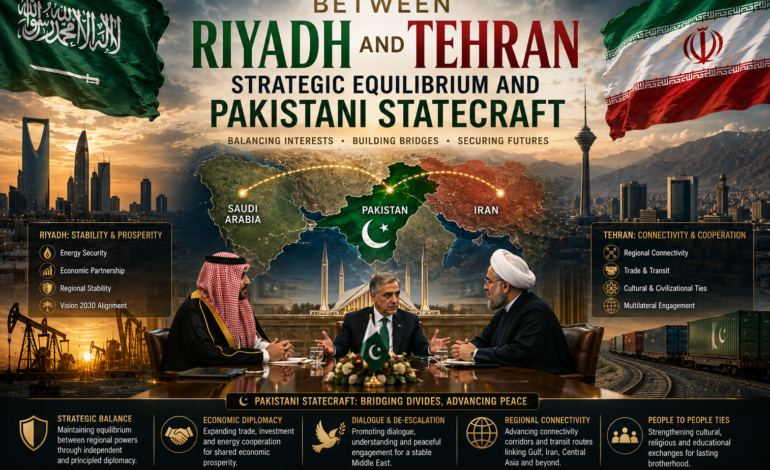
The structural challenge lies in reconciling Pakistan’s simultaneous dependencies on Gulf financial systems and Iranian geographical proximity. Gulf states, particularly Saudi Arabia and the United Arab Emirates, remain indispensable to Pakistan’s macroeconomic stability through remittances, oil financing, and investment inflows. Iran, by contrast, represents a geographically contiguous but financially constrained partner whose value is concentrated in energy potential and regional connectivity. This asymmetry produces a triangular diplomatic constraint in which Pakistan’s policy autonomy is perpetually negotiated between economic necessity and geographic inevitability.
Iran’s sanction constrained economy has also generated adaptive mechanisms that are increasingly relevant for regional economic analysis. These include the expansion of informal trade networks, reliance on barter based transactions, utilization of shadow maritime logistics, and experimentation with alternative currency settlement systems. While these mechanisms are often viewed externally as distortions of formal economic order, they represent a form of systemic resilience that enables Iran to maintain regional engagement despite sustained financial isolation. For Pakistan, such mechanisms present both opportunity and risk, offering potential trade flexibility while simultaneously exposing the state to secondary sanction vulnerabilities and reputational constraints within global financial systems.
The broader geopolitical environment further complicates Pakistan’s strategic recalibration. The partial reconfiguration of Middle Eastern diplomacy, including episodic rapprochement between Iran and Saudi Arabia facilitated by external mediation channels, has temporarily reduced the intensity of direct confrontation but has not eliminated structural competition. Instead, rivalry has migrated into more subtle domains including maritime influence in the Persian Gulf and Red Sea corridors, ideological competition over Islamic legitimacy, and infrastructural competition over trade and energy connectivity corridors linking Asia to Europe and Africa. Within this evolving configuration, Pakistan’s strategic relevance is both enhanced and constrained, as its geographic position becomes increasingly significant for regional connectivity while its internal vulnerabilities limit its capacity for assertive diplomacy.
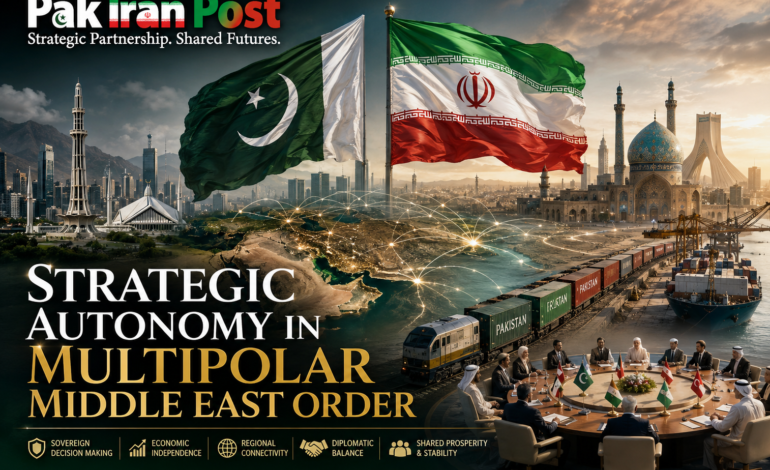
China’s expanding engagement in both Iran and Pakistan introduces an additional layer of complexity. Through infrastructure investment frameworks and connectivity initiatives, Beijing has created overlapping networks of economic integration that link Gwadar, Tehran, and broader Central Asian corridors. This has the potential to transform Pakistan into a critical transit node in Eurasian connectivity systems. However, it also introduces new dependency structures characterized by debt obligations, technological asymmetry, and long term strategic alignment pressures. The intersection of Chinese economic influence with Iranian regional assertiveness thus creates both convergence opportunities and strategic ambiguity for Pakistan.
From a policy perspective, Pakistan’s engagement with Iran requires a shift from episodic crisis management to institutionalized strategic calibration. This involves the development of structured border governance mechanisms capable of addressing cross border militancy and smuggling networks without escalating diplomatic tensions. It also necessitates the creation of energy diplomacy frameworks that can evaluate the feasibility of cross border pipelines and electricity exchange mechanisms within a sanctions sensitive environment. Intelligence cooperation mechanisms must be strengthened to manage non state actor mobility, while diplomatic channels must be insulated from short term political volatility.
Equally important is the need to develop informational governance frameworks capable of mitigating the impact of externally driven narrative polarization. Sectarian framing of Iran Pakistan relations must be actively countered through institutional communication strategies that emphasize pragmatic cooperation over ideological categorization. Without such mechanisms, domestic discourse will remain vulnerable to external amplification of identity based geopolitical narratives.
The central analytical challenge for Pakistan is to redefine Iran not as a binary strategic problem but as a structural regional constant whose influence will persist regardless of diplomatic fluctuations. This requires abandoning the assumption that regional order is transitional and instead recognizing that Iran’s regional embeddedness is now a permanent feature of West Asian geopolitics. Policy must therefore be oriented toward long term coexistence rather than short term containment.
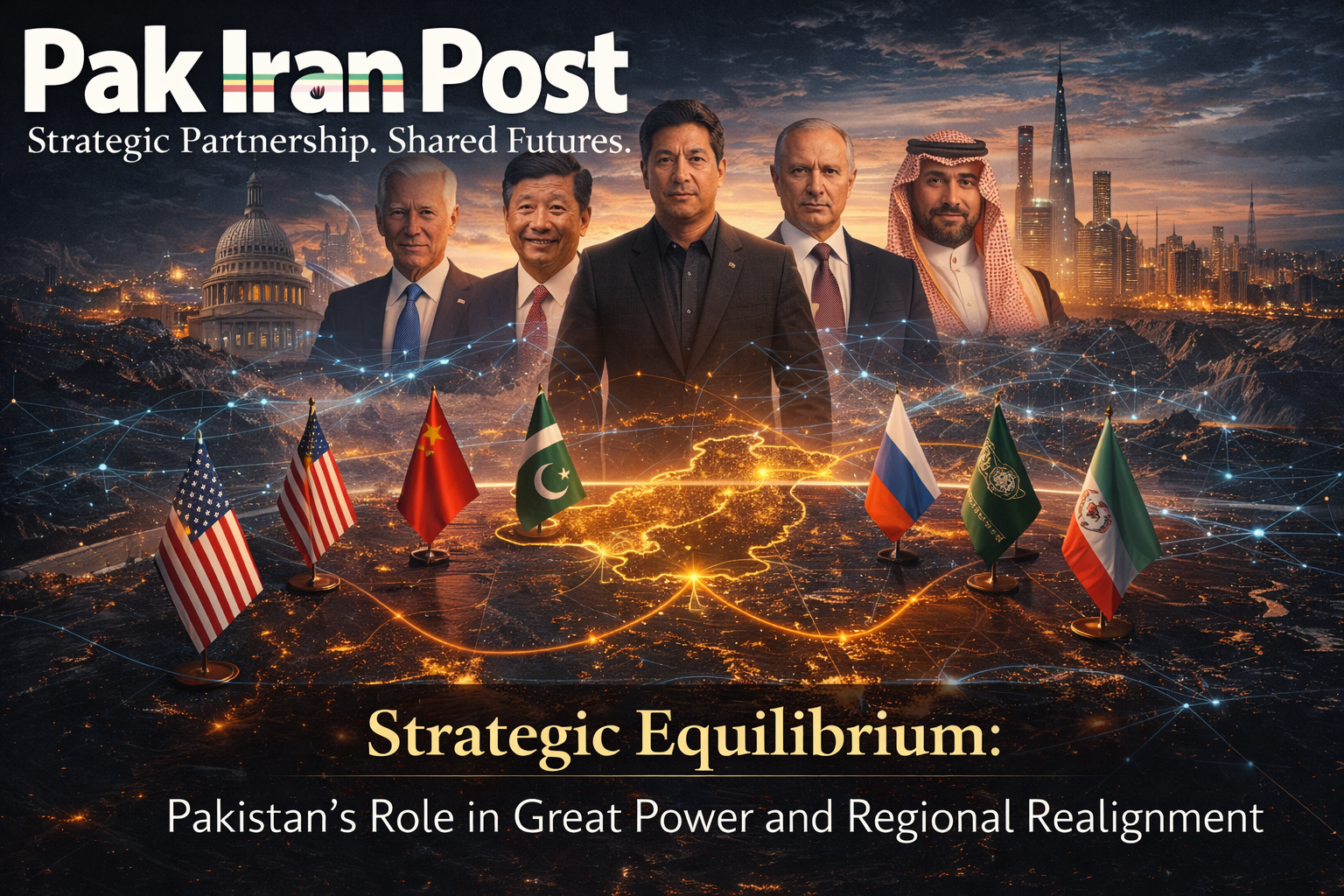
Ultimately, Pakistan’s strategic recalibration toward Iran reflects a broader transformation in international relations, where state behavior is increasingly shaped by layered dependencies rather than absolute alliances. Success in this environment will depend not on ideological alignment or opposition but on the capacity to manage complexity through adaptive governance, diversified partnerships, and resilient institutional design. Iran’s regional assertiveness is not an external anomaly to be resolved but an enduring structural reality to be navigated.
A Public Service Message