Strategic Autonomy in Multipolar Middle East Order

BY SHAFQAT ALI QURESHI
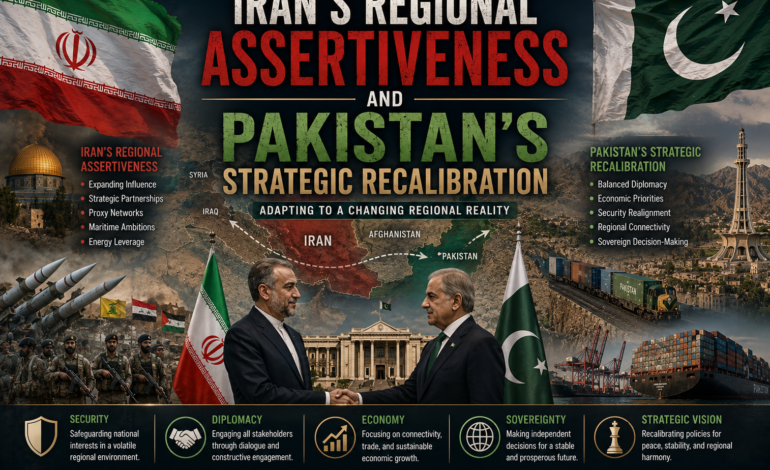
The contemporary invocation of strategic autonomy within the evolving geopolitical architecture of the Middle East reflects less a coherent doctrine and more an aspirational response to an increasingly fragmented international system in which sovereignty is simultaneously asserted and structurally constrained. For states such as Pakistan and Iran, strategic autonomy is not a stable condition but a continuous negotiation within overlapping spheres of influence shaped by the United States, China, and Russia, alongside regional power centres embedded in Gulf monarchies and transnational financial architectures. The idea of a multipolar order, frequently articulated in diplomatic discourse as a post unipolar transition, masks a deeper reality of asymmetrical interdependence, where power is distributed unevenly across military capabilities, financial systems, technological infrastructures, and informational regimes rather than balanced across equal sovereign poles.
In this environment, autonomy does not signify independence from external influence but rather the capacity to manage multiple dependencies without succumbing to singular domination. Pakistan and Iran both operate within this condition, albeit from distinct structural positions. Iran’s autonomy is shaped by prolonged exposure to sanctions regimes, compelled self reliance, and the construction of alternative economic and security networks that bypass Western institutional frameworks. Pakistan’s autonomy, by contrast, is mediated through financial vulnerability, security dependencies, and infrastructural reliance on external partners for energy, investment, and fiscal stabilization. Despite these differences, both states confront a shared epistemic challenge: how to preserve decision making flexibility in a system where sovereignty is increasingly conditional.
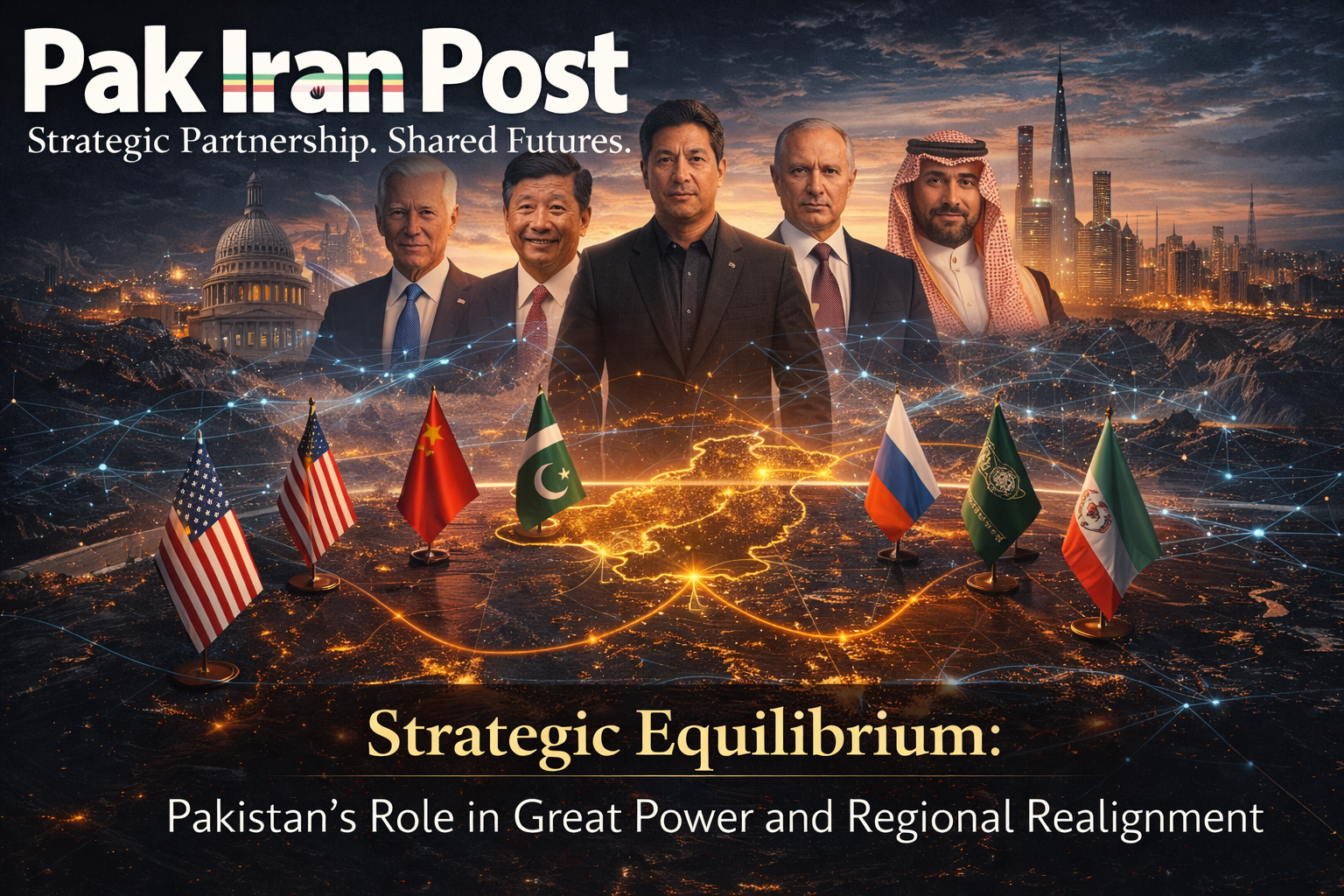
The global system that is often described as multipolar is in reality characterized by layered hierarchies rather than horizontal parity. The United States retains systemic influence through the dollar based financial order, global sanctions enforcement mechanisms, maritime dominance, and technological ecosystems that underpin digital governance worldwide. Even in regions where American military presence has diminished, its institutional influence persists through financial compliance structures, intelligence networks, and regulatory regimes that shape state behavior. China, on the other hand, represents an infrastructural superpower whose influence is exercised through long term investment frameworks, connectivity corridors, digital infrastructure expansion, and energy financing mechanisms that bind recipient states into durable dependency cycles. Russia functions as a selective disruptor, projecting influence through energy leverage, arms exports, and tactical interventions, yet lacks the institutional depth to construct a comprehensive alternative order.
Within this triangulated structure, Iran and Pakistan occupy intermediate positions, neither capable of shaping systemic architecture nor fully subordinate within it. Their strategic choices are therefore constrained by the need to continuously navigate between competing external poles while maintaining internal stability. For Iran, this has produced a doctrine of resistance shaped by ideological consolidation and asymmetric deterrence. For Pakistan, it has produced a doctrine of calibrated alignment, oscillating between competing external partners depending on economic necessity and security imperatives.
The concept of strategic autonomy is frequently romanticized in Global South discourse as a form of geopolitical emancipation. However, such interpretations often obscure the infrastructural realities that define contemporary sovereignty. Digital ecosystems are controlled by a small number of global technology firms, financial flows are regulated through compliance regimes anchored in Western banking systems, and energy markets are shaped by integrated global pricing structures. In such an environment, no state exercises absolute autonomy; rather, all states operate within nested systems of constraint and opportunity.
For Pakistan, strategic autonomy is fundamentally limited by fiscal dependency cycles that require periodic external financial stabilization. These dependencies are reinforced by structural trade imbalances, narrow export bases, and recurring balance of payments crises. External actors, particularly international financial institutions and Gulf financial partners, therefore exercise indirect influence over domestic policy decisions. Iran’s autonomy, while more ideologically assertive, is constrained by sanctions regimes that limit access to global financial systems and restrict technological integration, compelling reliance on alternative economic networks that are often less efficient and more politically volatile.
China’s expanding role in both Pakistan and Iran introduces a complex layer of infrastructural interdependence that simultaneously enhances and constrains autonomy. Through large scale connectivity initiatives, energy investments, and digital infrastructure projects, China offers an alternative to Western financial and technological systems. However, these alternatives are not neutral replacements but embedded systems of long term dependency structured through debt obligations, contractual asymmetries, and technological standardization. As a result, autonomy is not expanded but reconfigured within a different hierarchical framework.
The persistence of United States influence further complicates any simplistic transition to multipolarity. Dollar dominance ensures that global trade, energy pricing, and financial settlements remain deeply integrated into American controlled systems. Sanctions regimes function as instruments of extended geopolitical reach, allowing Washington to influence state behavior even in regions where direct military presence is absent. This structural reality ensures that both Pakistan and Iran must account for American systemic influence in their strategic calculations regardless of bilateral relations.
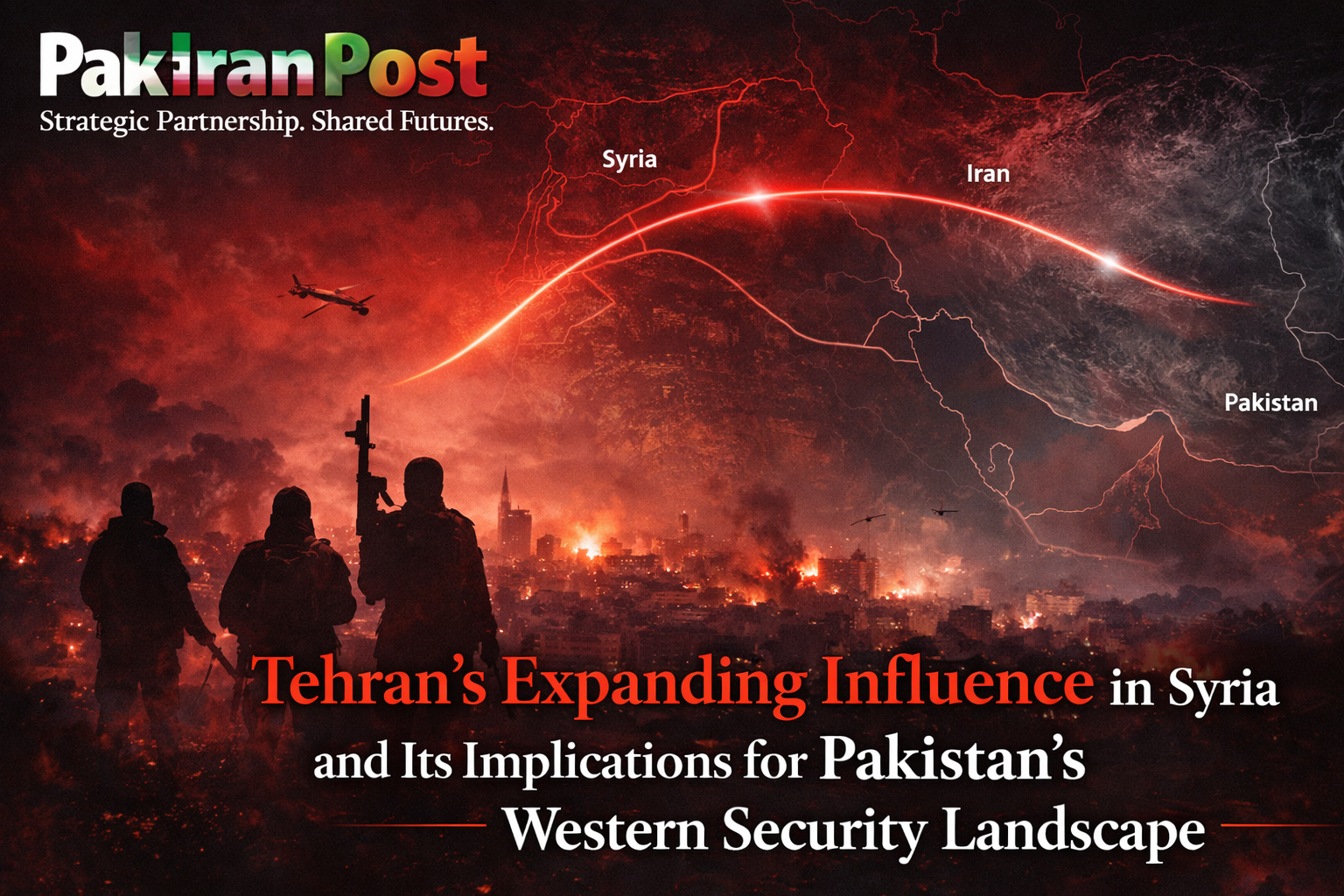
In parallel, Russia’s role introduces a dimension of opportunistic alignment rather than structural balance. Its engagement in energy markets, arms trade, and selective diplomatic interventions provides tactical leverage for states seeking diversification. However, Russia does not offer a comprehensive institutional alternative to existing global systems, limiting its capacity to function as a stable anchor for strategic autonomy.
Within this global configuration, Pakistan and Iran’s pursuit of autonomy must therefore be understood as a process of network navigation rather than alignment avoidance. Both states must engage simultaneously with competing power centres while mitigating exposure to coercive dependencies. This requires a sophisticated form of diplomatic modularity, where cooperation is issue specific rather than ideologically comprehensive. Energy relations may be pursued with one actor while security cooperation is maintained with another, and financial stabilization may rely on yet another external partner.
The media discourse surrounding multipolarity often obscures these complexities by presenting geopolitical fragmentation as inherently liberating. Fragmentation increases systemic uncertainty and intensifies competition over infrastructural control. Digital sovereignty, often cited as a hallmark of autonomy, is itself constrained by dependence on foreign hardware, software ecosystems, and data governance architectures. Similarly, energy independence is complicated by global price integration and supply chain interdependencies that limit unilateral control.
For Pakistan and Iran, the challenge is not to achieve full autonomy but to construct resilient frameworks of partial autonomy that maximize strategic flexibility while minimizing systemic vulnerability. This involves diversification of trade partnerships, development of localized technological capacity, expansion of regional connectivity frameworks, and strengthening of institutional resilience against external economic shocks. It also requires the cultivation of informational sovereignty capable of resisting narrative manipulation within global media ecosystems.
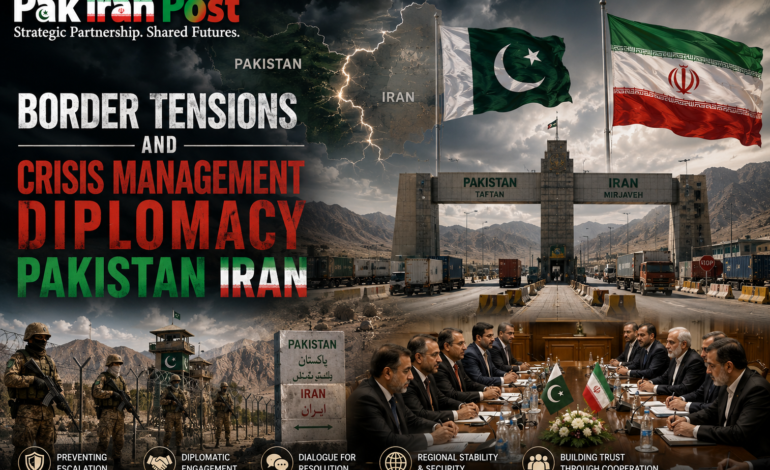
A potential convergence point between Pakistan and Iran lies in the construction of regional economic corridors that link South Asia, Central Asia, and the Gulf through integrated energy and trade infrastructure. Such frameworks could provide limited insulation from global volatility while enhancing regional interdependence. However, the success of such initiatives depends on the ability to manage external pressures from competing global powers that may perceive regional integration as a threat to their influence. Ultimately, strategic autonomy in the contemporary Middle Eastern order is not a destination but a condition of perpetual negotiation. It exists not as absolute independence but as calibrated interdependence managed across multiple external axes. For Pakistan and Iran, the central challenge is to transform this condition from a source of vulnerability into a structured system of resilience. The future of their foreign policy will depend less on escaping global constraints and more on mastering the architecture of constraint itself.
A Public Service Message