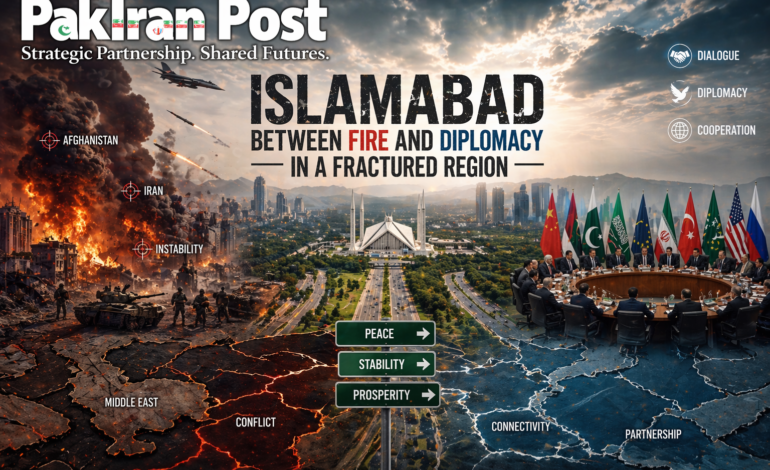
Islamabad Between Fire and Diplomacy in a Fractured Region

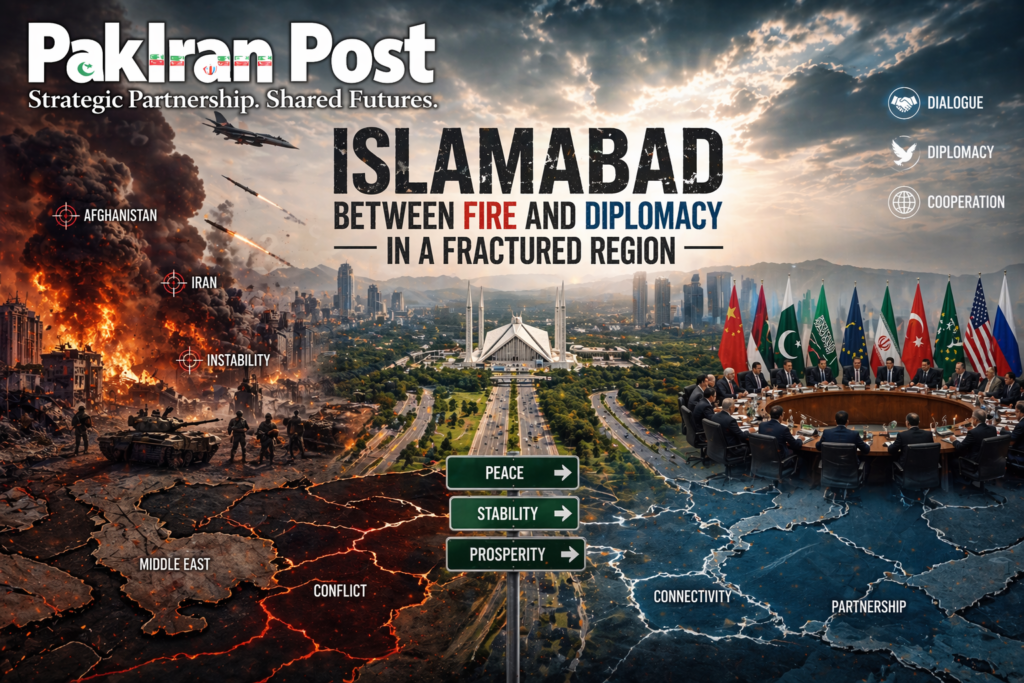
Iran’s hesitation to begin negotiations with the United States, even amid discussion of a ceasefire and the possibility of Islamabad serving as a diplomatic venue, reflects more than tactical delay. It is the product of strategic memory, ideological caution, domestic political management and a wider regional calculation. In the Middle East, diplomacy rarely fails because of a lack of meeting rooms. It fails because the parties involved do not believe that the other side sees negotiation as preferable to coercion. Tehran’s present reluctance therefore says less about venue than about credibility.
For Pakistan, however, the matter is larger than symbolism. If Islamabad can offer a discreet, credible and stable platform for indirect or exploratory dialogue, it may reposition itself as a middle power capable of facilitating regional de-escalation. Yet success would require diplomatic discipline, neutrality and insulation from great-power rivalries. Pakistan’s opportunity lies not in dramatic summitry but in careful statecraft.
The immediate obstacle is uncertainty surrounding the ceasefire itself. Ceasefires in volatile theatres are often tactical pauses rather than durable political settlements. Iran appears to calculate that entering negotiations during an unstable truce risks legitimising a fragile arrangement that may collapse under renewed military pressure. If hostilities resume shortly after talks begin, Tehran would appear strategically naïve, while Washington could blame Iranian intransigence. From Iran’s perspective, time spent verifying whether a ceasefire is real, enforceable and internationally supported may be more valuable than rushing to a negotiating table.
This logic is reinforced by the history of crisis diplomacy in the region. Temporary pauses have frequently been used by competing actors to regroup militarily, reposition assets or recalibrate messaging. Iranian policymakers are therefore likely to distinguish between a ceasefire declared in headlines and one sustained through monitoring mechanisms, third-party guarantees and reciprocal restraint. Without these elements, negotiations may look premature.
The second and deeper problem is mistrust between Tehran and Washington. No bilateral relationship in the region is more burdened by accumulated grievance. From Iran’s viewpoint, decades of sanctions, pressure campaigns, covert competition and the abrupt reversal of prior diplomatic understandings have created a structural credibility gap. The memory of agreements reached and later undermined remains powerful within the Iranian political establishment. In such an environment, assurances from Washington are judged not by language but by durability.
The American side, meanwhile, remains sceptical of Iranian regional intentions, missile development and support for aligned non-state actors. Successive administrations have oscillated between engagement and maximum pressure, while Congress and domestic political cycles complicate continuity. Tehran sees this volatility as a core problem. Even if a US administration offers concessions today, can it bind the next administration tomorrow? Iran’s answer appears uncertain.
That uncertainty shapes negotiation sequencing. Iran seeks evidence before concessions; the United States often seeks concessions before evidence. Tehran would prefer some sanctions easing, access to frozen assets, or clear legal guarantees as a demonstration of seriousness. Washington is more likely to insist that talks begin first and substantive Iranian steps follow before broader relief. This sequencing dispute is not procedural trivia. It is the essence of diplomacy when trust is absent.
Each side fears being the first mover who gets exploited. If Iran compromises early without relief, it risks appearing weak domestically while receiving little in return. If Washington eases pressure first without reciprocal steps, it risks domestic criticism for rewarding resistance. Thus diplomacy becomes trapped by mutual political risk aversion.
Inside Iran, domestic politics adds another layer of caution. Iranian leaders must balance external diplomacy with internal legitimacy. Hardline constituencies remain suspicious of engagement with the United States, arguing that previous talks yielded insufficient economic benefit and excessive strategic exposure. Even pragmatists who favour calibrated dialogue must operate within a system where revolutionary identity, sovereignty narratives and resistance credentials still matter.
In this setting, immediate negotiations can be politically costly unless framed as strength rather than concession. Tehran therefore prefers entering talks from a position of resilience, not urgency. A stable ceasefire, visible leverage and prior gestures from Washington would help Iranian officials present negotiations as prudent statecraft rather than capitulation.
Economic pressures complicate this picture. Sanctions, inflation and structural inefficiencies have created incentives for diplomatic relief. Yet economic strain does not automatically produce political softness. States under pressure often become more cautious, fearing that concessions made under duress invite further demands. Iran’s leadership likely seeks to avoid signalling desperation. Hence hesitation may coexist with quiet interest in backchannel engagement.
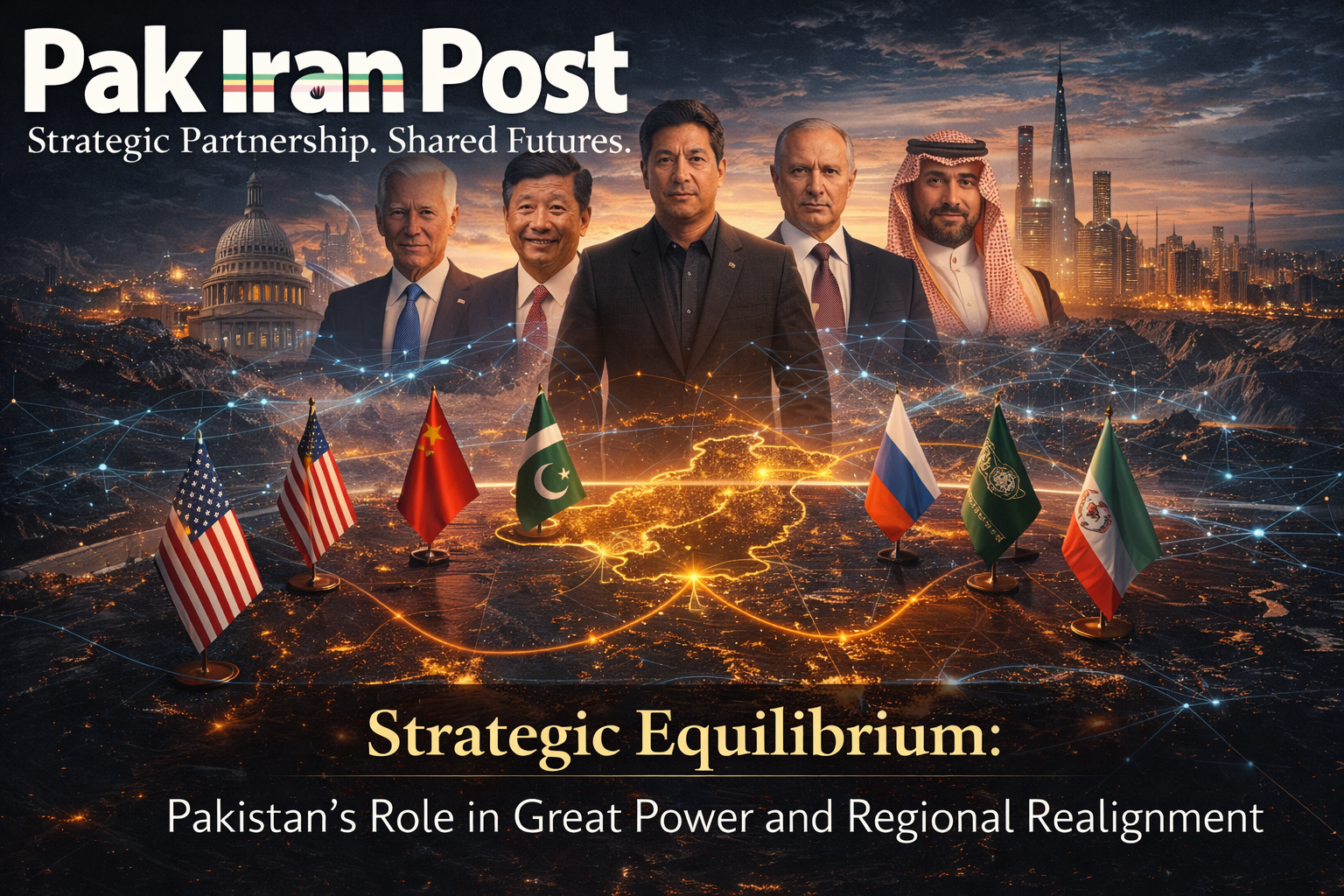
This is where Pakistan enters the equation. Islamabad occupies a distinctive geopolitical position. It maintains ties with Iran, strategic relations with Gulf states, longstanding security engagement with the United States and an increasingly important partnership with China. It also shares a border with Iran and has a direct stake in regional stability, energy connectivity and the prevention of sectarian spillovers. Few states can speak to all relevant camps without immediate suspicion.
Pakistan’s diplomatic advantage lies in not being seen as an ideological architect of the conflict. Unlike some regional powers, it is not central to the US-Iran confrontation. Unlike European capitals, it is geographically proximate and politically aware of regional sensitivities. Unlike great powers, it carries fewer hegemonic anxieties. That can make Islamabad useful as a convening space for exploratory contacts.
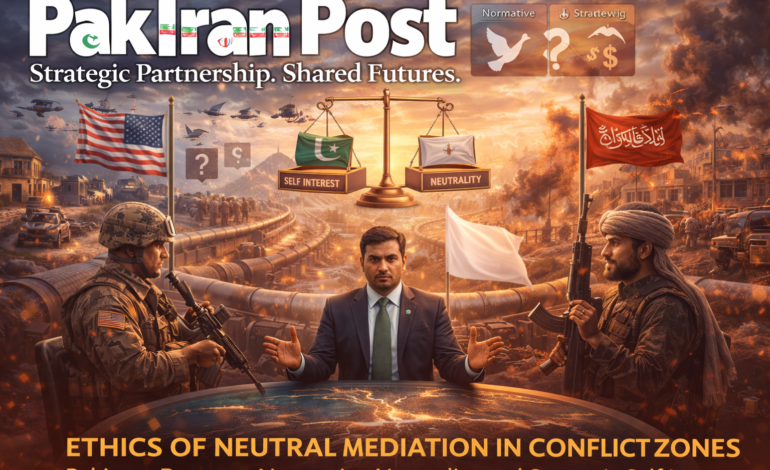
Yet neutrality must be demonstrated, not declared. Tehran will assess whether Pakistan can host talks without external pressure. Washington will assess whether Islamabad can guarantee discretion, security and seriousness. Gulf capitals will watch for any shift in regional alignment. India may view expanded Pakistani diplomatic relevance through a competitive lens. China will observe whether Pakistan’s mediation role complements or complicates Beijing’s own regional initiatives. Islamabad must therefore navigate multiple audiences simultaneously.
If handled skilfully, Pakistan can frame its role not as mediator imposing solutions but as facilitator reducing miscalculation. This distinction matters. Mediation implies leverage over outcomes; facilitation focuses on process, communication and confidence-building. Pakistan is better placed for the latter.
Practical steps could include hosting technical-level discussions, enabling intelligence deconfliction channels, providing secure backchannel venues, and coordinating humanitarian or maritime confidence measures. These are less glamorous than headline summits but often more valuable. Successful diplomacy is usually incremental.
For Pakistan’s foreign policy, such a role would align with several strategic goals. First, it would diversify Pakistan’s external identity beyond security dependence and crisis narratives. Second, it would enhance Pakistan’s value to multiple partners simultaneously. Third, it could support economic interests by encouraging regional stability, trade corridors and energy linkages. Fourth, it would strengthen Islamabad’s claim to be a responsible stakeholder rather than merely a reactive state.
There are, however, serious risks. If talks fail publicly, Pakistan could be associated with failure. If one side perceives bias, trust could erode. If negotiations coincide with renewed conflict, Islamabad might face pressure to choose sides. Domestic sectarian actors could exploit the symbolism of Pakistan’s involvement in Iran-related diplomacy. Security threats against visiting delegations would also be significant.
Therefore Pakistan’s best approach is quiet professionalism. It should avoid triumphalist announcements, resist becoming a theatre for public diplomacy, and insist that any hosting role be requested by both parties. Discretion is often the currency of trust.
For the wider Middle East, an Islamabad channel would not solve structural rivalries. But it could lower temperatures during moments of escalation. The region increasingly suffers from a deficit of trusted communication mechanisms. Formal institutions are weak, while bilateral relations are often securitised. In such an environment, secondary venues matter. Oman has historically played this role at times. Qatar has done so in other theatres. Pakistan could add another node to this flexible diplomatic network.
For the United States, engaging through Islamabad may offer advantages. Pakistan understands security establishments, intelligence channels and crisis management culture. It also has an interest in avoiding regional war that would disrupt energy markets and Muslim-world politics. Washington may find a Pakistani channel useful when direct engagement is politically sensitive.
For Iran, Islamabad offers proximity, cultural familiarity and the reassurance of dealing in a Muslim-majority neighbouring state rather than a distant Western capital. Pakistan’s own tradition of balancing rival partnerships may also make it appear less doctrinaire. Yet Iran would still demand evidence that Pakistan can protect confidentiality and resist pressure from competing partners.
The ceasefire question remains central. If the truce stabilises, diplomatic space widens. If it collapses, every capital will revert to deterrence logic. Pakistan cannot mediate against the momentum of active war. It can only help when parties retain some appetite for pause. Thus Islamabad’s diplomatic prospects are directly linked to developments on the ground.
The broader lesson is that venue diplomacy is necessary but insufficient. States often overestimate the power of geography. Hosting talks in Geneva, Muscat, Doha or Islamabad cannot compensate for incompatible expectations. What matters is whether the parties believe limited compromise serves their interests better than continued confrontation.
At present, Iran seems unconvinced. It likely sees negotiations as potentially useful but insufficiently prepared. It wants a firmer ceasefire, tangible signals of American seriousness, and a domestic narrative that protects regime legitimacy. Until these conditions improve, hesitation is rational from Tehran’s perspective.
Pakistan should recognise this reality. Its objective should not be to rush talks for prestige. It should instead build the conditions under which talks become possible. That means engaging all sides quietly, coordinating with other regional facilitators, improving border stability with Iran, avoiding inflammatory rhetoric, and presenting itself as a dependable custodian of dialogue.
There is also an economic dimension for Pakistan. A calmer regional environment could revive discussion of cross-border energy trade, transit corridors and investment confidence. Pakistan’s chronic energy constraints make long-term regional connectivity strategically attractive, even if politically difficult. Stability between Iran and the West would expand room for commercial imagination. Instability narrows it.
China’s role cannot be ignored. Beijing has grown more active in Middle Eastern diplomacy while remaining Pakistan’s closest strategic partner. Islamabad could potentially complement Chinese regional engagement by offering an additional channel rather than a competing one. However, Pakistan must avoid appearing as a proxy for any external power. Its credibility depends on sovereign diplomatic agency.
Similarly, ties with Gulf partners require careful management. Pakistan has deep economic and labour links with Saudi Arabia and the United Arab Emirates. Any facilitation role with Iran must therefore be framed as stabilisation, not alignment. Gulf states themselves increasingly favour de-escalation, but sensitivities remain.
Ultimately, Islamabad’s opportunity lies in the politics of usefulness. Middle powers gain influence when they solve problems larger powers cannot easily solve themselves. Pakistan cannot dictate terms to Washington or Tehran. It can, however, provide a credible table, a secure room, a trusted messenger and a patient diplomatic process. Sometimes that is enough to matter.
Iran’s hesitation should thus be read not as rejection of diplomacy but as a demand for better diplomacy. It reflects the logic of a state that has learned to distrust promises, fear premature concessions and prioritise strategic patience. The United States may see delay; Tehran sees prudence.
For Pakistan, the policy imperative is clear. Offer facilitation without vanity, neutrality without passivity, and engagement without entanglement. If Islamabad can do that, it may not transform the Middle East overnight. But it could strengthen a more modest and realistic ambition: becoming a state whose relevance grows when others need peace.
A Public Service Message