
Iran’s Diplomatic Repositioning Reshapes Pakistan’s Middle Power Calculus

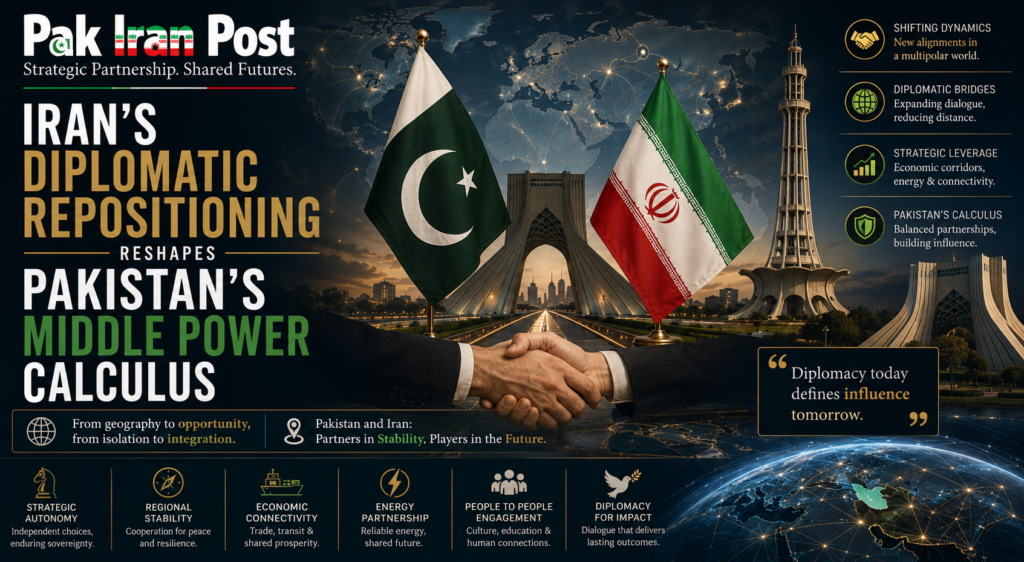
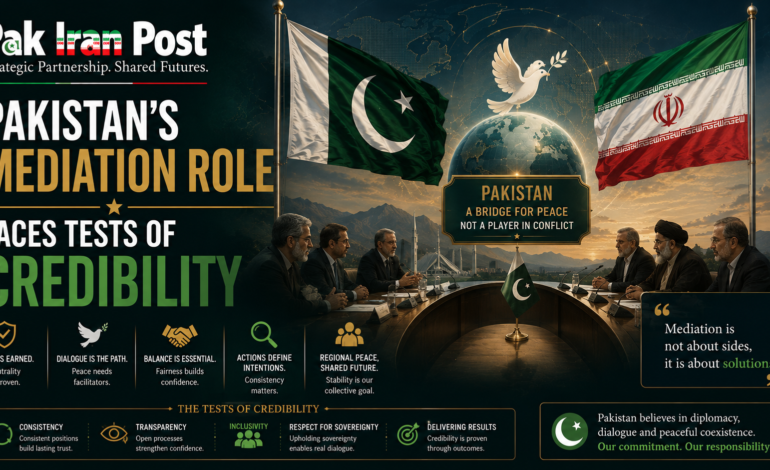
Iran’s diplomatic repositioning during the current conflict is altering the operating environment in which Pakistan must balance proximity to Tehran with relationships across the Gulf, China, the United States, Turkey and the wider Muslim diplomatic system. Pakistan’s strategic problem is no longer adequately described as a choice between neutrality and alignment. It is a question of whether Islamabad can preserve sufficient diplomatic utility with competing capitals while preventing its own geography, economic exposure and security requirements from being converted into instruments of another power’s strategy. The distinction matters because the present conflict has demonstrated that diplomatic access itself has acquired strategic value. Pakistan’s facilitation of United States Iran contacts, culminating in the Islamabad Memorandum of Understanding and subsequent technical level engagement involving Pakistan, Iran, the United States and Qatar, has elevated Islamabad from a neighbouring observer to a consequential intermediary.
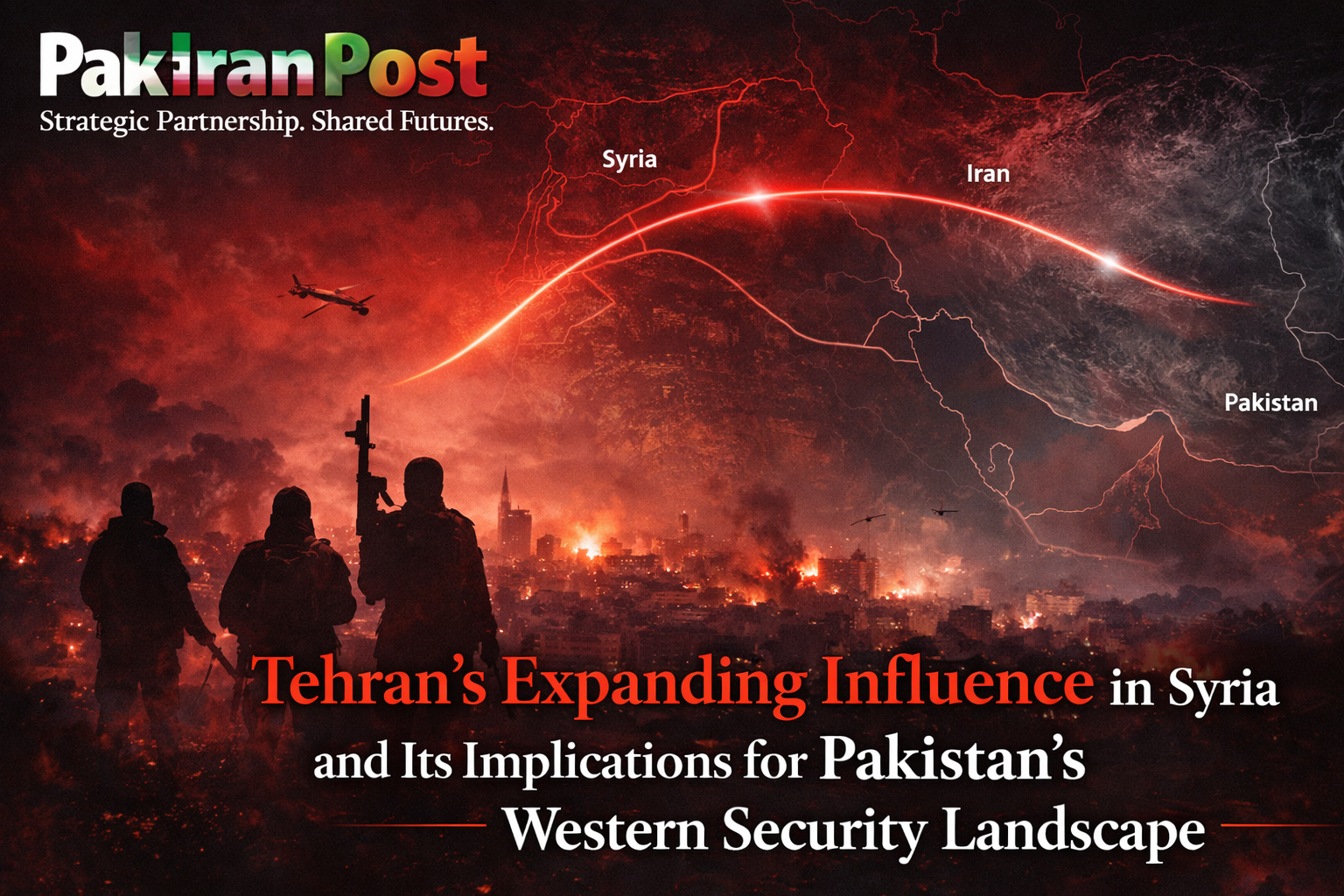
The opportunity, however, is inseparable from the liability. Mediation generates influence only when the mediator retains credibility with all principal parties, and that credibility can evaporate if facilitation is interpreted as covert alignment. Tehran’s appreciation of Pakistan’s diplomatic efforts has created political capital, while Islamabad’s continuing engagement with Washington creates a separate channel of leverage. Iran’s President Masoud Pezeshkian’s June visit to Pakistan, during which both governments reaffirmed cooperation in political, economic, security and connectivity matters, demonstrated that Tehran presently regards Islamabad as a useful diplomatic interlocutor rather than merely a contiguous security actor. Yet this usefulness should not be mistaken for strategic convergence. Pakistan and Iran possess overlapping interests in regional stability but retain divergent assessments of the United States, Gulf security architecture, sanctions, militant networks and the appropriate distribution of regional power.
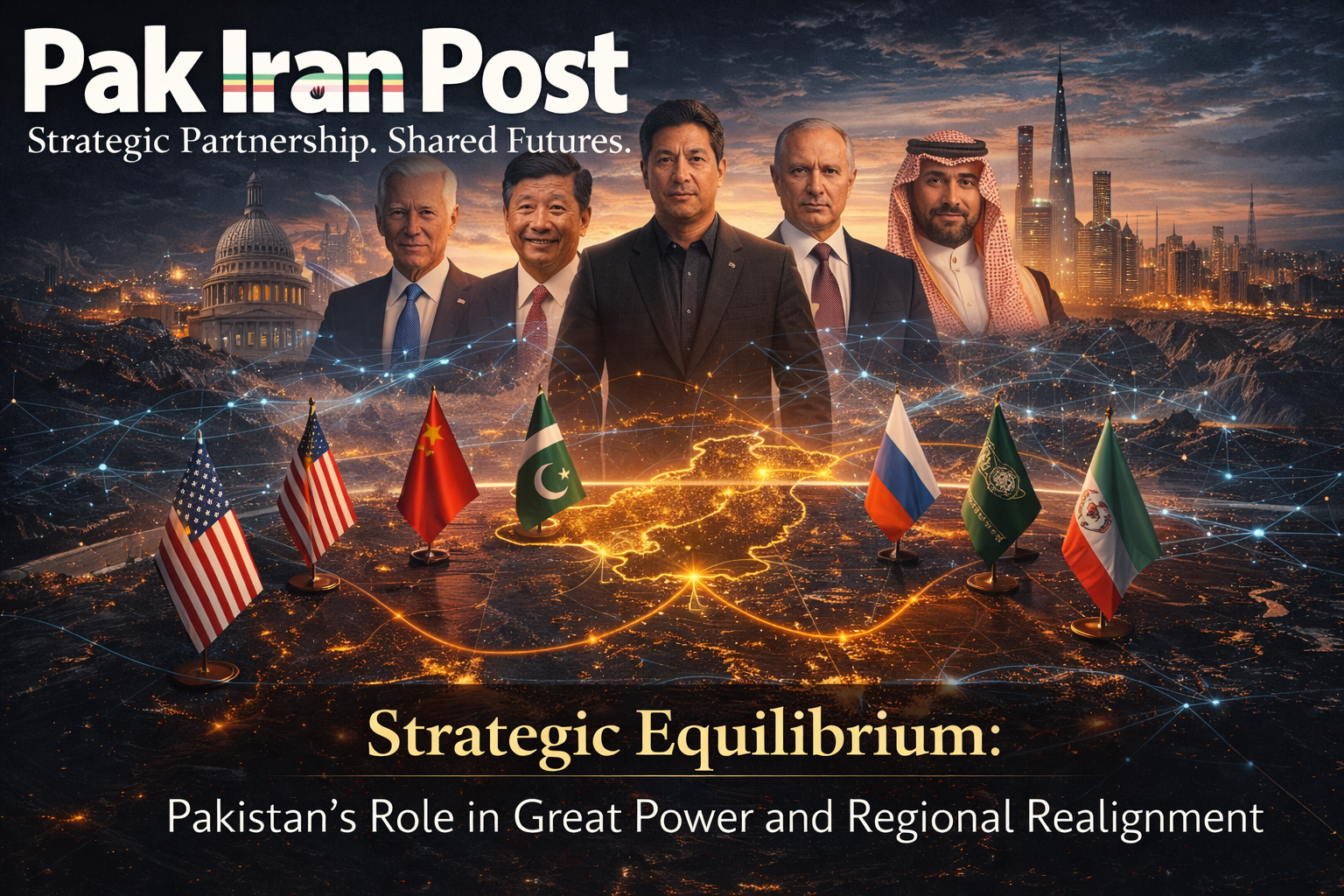
The current crisis has therefore exposed a more sophisticated requirement for Pakistani statecraft. Islamabad must maintain differentiated relationships rather than seek uniformity across its foreign policy. With Tehran, the priority should be strategic reassurance without political dependency. With Washington, it should be functional cooperation without reputational subordination. With Gulf partners, it should provide confidence that engagement with Iran will not compromise their sovereign security interests. With China, it should preserve strategic coordination while demonstrating that Pakistan’s diplomatic activity is independently calibrated rather than delegated. With Turkey and other Muslim states, Islamabad should cultivate issue specific coalitions around de escalation, humanitarian access, maritime stability and diplomatic law rather than construct an ideological bloc.
This requires abandoning the temptation to treat the Muslim diplomatic sphere as a single strategic constituency. It is not. Saudi Arabia, the United Arab Emirates, Qatar, Türkiye, Iran, Egypt and Pakistan possess different threat perceptions, economic priorities and relationships with Washington and Beijing. Their common interest in preventing regional conflagration does not erase their competing assessments of Iran’s regional role. Pakistan’s comparative advantage lies precisely in operating within these differences without becoming captive to them. Its diplomatic language should consequently emphasise sovereignty, territorial integrity, negotiated settlements, freedom of navigation, civilian protection and non intervention, while avoiding formulations that appear to endorse the strategic narrative of any single capital.
Iran’s own diplomatic repositioning has made this approach more feasible and more necessary. Tehran has demonstrated that despite intense strategic pressure, it can still use bilateral relationships, regional interlocutors and diplomatic channels to widen its manoeuvring space. Pakistan should read this not merely as evidence of Iranian resilience but as an indication of how regional diplomacy is becoming increasingly transactional and networked. States are no longer required to belong to a fixed coalition to exercise influence. They can maintain simultaneous channels with actors whose interests collide on one file and converge on another. Islamabad should adopt precisely this architecture.
The practical implication is that Pakistan’s Iran policy needs to be compartmentalised. Border security should be insulated from disagreements over nuclear diplomacy. Trade should not become hostage to fluctuations in the United States Iran relationship, although transactions must remain legally compliant with applicable sanctions regimes. Energy cooperation should be pursued through transparent, auditable mechanisms rather than informal arrangements vulnerable to sudden disruption. Consular and people to people engagement should remain protected from strategic disputes. Connectivity projects should be assessed according to commercial viability, sanctions exposure and security requirements independently of political rhetoric. This compartmentalisation would reduce the probability that a crisis in one domain contaminates every other channel.
The same logic should govern Pakistan’s engagement with Washington. Islamabad should make clear that its facilitation role is not an undertaking to enforce American preferences on Tehran. The distinction is strategically indispensable. A mediator who becomes an advocate ceases to be a mediator. Pakistan can communicate American concerns to Iranian interlocutors without adopting them as its own negotiating position. Equally, Islamabad can explain Iranian security sensitivities to Washington without becoming Tehran’s diplomatic proxy. Such calibrated transmission of positions is more defensible than public advocacy and gives Pakistan greater freedom to remain useful when negotiations deteriorate.
The establishment should particularly guard against premature diplomatic ownership of outcomes. Pakistan’s role in facilitating negotiations is valuable, but the state should avoid constructing a national foreign policy narrative around the assumption that Islamabad can indefinitely arbitrate disputes between Washington and Tehran. Mediation credibility is perishable. It depends on confidentiality, procedural discipline, accurate signalling and the absence of demonstrable favouritism. The Foreign Office, national security institutions and economic ministries should therefore establish a unified mediation protocol defining what Pakistan can transmit, what must remain confidential, which commitments require political authorisation and which statements should be avoided during active negotiations.
A small interagency Iran Crisis Coordination Cell would be operationally useful. It should integrate the Foreign Office, defence establishment, intelligence assessments, finance, commerce, petroleum, maritime authorities and border management institutions. Its mandate should not be to centralise foreign policy but to prevent contradictory signalling. Every major diplomatic initiative involving Iran should be subjected to a common assessment covering escalation risk, sanctions exposure, economic consequences, border implications, maritime security and likely reactions in Washington, Beijing, Riyadh, Abu Dhabi, Doha and Ankara. This would convert diplomatic improvisation into structured statecraft.
Pakistan should simultaneously strengthen its diplomatic sequencing. Not every issue should be raised with every partner at the same time. Tehran should receive early reassurance on matters directly affecting bilateral sovereignty, border security and economic continuity. Gulf partners should receive advance briefings where Pakistani initiatives could be misconstrued as altering regional security alignments. Washington should be kept informed about the strictly facilitative character of Pakistan’s engagement. Beijing should receive strategic consultations concerning regional stability, energy security and connectivity. Turkey should be engaged around complementary diplomatic objectives rather than competitive mediation. Sequencing would reduce the risk of an otherwise manageable initiative being interpreted differently across capitals before Islamabad has established its intended meaning.
Pakistan’s Gulf diplomacy is particularly sensitive. Riyadh and Abu Dhabi remain indispensable economic and strategic partners, while Qatar possesses distinct diplomatic utility because of its established role in regional mediation. Islamabad therefore cannot permit its Tehran engagement to be framed as a zero sum proposition. The correct message is that stable Pakistan Iran relations reduce, rather than increase, risks for the Gulf. A secure western frontier reduces transnational militant movement, protects trade routes and creates opportunities for regulated economic exchange. Pakistan should offer Gulf partners structured briefings on border security, maritime stability and escalation management, rather than seeking their approval for every bilateral interaction with Tehran.
China presents a different calculation. Beijing’s strategic relationship with Pakistan gives Islamabad substantial diplomatic space, but that space should not be mistaken for unlimited strategic cover. China has its own interests in Gulf stability, energy flows, maritime commerce and regional de escalation. Pakistan should therefore coordinate with Beijing without outsourcing its diplomatic judgement. Joint positions should be developed where interests genuinely coincide, particularly on sovereignty, peaceful settlement, economic stability and freedom of navigation. Where interests diverge, Pakistan should retain an independently articulated national position. Strategic partnership is strengthened by policy reliability, not by reflexive conformity.
Turkey can provide another useful diplomatic channel because Ankara possesses its own regional relationships and political access. Islamabad should avoid competing with Turkey for the title of mediator. Instead, the two states could pursue functional coordination on humanitarian diplomacy, Muslim world consultations and regional de escalation. Such coordination would distribute diplomatic burden and reduce the perception that Pakistan is attempting to establish an exclusive intermediary role. The objective should be complementarity, not diplomatic proprietorship.
Pakistan’s credibility will ultimately depend on whether its economic policy is consistent with its diplomatic posture. A state cannot claim strategic autonomy while remaining operationally exposed to sanctions, payment restrictions, energy interruptions or abrupt border closures. Islamabad should therefore construct a sanctions compliance architecture specifically for Iran related transactions. Commercial banks, customs authorities, exporters, importers, insurers and logistics operators require predictable guidance on permissible transactions, documentation, beneficial ownership and restricted entities. The purpose should not be to surrender economic policy to external pressure, but to distinguish lawful commercial engagement from transactions capable of triggering avoidable secondary exposure.
The western border requires equal attention. Diplomatic engagement with Tehran will have limited strategic value if border insecurity continues to generate reciprocal accusations and military friction. Pakistan should pursue a standing border security mechanism with measurable indicators covering militant movement, intelligence exchange, border incidents, coordinated patrol protocols, biometric verification and rapid incident deconfliction. The mechanism should report routinely to the political leadership and permit rapid escalation to senior military and diplomatic channels when incidents exceed agreed thresholds. Border diplomacy must become institutional rather than crisis driven.
Maritime security is now an additional strategic variable. The latest escalation around shipping in the Gulf of Oman and the wider maritime theatre demonstrates how quickly Iran related conflict can affect commercial routes, insurance costs and energy markets. (Reuters) Pakistan’s planners should therefore treat the Arabian Sea and approaches to Pakistani ports as part of the Iran policy equation. The navy, maritime security institutions, ports, energy authorities and commercial shipping community should maintain a shared contingency framework covering vessel tracking, insurance disruption, fuel availability, port congestion, evacuation contingencies and communication with international maritime partners.
Islamabad should also resist rhetorical overextension. Statements describing Pakistan as a permanent guarantor, strategic bridge or indispensable mediator create expectations that may later become liabilities. Diplomatic utility is better preserved through understated competence. Pakistan should speak where its interests or responsibilities are directly implicated and remain deliberately non declaratory where public positioning would diminish its access to one of the parties. Strategic ambiguity is useful only when it is disciplined. Ambiguity without institutional coordination becomes incoherence; neutrality without capability becomes irrelevance.
The wider Muslim diplomatic sphere offers Pakistan an opportunity to establish a more durable doctrine. Islamabad could advocate a standing consultation mechanism focused on conflict prevention rather than ideological alignment. Its agenda could include civilian protection, maritime security, humanitarian corridors, energy stability, border deconfliction and diplomatic engagement. Such a mechanism would permit states with divergent views of Iran to cooperate on limited objectives without requiring consensus on every strategic question. This is more realistic than attempts to manufacture a unified Muslim geopolitical position.
Pakistan should also preserve the distinction between diplomatic recognition of Iran’s security concerns and endorsement of every Iranian policy. Tehran is likely to value Pakistan most when Islamabad remains candid rather than deferential. Quietly communicating the consequences of escalation, encouraging restraint and insisting on reciprocal commitments can protect the bilateral relationship better than unconditional rhetorical solidarity. The same principle applies to Washington and Gulf capitals. Islamabad’s credibility will rise if partners know that Pakistani assurances have policy content rather than merely diplomatic courtesy.
The strategic calculus should therefore be measured through outcomes rather than declarations. Pakistan should establish quarterly indicators for diplomatic access, border incidents, bilateral trade, lawful energy transactions, transit volumes, maritime disruption, sanctions compliance, consular cases and high level consultations with major partners. A foreign policy that cannot be measured becomes vulnerable to bureaucratic inertia and political theatre. The National Security Committee should periodically review these indicators against escalation scenarios and determine whether Pakistan is gaining or losing room for manoeuvre.
The immediate objective should not be to make Pakistan indispensable to every capital. That is neither realistic nor strategically desirable. The objective should be to ensure that no competing capital can instrumentalise Pakistan without incurring costs of its own. This requires diversified diplomatic access, economic resilience, secure borders, credible mediation procedures and disciplined strategic communication. It also requires recognising that Pakistan’s greatest asset is not ideological proximity to Iran, historic affinity with the Gulf, strategic partnership with China or episodic convergence with the United States. Its principal asset is the ability to maintain functional relationships across conflicting geopolitical systems.
Pakistan’s current diplomatic opening should therefore be consolidated without being romanticised. The Islamabad Memorandum and subsequent engagement demonstrated that Islamabad can create negotiating space when major powers require an interlocutor trusted enough to carry messages across an adversarial divide. The challenge now is to institutionalise that utility without allowing it to become an externally assigned role. Pakistan should remain available, but not absorbent; cooperative, but not compliant; balanced, but not passive.
For the establishment, the central proposition is consequently straightforward. Pakistan’s Iran policy should be organised around calibrated diplomatic autonomy, with bilateral relations compartmentalised, mediation professionally governed, economic exposure quantified, border security institutionalised and communication sequenced across Washington, Tehran, Beijing, Riyadh, Abu Dhabi, Doha and Ankara. The country does not need a bloc. It needs manoeuvrability. It does not need rhetorical neutrality. It needs demonstrable independence of judgement. And it does not need to choose between being Iran’s neighbour and a partner of the United States, China and the Gulf. Its strategic task is to ensure that these relationships remain sufficiently differentiated for Pakistan to serve its own national interests while retaining the diplomatic credibility to reduce, rather than reproduce, the consequences of conflict around it.
A Public Service Message.