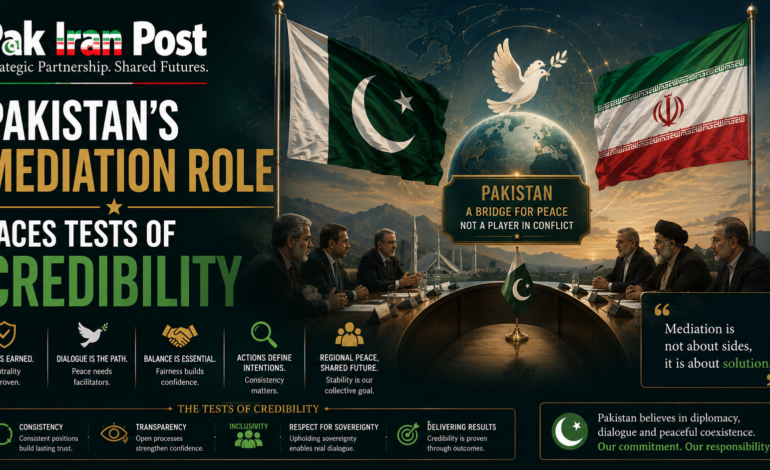
Pakistan’s Mediation Role Faces Tests of Credibility


Pak Iran Post enters the present crisis with an unusual diplomatic proposition: Pakistan possesses enough access to Tehran, Washington and key Gulf capitals to facilitate communication, yet lacks the economic insulation, political leverage and strategic distance that traditionally protect successful mediators from the consequences of failure. That contradiction defines Islamabad’s current diplomatic opportunity. Pakistan has already moved beyond declaratory neutrality. It hosted earlier US Iran contacts, participated in the implementation process surrounding the Islamabad Memorandum of Understanding, and was identified alongside Qatar as a mediator in technical level discussions between Washington and Tehran. The subsequent deterioration of the security environment, including renewed attacks on shipping around the Gulf of Oman and Bab el Mandeb, has made the mediating function considerably more hazardous.
The policy question is therefore not whether Pakistan should proclaim itself a mediator. It is whether Islamabad can construct a sufficiently credible diplomatic utility that both Iran and its external adversaries regard Pakistani involvement as useful without interpreting it as alignment. That distinction matters. Symbolic mediation produces photographs, communiqués and political applause. Functional mediation creates channels through which adversaries can transmit propositions, clarify red lines, manage incidents and test compromises without prematurely assuming the political liabilities of direct negotiation. Pakistan should pursue the latter.
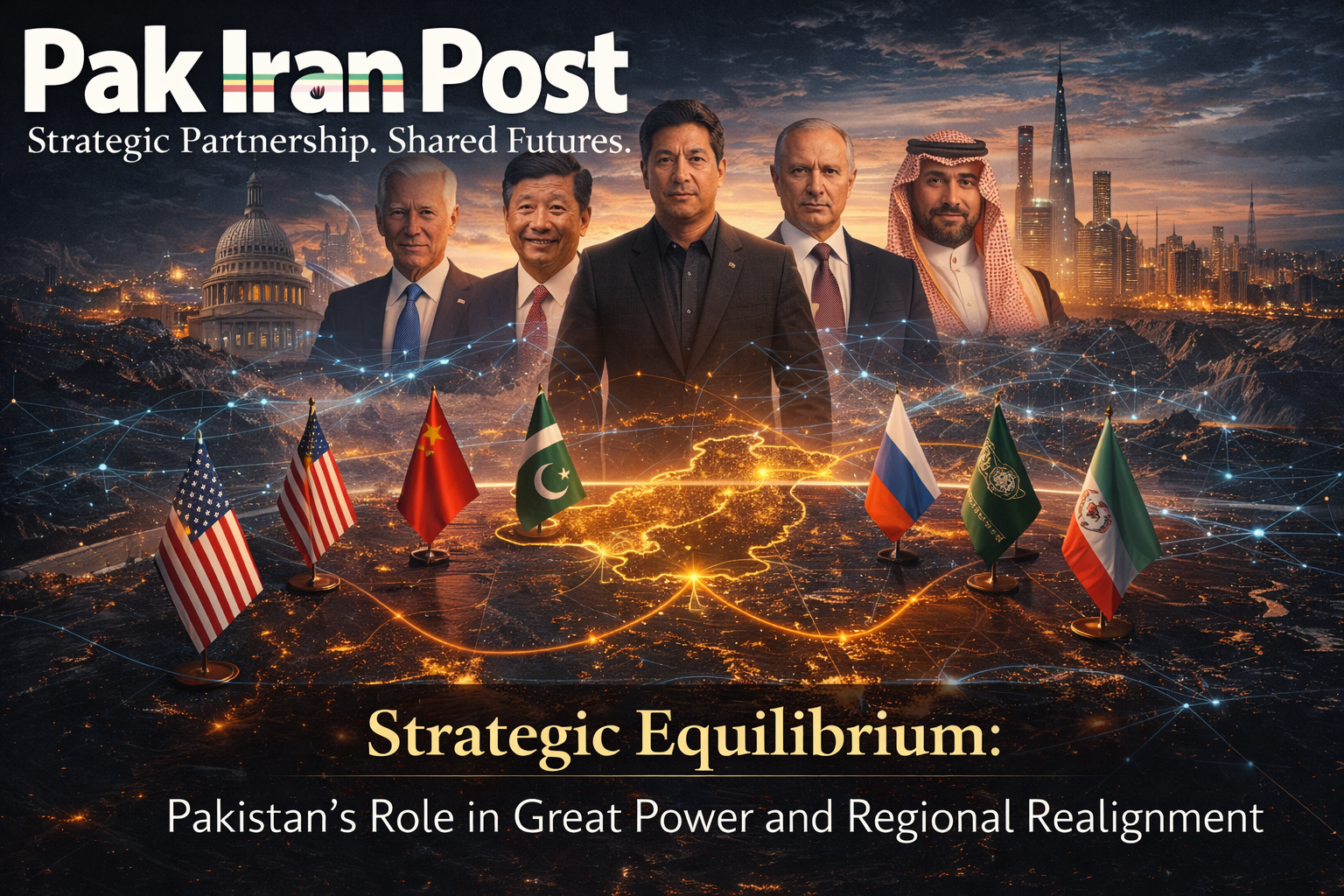
Its comparative advantage is not coercive power. It lies in relational density. Pakistan has a long border with Iran, institutional familiarity with Tehran, military and diplomatic relationships with the United States, extensive political links with Saudi Arabia and other Gulf states, and a strategic relationship with China. Its geography gives it immediate exposure to developments in the Arabian Sea, Gulf of Oman and broader western borderlands. Its military establishment also possesses an understanding of regional security architecture that many civilian diplomatic interlocutors lack. Yet each asset carries an associated liability. Proximity can become vulnerability. Military credibility can be interpreted as strategic signalling. Gulf relationships can generate suspicion in Tehran. American access can generate suspicion in Iran. Chinese strategic proximity can complicate perceptions in Washington. Pakistan’s usefulness therefore depends upon disciplined compartmentalisation rather than grand declarations of neutrality.
The June diplomatic process demonstrated that Islamabad can occupy a narrow but consequential space between parties that cannot easily communicate without political cost. Pakistan’s role in the Islamabad Memorandum process was sufficiently substantive for technical level discussions involving US, Iranian, Pakistani and Qatari representatives to proceed under a Pakistani facilitated framework. The June high level engagement further demonstrated that Islamabad could convene senior interlocutors while maintaining parallel bilateral contacts with participating states. This is diplomatic capital, but it should not be mistaken for unlimited influence.
The distinction should now become institutional. Pakistan should establish a permanent crisis communication architecture dedicated to the Iran conflict, operating under tightly controlled political authority and integrating the Foreign Office, relevant security institutions, maritime authorities, economic ministries and intelligence assessments. Its purpose should not be to negotiate a comprehensive settlement on behalf of the United States or Iran. Its immediate function should be to preserve communication when formal diplomacy freezes. The mechanism should maintain separate channels for political messages, military deconfliction, humanitarian questions, maritime incidents, consular matters and economic consequences. Such compartmentalisation would prevent an obstruction in one portfolio from paralysing the entire diplomatic channel.
Humanitarian facilitation offers the least politically toxic entry point. Pakistan could propose a standing humanitarian contact mechanism covering evacuation requests, medical transfers, treatment of wounded civilians, protection of diplomatic premises, repatriation of stranded nationals and coordination concerning humanitarian cargo. This would enable Islamabad to demonstrate practical neutrality rather than rhetorical neutrality. A state becomes a credible interlocutor when its diplomatic machinery can solve problems that neither belligerent can resolve efficiently through direct contact.
Prisoner related diplomacy presents another tractable function. Islamabad should discreetly offer its good offices for verification of detention claims, transmission of family information, facilitation of consular access and negotiation over limited humanitarian releases. Such diplomacy should remain insulated from broader political bargaining. Prisoner issues are frequently among the few subjects on which adversaries can reach incremental understandings without conceding their wider positions. Pakistan could establish a small confidential cell involving foreign affairs, consular and legal specialists capable of maintaining verified records and transmitting proposals through designated channels.
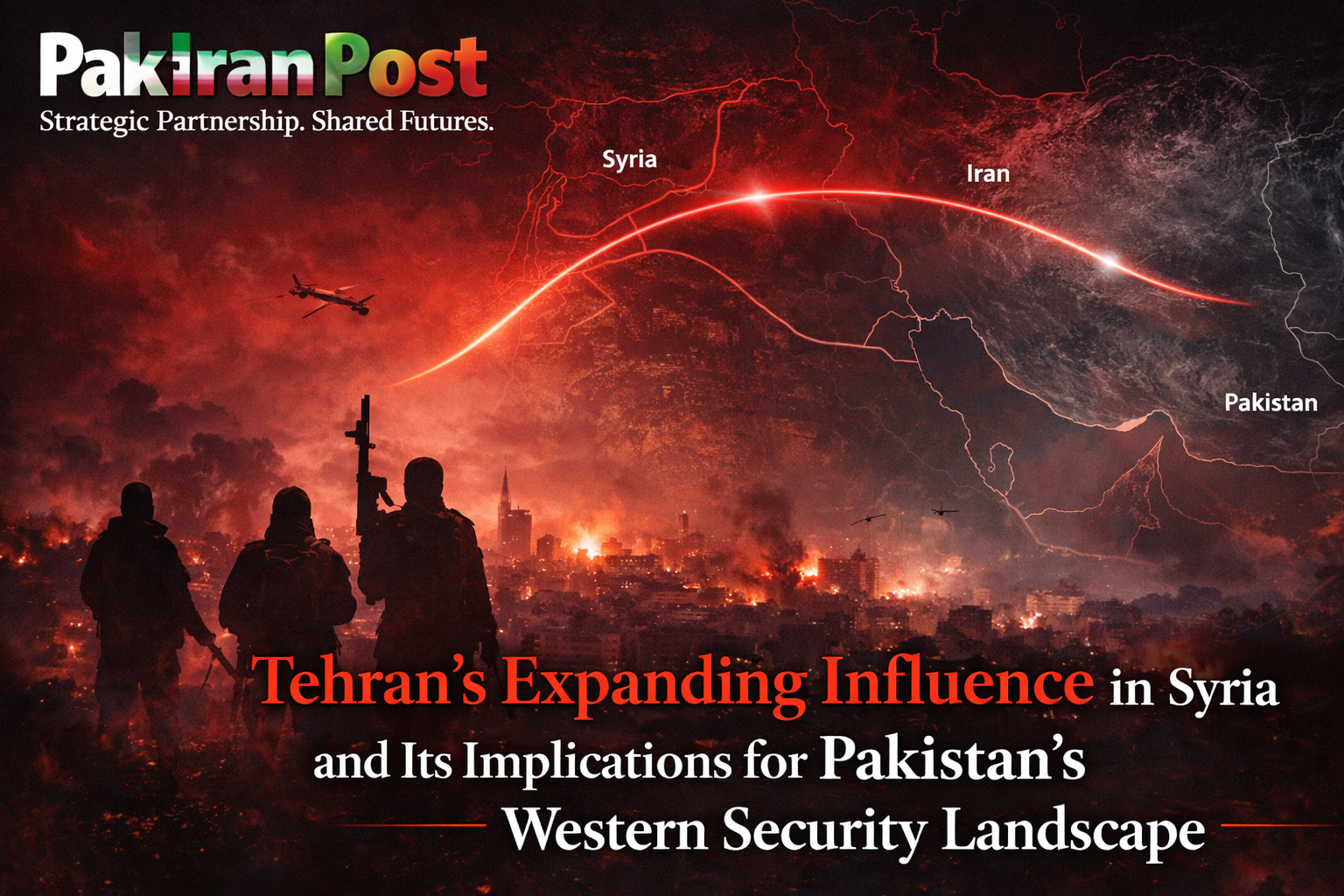
Maritime communication may prove even more strategically important. The latest escalation has demonstrated that the crisis is no longer confined to missile exchanges and political declarations. Shipping in strategic waterways has become a direct variable in global energy security, with renewed attacks reported around the Gulf of Oman and Bab el Mandeb and uncertainty surrounding the Strait of Hormuz. Pakistan’s proximity to the Arabian Sea gives Islamabad a direct interest in maritime deconfliction, but it also creates exposure to escalation.
Pakistan should therefore propose a maritime incident notification mechanism rather than a politically ambitious naval arrangement. The mechanism could provide a secure channel for communicating warnings concerning commercial shipping, search and rescue incidents, navigational hazards and unintended encounters involving military or quasi military platforms. Pakistan’s maritime authorities, navy and diplomatic representatives should operate within clearly separated mandates. The objective would be incident prevention, not enforcement of another state’s maritime preferences. Islamabad should avoid becoming responsible for guaranteeing the security of the Strait of Hormuz. That would exceed its capabilities and potentially transform a diplomatic asset into a military liability.
Back channel communication represents the most valuable and most dangerous instrument available to Islamabad. The principal value of a back channel is not secrecy for its own sake. It is the capacity to allow governments to explore concessions without committing themselves publicly. Pakistan should therefore maintain at least two differentiated diplomatic pathways. One should be an official state channel capable of carrying messages attributable to Islamabad. The other should be a confidential exploratory channel for transmitting non binding propositions, clarifying intentions and testing whether formal talks remain politically feasible. Every message should be logged internally, attributed to its originating side and subjected to a controlled verification process. This would reduce the risk that Pakistan becomes the inadvertent author of a proposal that one party subsequently denies.
The architecture must also account for Washington’s expectations. Pakistan cannot credibly reassure the United States merely by repeating that it is neutral. Washington will judge Islamabad by behaviour, particularly concerning sanctions exposure, military cooperation, maritime security and the movement of strategic goods. Islamabad should therefore establish an internal sanctions compliance mechanism for all diplomatic initiatives involving Iranian financial, commercial or transport channels. The objective is not to accept unilateral extraterritorial restrictions as Pakistani foreign policy. It is to prevent diplomatic facilitation from becoming an avoidable source of secondary exposure. Every proposed initiative should be assessed for sanctions implications, financial traceability, beneficial ownership and potential impact on Pakistan’s banking relationships.
Tehran will apply an equally demanding test. Iran is unlikely to accept Pakistan as an interlocutor if Islamabad appears to be transmitting American demands under a Pakistani flag. The credibility of the channel therefore requires demonstrable symmetry. Pakistan should transmit Iranian concerns to Washington accurately even when it considers them politically difficult, while transmitting American positions to Tehran without embellishment or selective filtering. Mediation becomes worthless when the intermediary begins editing messages according to its own preferred settlement.
The Gulf dimension requires still greater sophistication. Pakistan’s relationships with Saudi Arabia, the United Arab Emirates, Qatar and other Gulf states are not peripheral to the Iran crisis. They are part of Islamabad’s economic security architecture. Pakistan depends heavily on Gulf investment, remittances, energy supplies, financial relationships and diplomatic support. A mediation initiative perceived as strategically tilted towards Tehran could therefore generate economic and political costs disproportionate to any diplomatic prestige gained. Conversely, excessive accommodation of Gulf preferences could convince Iran that Pakistan has merely become another regional conduit for its adversaries.
The correct response is issue specific diplomacy. Islamabad should reassure Gulf capitals that its Iran engagement is directed towards preventing regional escalation, protecting maritime commerce and reducing risks to energy infrastructure, not towards altering the regional balance of power. At the same time, Pakistan should reassure Tehran that its Gulf relationships do not constitute a mandate to negotiate Iranian sovereignty or security interests. This dual reassurance should be institutional rather than personal. Diplomatic principals change; channels should survive them.
Pakistan’s military credibility presents another paradox. The armed forces give Islamabad greater strategic weight than its economic size might suggest, particularly among regional security establishments. That credibility can support discreet military to military deconfliction. It can also produce misinterpretation if military involvement becomes too visible. The armed forces should therefore provide technical assessments and secure communication capacity while the Foreign Office retains political ownership of the mediation narrative. The distinction between diplomatic facilitation and military alignment must remain unmistakable.
There is also a question of strategic sequencing. Pakistan should not attempt to solve the entire Iran crisis. It should concentrate on functions where its marginal contribution is highest and the political cost is lowest. Humanitarian access, consular communication, prisoner related arrangements and maritime incident prevention are relatively feasible. Confidence building around ceasefire compliance, verification mechanisms and limited economic arrangements can follow. Only after those channels demonstrate reliability should Islamabad consider involvement in substantive political bargaining.
This sequencing would also protect Pakistan from the reputational damage associated with failed summit diplomacy. Islamabad should resist announcing every diplomatic contact as a breakthrough. The credibility of a middle power is accumulated through quiet transactions, not press conferences. Public messaging should therefore use carefully calibrated terminology such as facilitation, communication, confidence building and good offices rather than promising settlement, breakthrough or comprehensive mediation unless an agreement has actually been achieved.
The risk of strategic retaliation must remain central to the doctrine. Pakistan becomes vulnerable if either belligerent concludes that its territory, airspace, ports, financial system or diplomatic infrastructure is being used to advance the opponent’s military objectives. Islamabad should establish explicit red lines against the movement of military materiel through Pakistani territory, unauthorised intelligence activity, use of Pakistani facilities for offensive operations and covert financial channels that could expose Pakistani institutions. Diplomatic utility cannot be purchased by allowing ambiguity over sovereign responsibilities.
Economic exposure requires a parallel contingency mechanism. Pakistan’s energy import requirements, external financing constraints and dependence on remittances leave little room for an extended regional shock. The Ministry of Finance, State Bank, Petroleum Division, maritime authorities and security institutions should maintain a crisis dashboard tracking oil prices, shipping premiums, insurance costs, remittance flows, Gulf liquidity, Iranian border commerce and disruptions to maritime routes. Diplomatic policy should be calibrated against these indicators. A mediation initiative that increases Pakistan’s economic vulnerability without generating tangible de escalation benefits should be reconsidered.
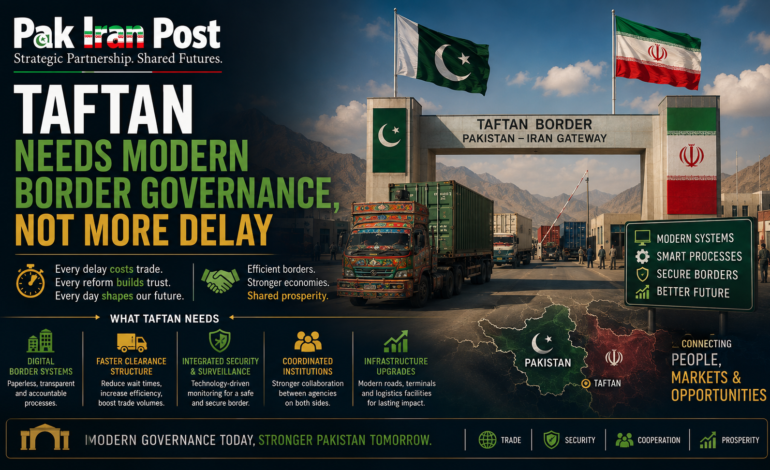
The western border demands equivalent attention. Pakistan’s bilateral relationship with Iran is inseparable from Balochistan. Border security, militant movement, cross border fire, fuel trafficking and local commercial dependence can either reinforce or undermine Islamabad’s diplomatic position. The June engagement on road and rail connectivity and the activation of the Pakistan Iran Joint Transport Committee demonstrated that bilateral relations contain practical economic mechanisms capable of surviving political turbulence. Islamabad should use these mechanisms as confidence building instruments rather than allowing them to become casualties of the wider conflict.
The strongest Pakistani proposition is therefore not neutrality in the abstract but calibrated usefulness. Islamabad should become the state that remains available when communication becomes difficult, not the state that claims authority over a conflict it cannot control. Its diplomatic machinery should be designed around access, verification, confidentiality, humanitarian facilitation and deconfliction. Its security establishment should provide strategic depth to the process without converting mediation into military signalling. Its economic ministries should quantify exposure before diplomatic initiatives are announced. Its Gulf relationships should be used to transmit reassurance rather than pressure. Its Chinese relationship should remain an independent strategic variable rather than being unnecessarily inserted into every Iran related discussion.
Pakistan’s success should ultimately be measured through outcomes that can be audited. Did communication remain open during periods of formal diplomatic rupture? Were humanitarian cases resolved? Were maritime incidents contained? Were prisoner related messages transmitted reliably? Did the parties receive accurate representations of each other’s positions? Did Pakistan avoid sanctions violations and military entanglement? Did Gulf capitals retain confidence in Islamabad? Did Tehran continue to regard Pakistan as an independent interlocutor? These are more meaningful indicators than the number of delegations received or statements issued.
Pakistan is consequently neither an automatic diplomatic asset nor an inevitable liability. It becomes an asset when its relationships are sufficiently diversified to create access, its institutions sufficiently disciplined to protect confidentiality, and its strategic establishment sufficiently coordinated to prevent diplomatic facilitation from becoming operational exposure. It becomes a liability when Islamabad overstates its influence, confuses proximity with leverage, permits partisan signalling to contaminate its channels, or assumes that goodwill can substitute for institutional capacity.
For Pak Iran Post, the strategic conclusion is therefore precise. Pakistan should not seek the title of mediator; it should build the infrastructure of an interlocutor. The former is bestowed by headlines and withdrawn by failure. The latter is constructed through reliable channels, controlled risk, institutional memory and demonstrable utility. In a conflict where direct communication repeatedly collides with military escalation, the state capable of keeping adversaries talking may exercise more influence than the state capable of making the loudest diplomatic declaration. Pakistan’s opportunity lies in becoming that state, but only if Islamabad treats mediation as a national security instrument governed by verification, sequencing, sanctions discipline, maritime awareness and clearly defined escalation thresholds.
A Public Service Message