

Chokepoint Realities: Hormuz Disruption and the Strategic Rewiring of Pakistan’s Maritime Doctrine

The events of 2026 have stripped away any lingering illusions about the stability of global energy arteries, exposing instead a maritime order that is increasingly vulnerable to disruption, coercion, and calculated ambiguity. At the center of this transformation lies the Strait of Hormuz,
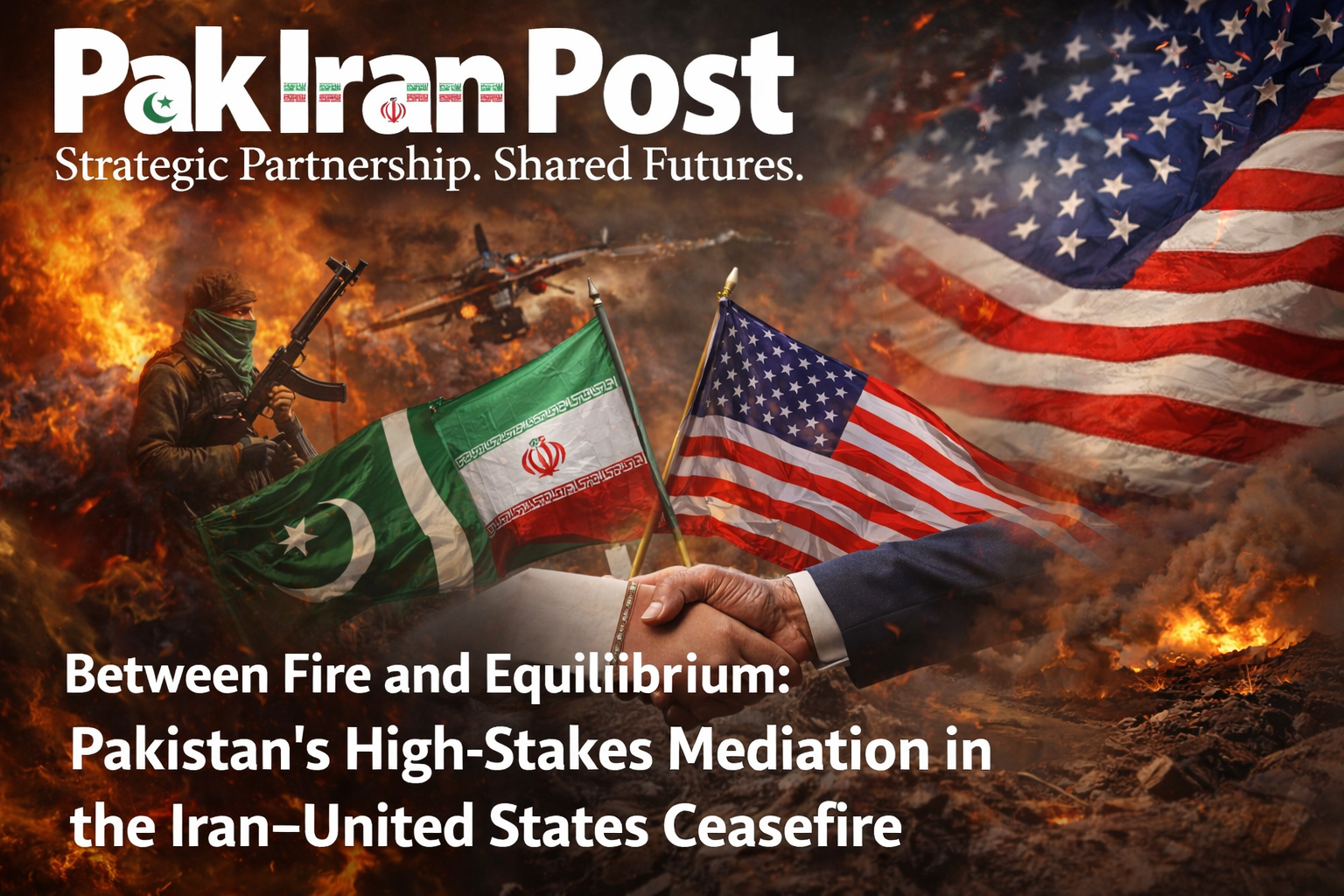
Between Fire and Equilibrium: Pakistan’s High-Stakes Mediation in the Iran–United States Ceasefire
In the uneasy stillness that follows war, diplomacy often performs its most consequential work not in grand conference halls but in the interstices of mistrust, ambiguity, and calculated restraint. The fragile 2026 ceasefire between Iran and the United States is one such moment,
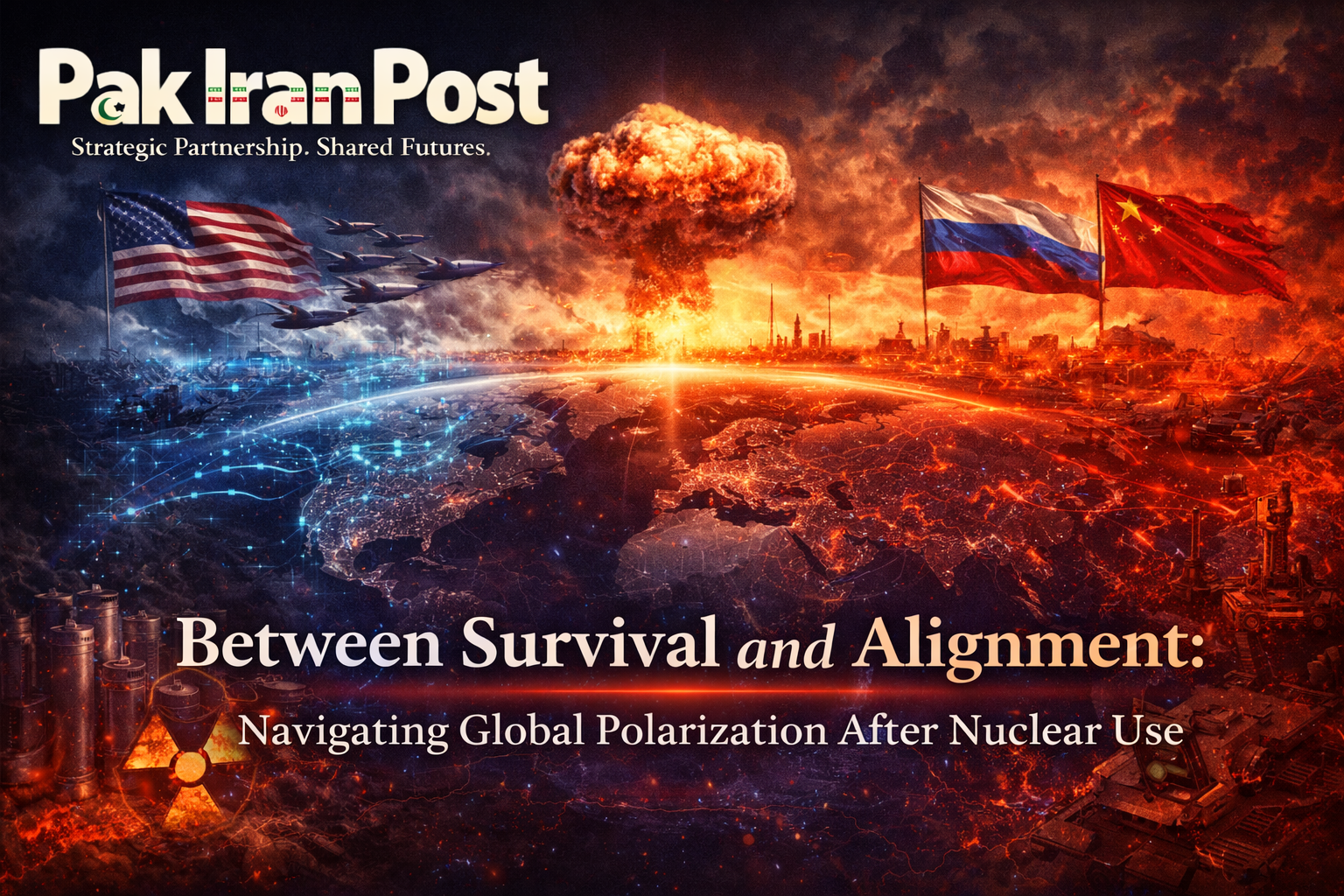
Between Survival and Alignment: Navigating Global Polarization After Nuclear Use
The hypothetical use of a nuclear weapon by the United States against Iran, irrespective of scale, would precipitate a seismic realignment of international strategic perceptions, alliances, and operational postures. Conventional assumptions regarding normative compliance, global security architecture, and deterrence credibility would be challenged,
Pak Iran PostIran’s Nuclear Red Line: Bluff or Strategic Dash
The period spanning February to April 2026 has witnessed a dramatic escalation in the US-Israel campaign against Iranian nuclear infrastructure, with sequential strikes targeting Fordow, Natanz, and Isfahan. Each kinetic action has introduced not only operational risk but a profound strategic ambiguity, raising
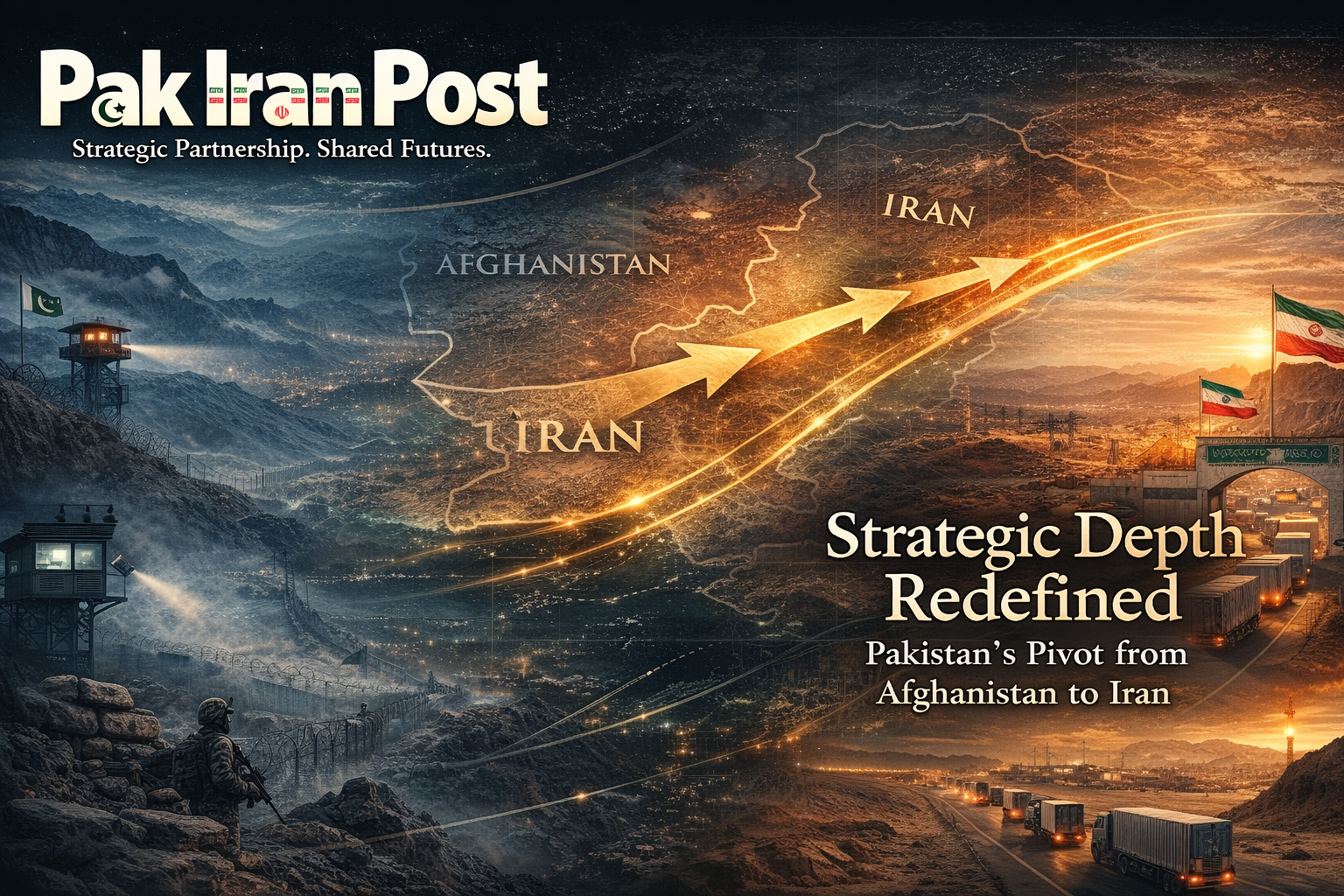
Strategic Depth Redefined: Pakistan’s Pivot from Afghanistan to Iran
Pakistan’s strategic doctrine has historically been shaped by its geographic and political proximity to Afghanistan. For decades, Islamabad’s security, foreign policy, and regional calculations were heavily influenced by developments across the Afghan border. Pakistan’s role in Afghanistan encompassed multiple dimensions, from facilitating stability
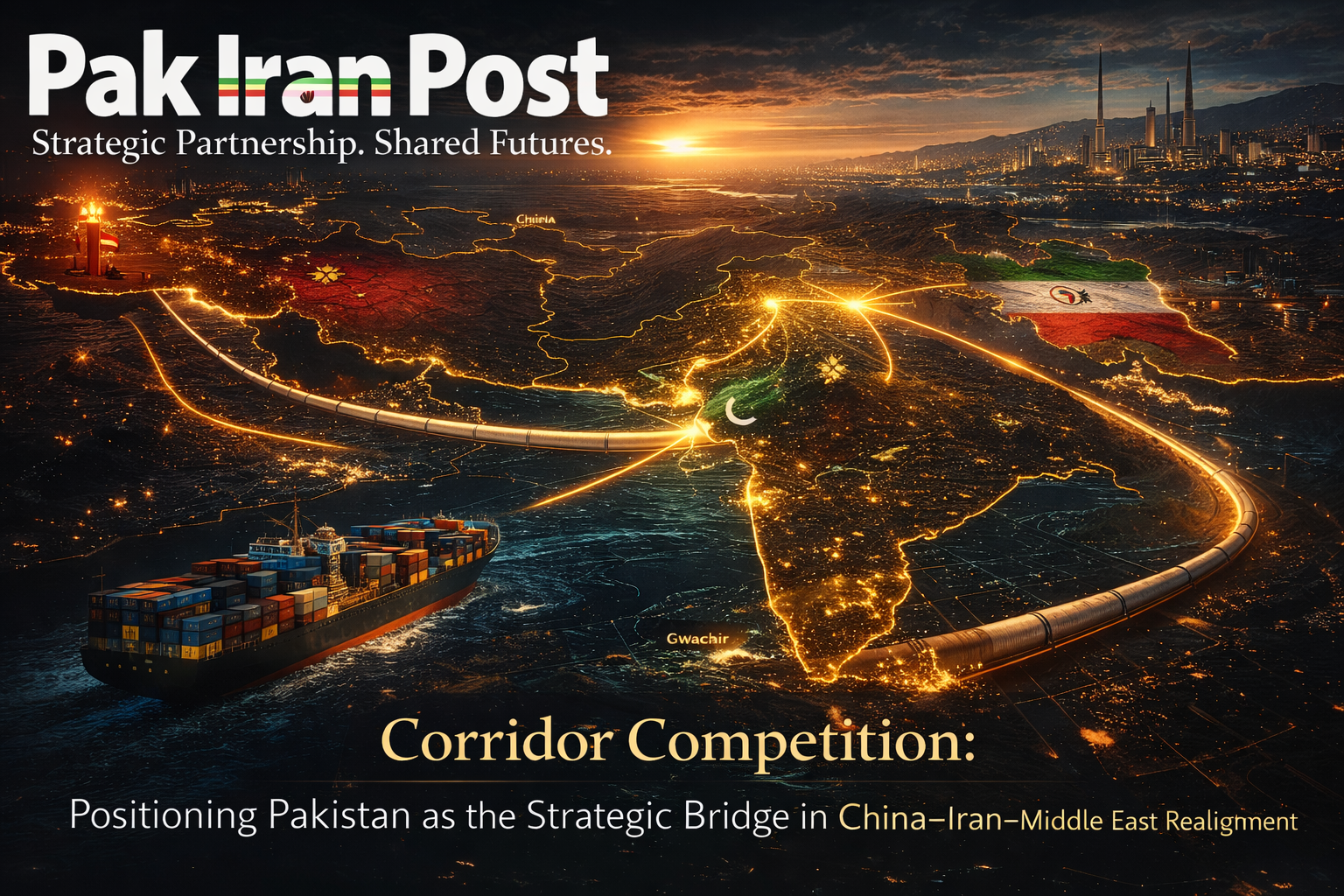
Corridor Competition: Positioning Pakistan as the Strategic Bridge in China–Iran–Middle East Realignment
The evolving geopolitical and economic landscape of the Middle East and South Asia is creating a transformative opportunity for Pakistan to emerge as a central node in the regional connectivity and energy architecture. The fragmentation of global trade routes, the monetization of strategic
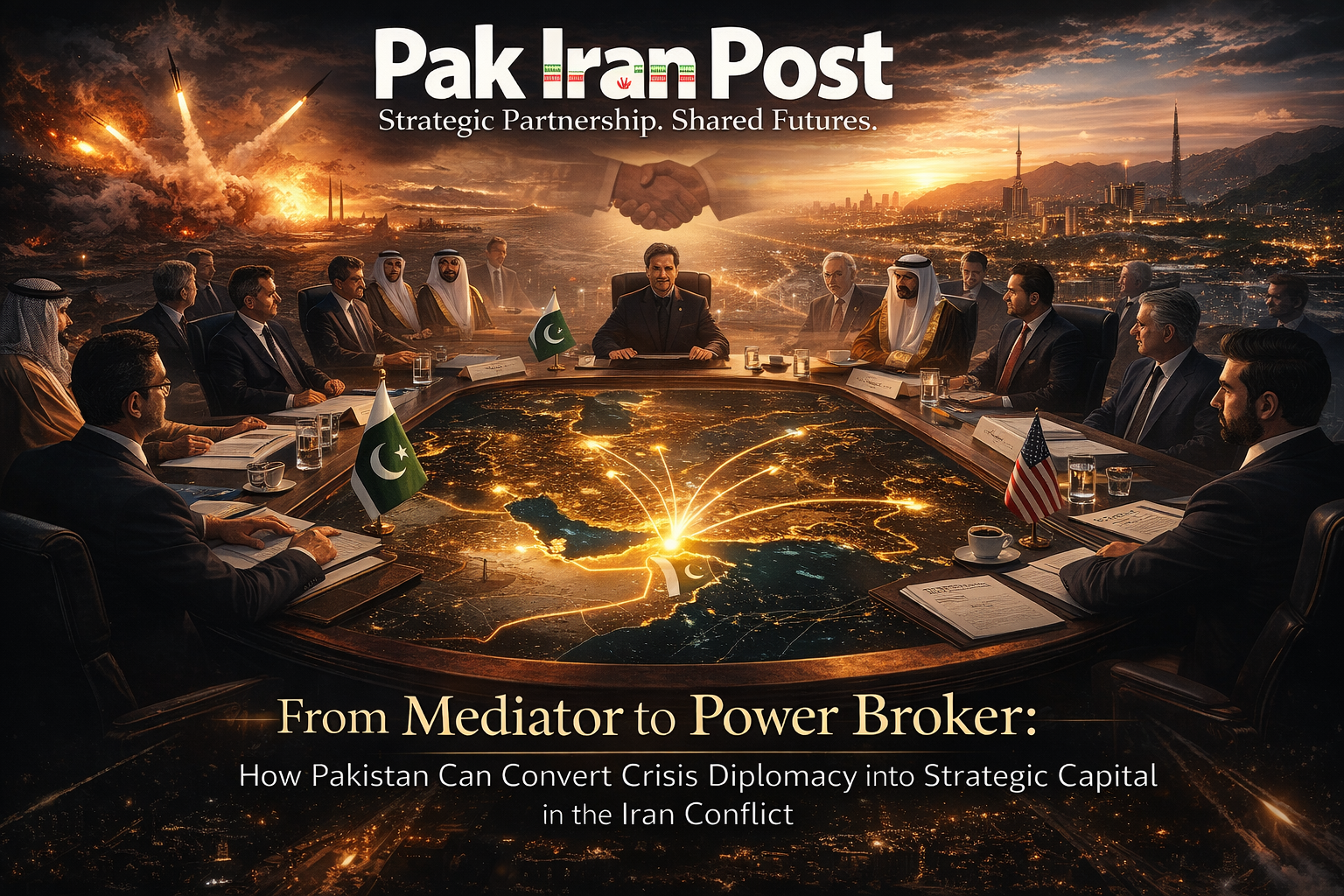
From Mediator to Power Broker: How Pakistan Can Convert Crisis Diplomacy into Strategic Capital in the Iran Conflict
The contemporary Middle Eastern landscape is being reshaped by conflict, strategic recalibration, and the emergence of new power alignments. Among the most consequential theaters is Iran, whose political, economic, and military positioning is influencing not only regional security but global energy and trade
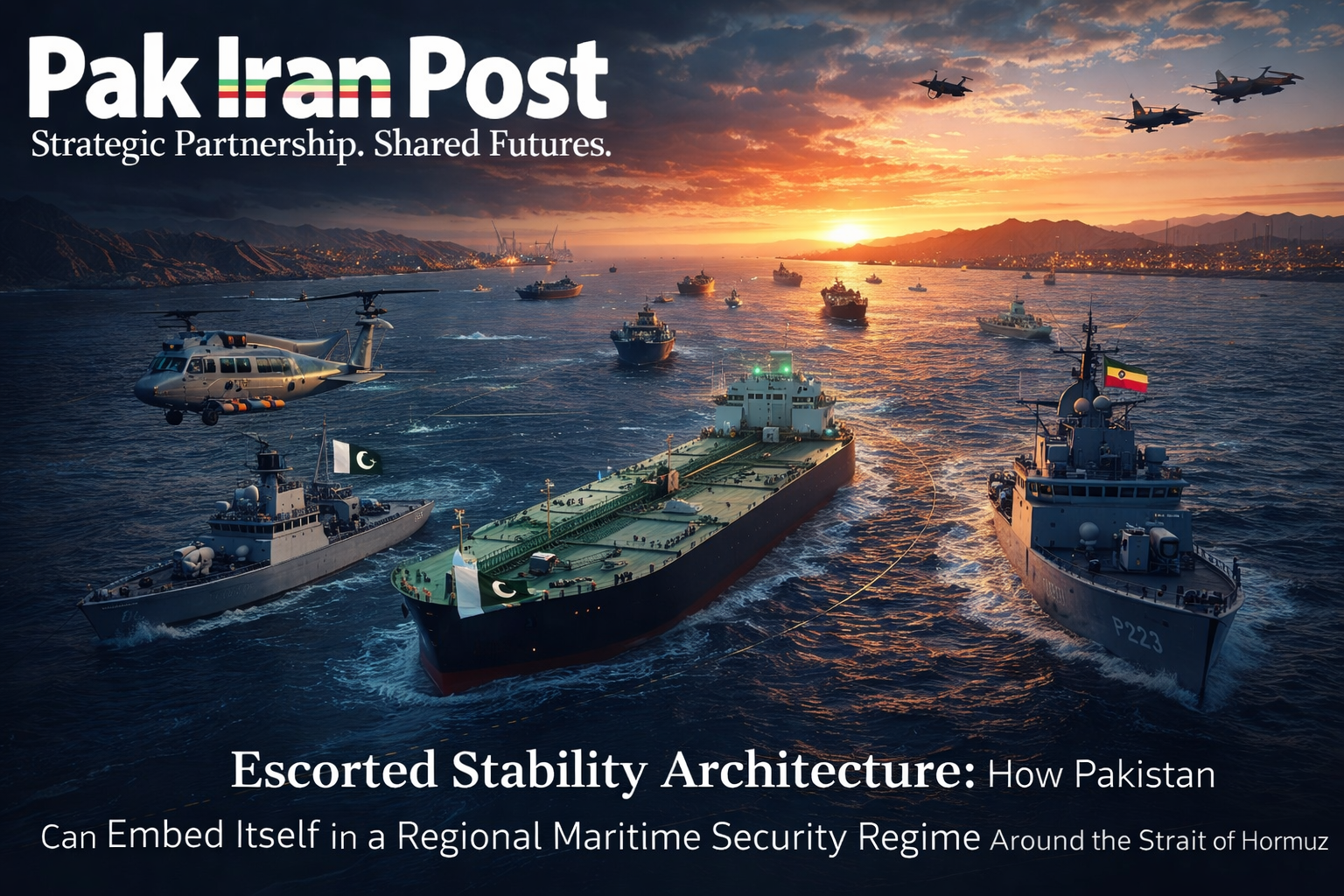
Escorted Stability Architecture: How Pakistan Can Embed Itself in a Regional Maritime Security Regime Around the Strait of Hormuz
The evolving security dynamics of the Strait of Hormuz are no longer defined by episodic crises or symbolic shows of force but by a gradual institutionalization of managed risk. What is emerging is not a battlefield but a system, one in which maritime

Selective Access Order: How Pakistan Can Leverage Iran’s Emerging Control Regime in the Strait of Hormuz
The global maritime order is undergoing a profound transformation in which the long-standing principle of open and neutral sea lanes is being replaced by a more conditional and politically mediated system of access. Nowhere is this shift more visible than in the Strait

Helmand’s Waters and the Contest for Resource Sovereignty in Iran–Pakistan Relations
The Helmand River, originating in the central highlands of Afghanistan and flowing into Iran’s Sistan‑Baluchistan region, has long been a defining feature of the geopolitical, economic, and environmental landscape of the Iran–Pakistan–Afghanistan triangle. In recent years, this transboundary river has become the focal