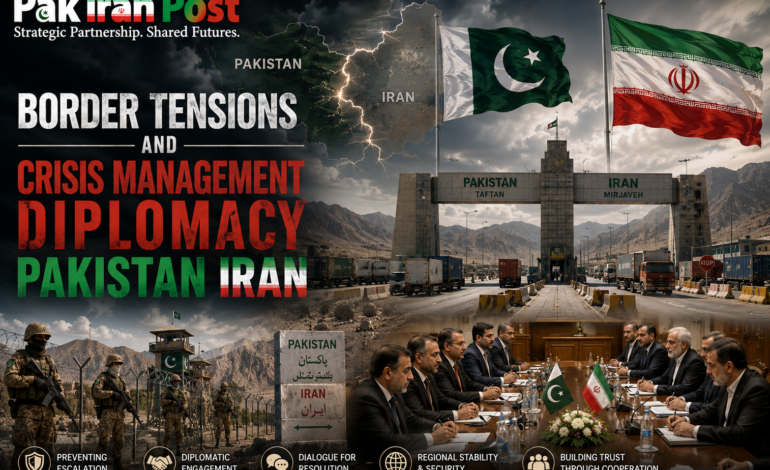
Border Tensions and Crisis Management Diplomacy Pakistan Iran


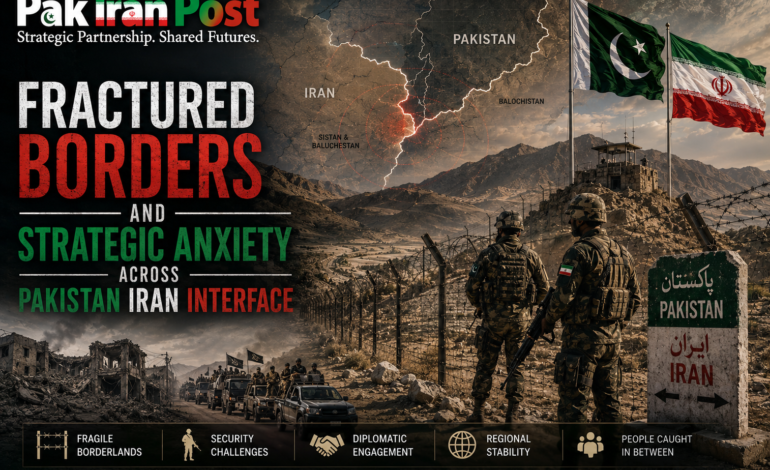
The frontier between Pakistan and Iran constitutes one of the most politically sensitive and structurally complex borderlands in contemporary Eurasian geopolitics, where state sovereignty, insurgent mobility, informal economies, sectarian identities, and competing security doctrines converge into a persistently unstable equilibrium. This border is not merely a territorial demarcation separating two sovereign entities, but an active geopolitical interface in which the limits of state control, the elasticity of non state actor networks, and the fragility of regional trust are continuously tested. In recent years, episodic escalations along this frontier have underscored a recurring pattern in which localized security incidents rapidly acquire diplomatic intensity, threatening to destabilize bilateral relations between Pakistan and Iran despite their underlying strategic interdependence.
At the structural level, border instability emerges from a convergence of governance asymmetries, geographic permeability, and socio economic marginalization. The border regions of Pakistan’s Balochistan province and Iran’s Sistan Baluchestan province share deep historical, ethnic, and cultural continuities that predate modern state formation. These continuities facilitate cross border mobility that is often indistinguishable between legitimate trade, informal economic exchange, and illicit trafficking networks. The result is a hybrid frontier ecosystem where state authority is fragmented and continuously negotiated with local power structures, tribal affiliations, and non state armed actors.
In this environment, insurgent groups and criminal networks exploit governance vacuums to establish transnational mobility corridors that operate beyond effective state surveillance. These actors are not external to the state system but are embedded within its peripheral margins, drawing legitimacy from local grievances, economic deprivation, and ethnic identity narratives. Their operational presence transforms the border from a controlled line of separation into a porous zone of contested sovereignty, where the distinction between internal and external security threats becomes increasingly blurred.
Recent episodes of cross border strikes and retaliatory actions have highlighted the volatility inherent in this system. While such incidents are often framed in national media as isolated acts of military assertion or defensive necessity, their structural significance lies in the speed with which they escalate into diplomatic crises. The rapid transition from tactical engagement to strategic tension reflects the absence of robust institutionalized crisis management frameworks capable of absorbing shocks without immediate political amplification.
Media ecosystems play a critical role in this escalation dynamic. In both Pakistan and Iran, state aligned and independent media channels often interpret border incidents through highly nationalized narratives that emphasize sovereignty violations, security threats, and retaliatory legitimacy. These narratives are further amplified by digital platforms where emotionally charged content circulates rapidly, often detached from verified information or diplomatic context. The result is a compression of political time, where governments are compelled to respond to public pressure cycles that outpace traditional diplomatic negotiation processes.
The informational dimension of border crises is therefore as consequential as their military dimension. In the absence of verified communication channels, misinformation and speculative reporting fill the informational vacuum, shaping public perception and constraining policy flexibility. This phenomenon transforms border incidents into symbolic events that carry disproportionate political weight relative to their tactical scale. Consequently, crisis management becomes not only a matter of military de escalation but also of narrative stabilization across fragmented media ecosystems.
Despite these structural vulnerabilities, the Pakistan Iran border has also demonstrated a recurring capacity for rapid de escalation. Historical patterns indicate that even after periods of heightened tension, both states have consistently returned to diplomatic engagement through a combination of formal communication channels, military to military contacts, and backchannel negotiations. This suggests the existence of an implicit stabilizing logic embedded within bilateral relations, driven by mutual recognition of the costs associated with sustained confrontation.
Intelligence coordination mechanisms, though often informal and opaque, play a crucial role in this stabilizing process. Security agencies on both sides have periodically engaged in communication aimed at managing cross border threats, particularly those related to insurgent activity and organized smuggling networks. These interactions, while limited in scope, function as critical pressure release valves that prevent localized incidents from escalating into broader military conflict.
However, the absence of institutionalized crisis management architecture remains a significant structural weakness. Unlike more formalized bilateral security arrangements found in other regional contexts, Pakistan and Iran lack permanent joint mechanisms for border monitoring, intelligence fusion, and rapid diplomatic consultation. This institutional gap increases reliance on ad hoc responses that are vulnerable to misinterpretation and political volatility.
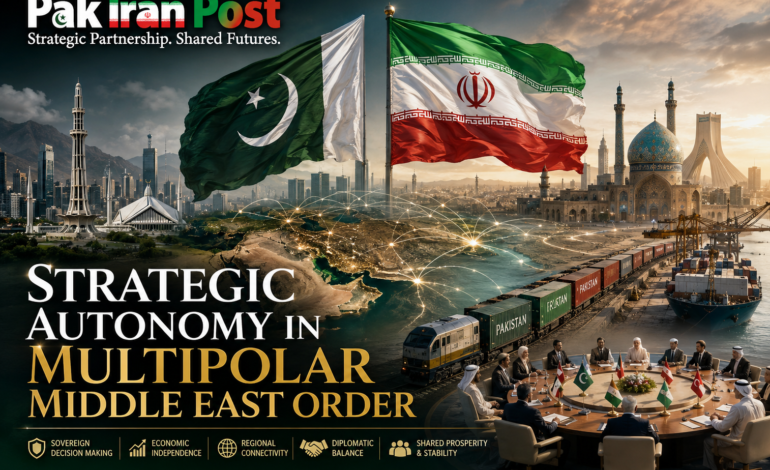
The geopolitical significance of the border further amplifies its sensitivity. The region is increasingly integrated into broader infrastructural and connectivity visions, including energy transit proposals, trade corridor initiatives, and maritime access strategies linked to regional economic integration frameworks. Any sustained instability along the frontier undermines these long term economic prospects and reinforces securitized approaches to border governance.
External geopolitical actors also indirectly influence border dynamics. Competing regional and global interests in South and West Asia create an environment in which local incidents can acquire broader strategic interpretations. Energy politics, sanctions regimes, and infrastructural investments intersect with border security considerations, complicating bilateral management and increasing the stakes of miscalculation.
Within Pakistan’s domestic context, border instability is further complicated by internal governance challenges in peripheral regions. Economic marginalization, limited state presence, and historical grievances contribute to a governance environment in which state authority is unevenly distributed. This unevenness creates conditions in which non state actors can operate with relative autonomy, further complicating cross border security management.
Iran faces parallel challenges in its own border provinces, where economic underdevelopment and ethnic diversity intersect with security concerns related to smuggling networks and insurgent activity. These shared structural conditions suggest that border instability is not a unilateral phenomenon but a mutual governance challenge rooted in parallel state formation trajectories.
Effective crisis management in this context requires a shift from reactive militarized responses to proactive institutional coordination. This includes the establishment of joint border monitoring mechanisms capable of real time information sharing, coordinated intelligence assessment, and rapid incident verification. It also requires the development of diplomatic hotlines insulated from political volatility, enabling direct communication between security and foreign policy institutions during periods of heightened tension.
In addition, economic integration strategies must be incorporated into border governance frameworks. The development of regulated cross border trade zones, infrastructure corridors, and localized economic exchange mechanisms can reduce the incentive structures that sustain informal and illicit networks. Economic interdependence, if properly structured, can function as a stabilizing force by aligning local incentives with bilateral stability.
Equally important is the need to address the informational dimension of border governance. Both states must develop coordinated strategies to manage misinformation, verify incident reporting, and communicate official positions in a timely and transparent manner. Without such mechanisms, narrative escalation will continue to outpace diplomatic de escalation, increasing the risk of policy overreaction.
The broader analytical implication is that the Pakistan Iran border should be understood not as a static security line but as a dynamic interface of competing sovereignties, informal economies, and narrative systems. Its instability is not an anomaly but a structural feature of the region’s political economy. Managing this instability requires acceptance of complexity rather than attempts at simplification.
Ultimately, sustainable border stability will depend on the ability of both states to institutionalize crisis management within a broader framework of managed interdependence. This involves recognizing that security cannot be achieved through militarization alone, but must be embedded within economic, informational, and diplomatic architectures capable of absorbing and diffusing shocks. The transformation of the border from a zone of recurrent crisis into a managed frontier of controlled interaction represents not only a bilateral necessity but a regional imperative for long term stability in the evolving Eurasian order.
A Public Service Message