
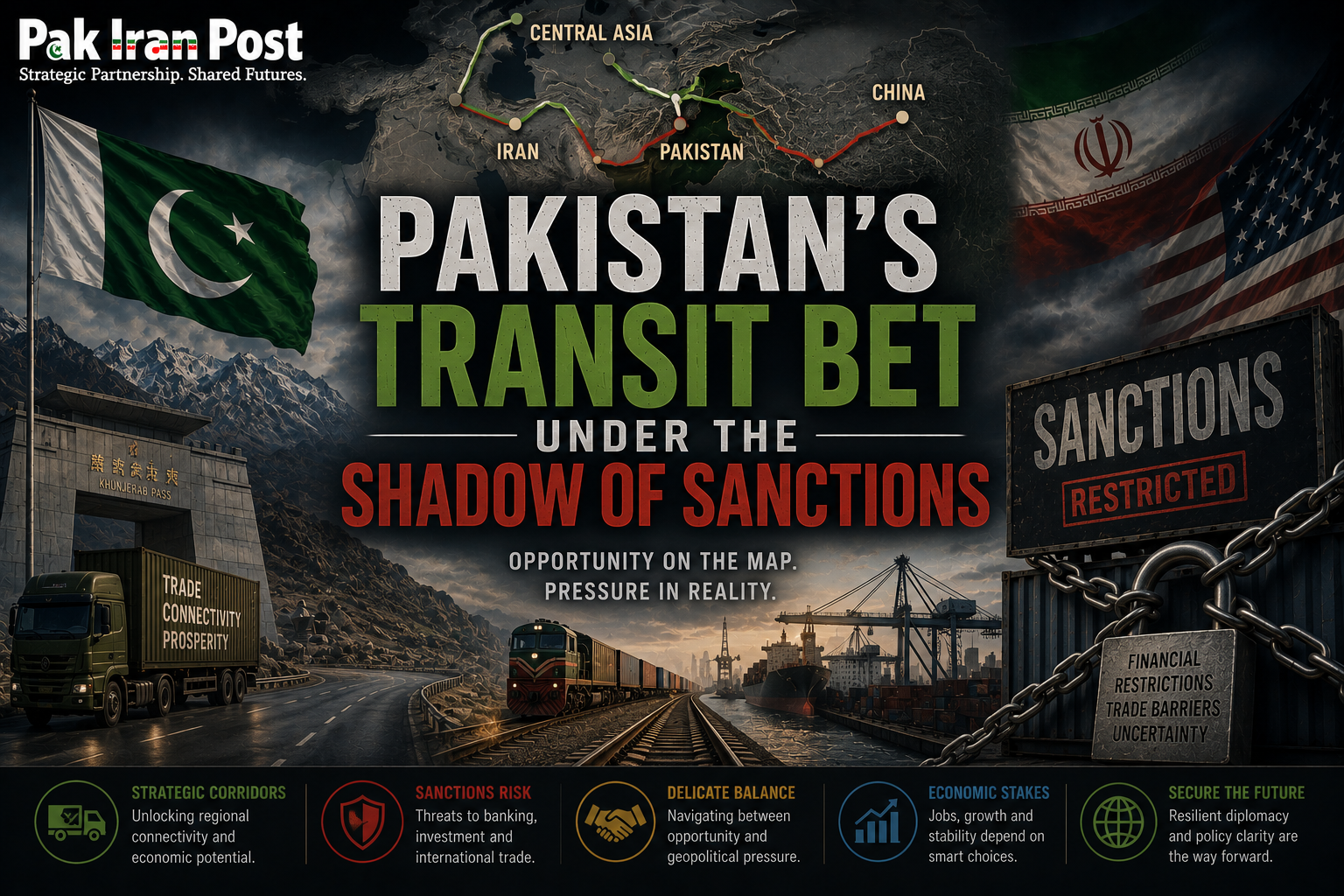
Pakistan’s Transit Bet Under the Shadow of Sanctions

There are moments in regional commerce when geography stops being a static fact and becomes a strategic instrument. Pakistan may be entering one of those moments. What looks, at first glance, like a technical adjustment in transit policy, the notification of six overland
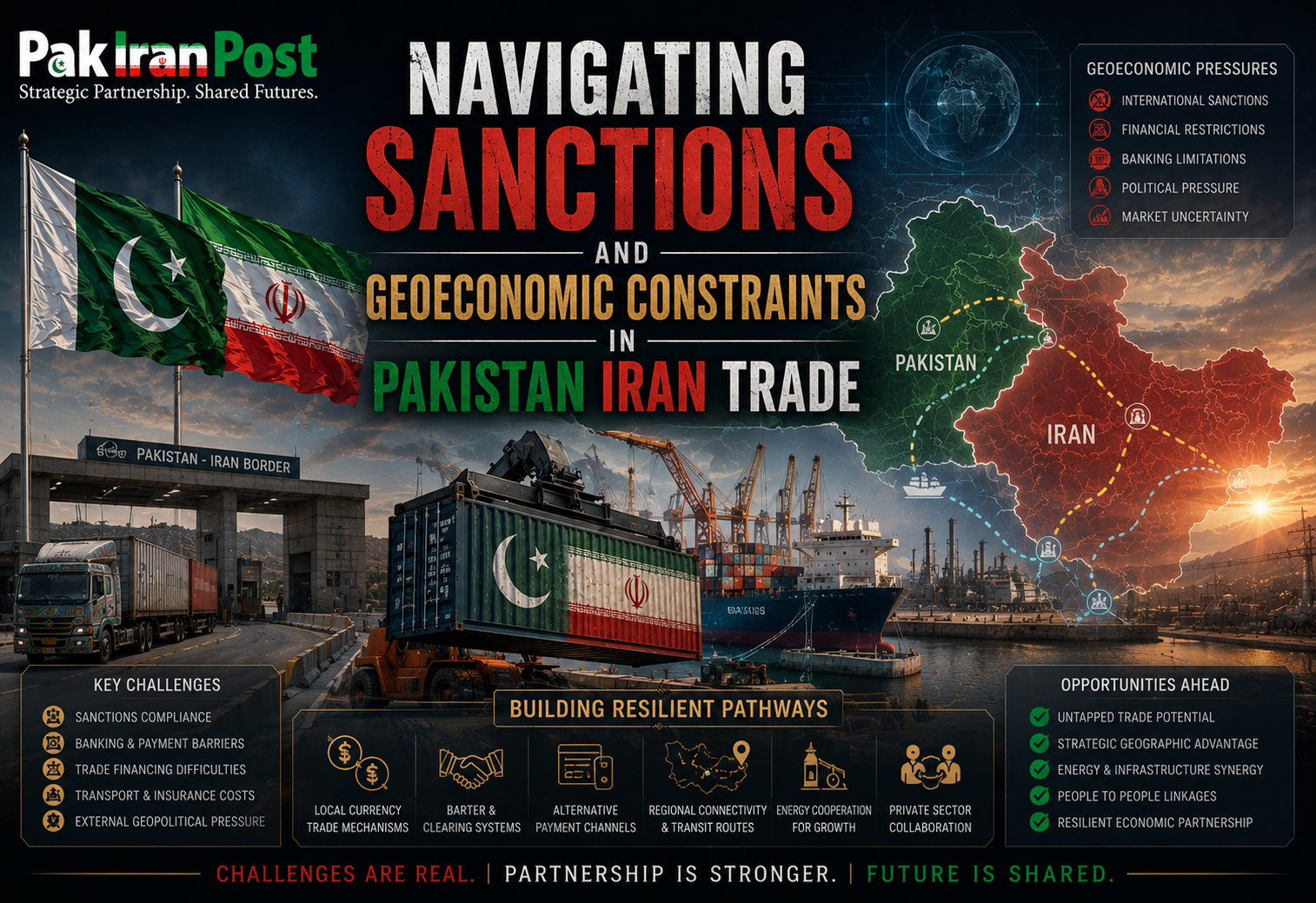
Navigating Sanctions and Geoeconomic Constraints in Pakistan Iran Trade

The evolving economic relationship between Pakistan and Iran is increasingly shaped not only by bilateral considerations but by the tightening architecture of global sanctions regimes, fragmented financial systems, and intensifying geoeconomic competition among major powers. In this constrained environment, economic engagement is no

Governing Borders Through Integrated Pakistan Iran Mechanisms

The Pakistan Iran border, stretching across rugged terrain, arid landscapes, and historically porous corridors of mobility, is increasingly emerging as a critical site where twenty first century geopolitics, informal economies, and fragmented sovereignty intersect in complex and often contradictory ways. What has long

Reconfiguring Pakistan Iran Relations Beyond Security Paradigms

In the evolving geometry of South and West Asian geopolitics, the relationship between Pakistan and Iran is undergoing a subtle but structurally consequential transformation that defies traditional diplomatic grammar. What was once largely interpreted through the narrow prism of border insecurity, sectarian anxieties,

Beyond Westphalia Pakistan Iran Relations in a Post Sovereign World of Networks

In the contemporary historical moment, the epistemic architecture of international relations is undergoing a profound metamorphosis, one that renders the inherited grammar of Westphalian sovereignty increasingly insufficient as a descriptive and normative framework. The bilateral nexus between Pakistan and Iran emerges as a

From Symbolism to Systems Institutionalising Pakistan Iran Economic Dialogue

The economic relationship between Pakistan and Iran has long been trapped in a paradox of proximity without integration. Geography suggests inevitability, history suggests familiarity, and political rhetoric repeatedly invokes brotherhood, yet the structural reality is one of fragmented trade channels, underdeveloped financial connectivity,
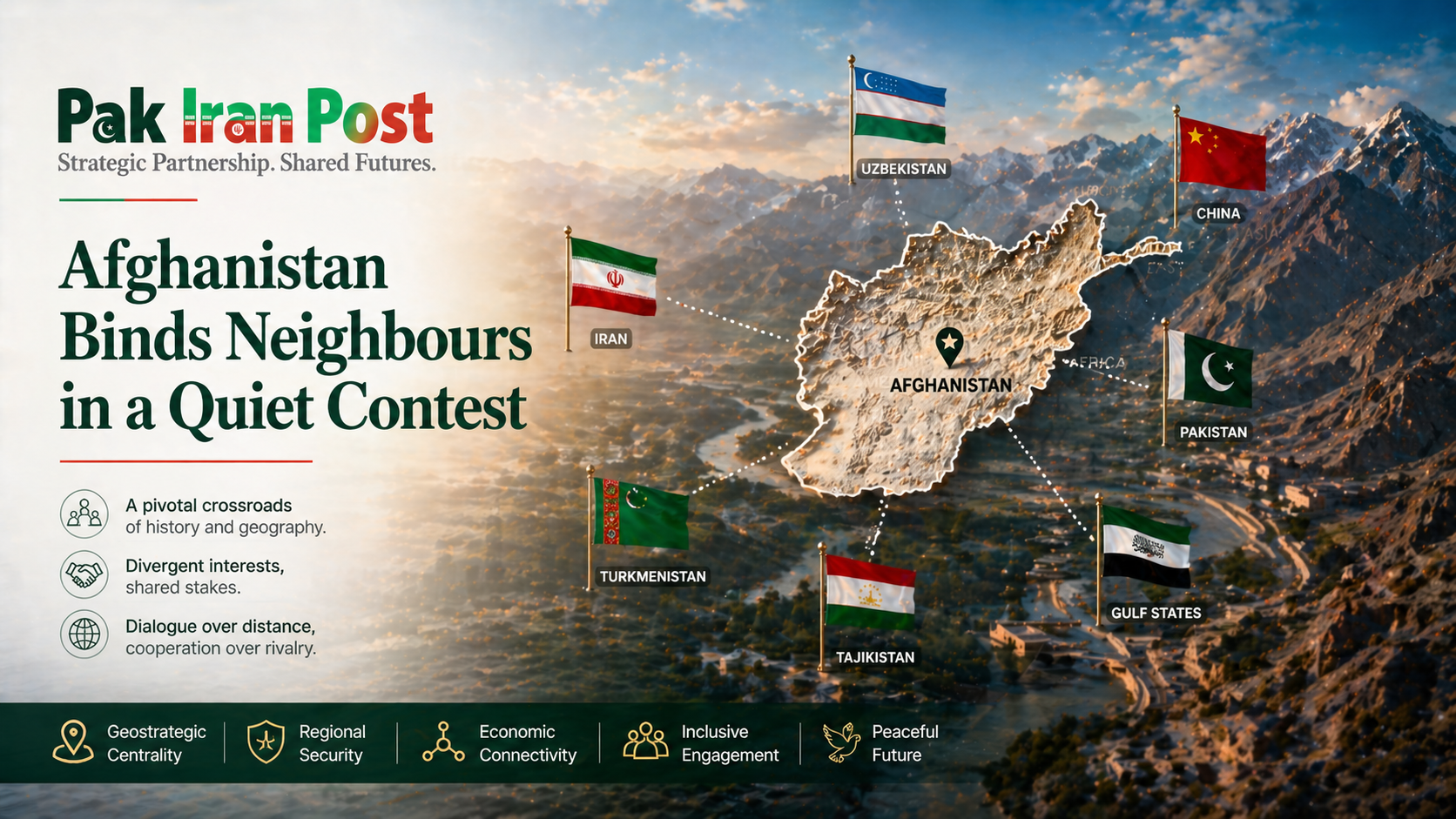
Afghanistan Binds Neighbours in a Quiet Contest
When the United States withdrew from Afghanistan, much of the world behaved as though the story had ended. Television cameras moved on, diplomatic urgency faded, and policy bandwidth was reassigned to wars elsewhere. Yet geopolitics rarely tolerates vacuums for long. If anything ended,

Borderlands of Power and Passage in a New Era.
For much of modern statecraft, the frontier between Pakistan and Iran existed in policy imagination as a cartographic afterthought. It was a long, arid, politically delicate belt where sovereignty was asserted episodically, commerce moved informally, and governments looked inward rather than across. Security

Chabahar’s Strategic Awakening and Its Ripple Effects on Regional Trade Architecture
Iran’s strategic calculus has undergone a significant transformation in recent years, driven by the intersecting pressures of international sanctions, shifting regional power alignments, and the persistent challenge of economic diversification. Central to this recalibration is the port of Chabahar, situated on the Makran